
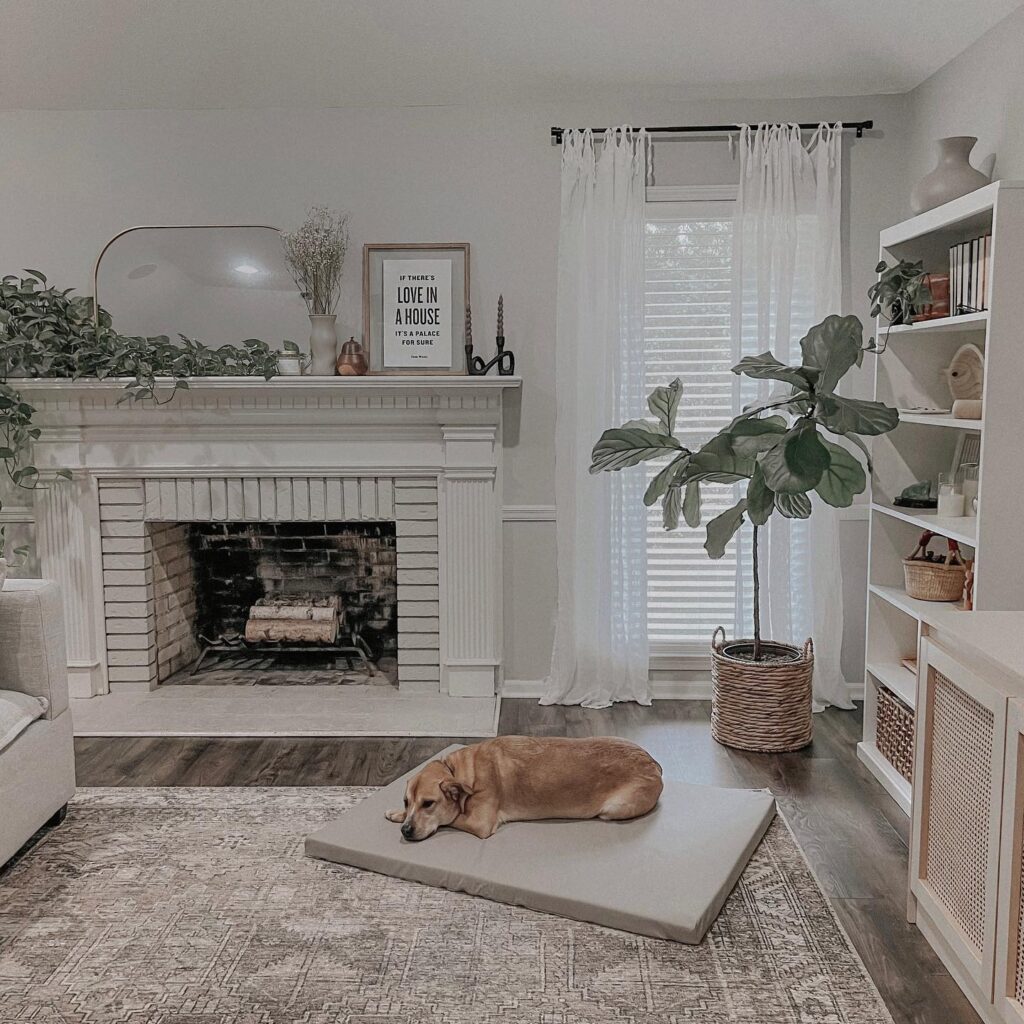
That plastic crate sitting in your living room? Yeah, it’s an eyesore — and you know it.
You’ve spent weeks curating the perfect gallery wall, hunting down the right throw pillows, getting your whole aesthetic just right. Then your golden retriever trots in and there it is. A bulky, industrial-looking cage that screams “I gave up on this corner.”
I felt that exact sting last year when my cousin visited and literally said, “Oh… is that your dog’s crate?” The look on her face said everything.
Here’s the thing though — you don’t have to choose between your dog’s comfort and a home you’re proud of.
These 7 DIY dog crate furniture ideas are going to change that corner completely. We’re talking pieces that double as end tables, consoles, and benches — built by real people, on real budgets, no contractor needed.
#1: Built-In Dog Crate Bench With Under-Seat Storage (The RV-Style Secret Weapon)
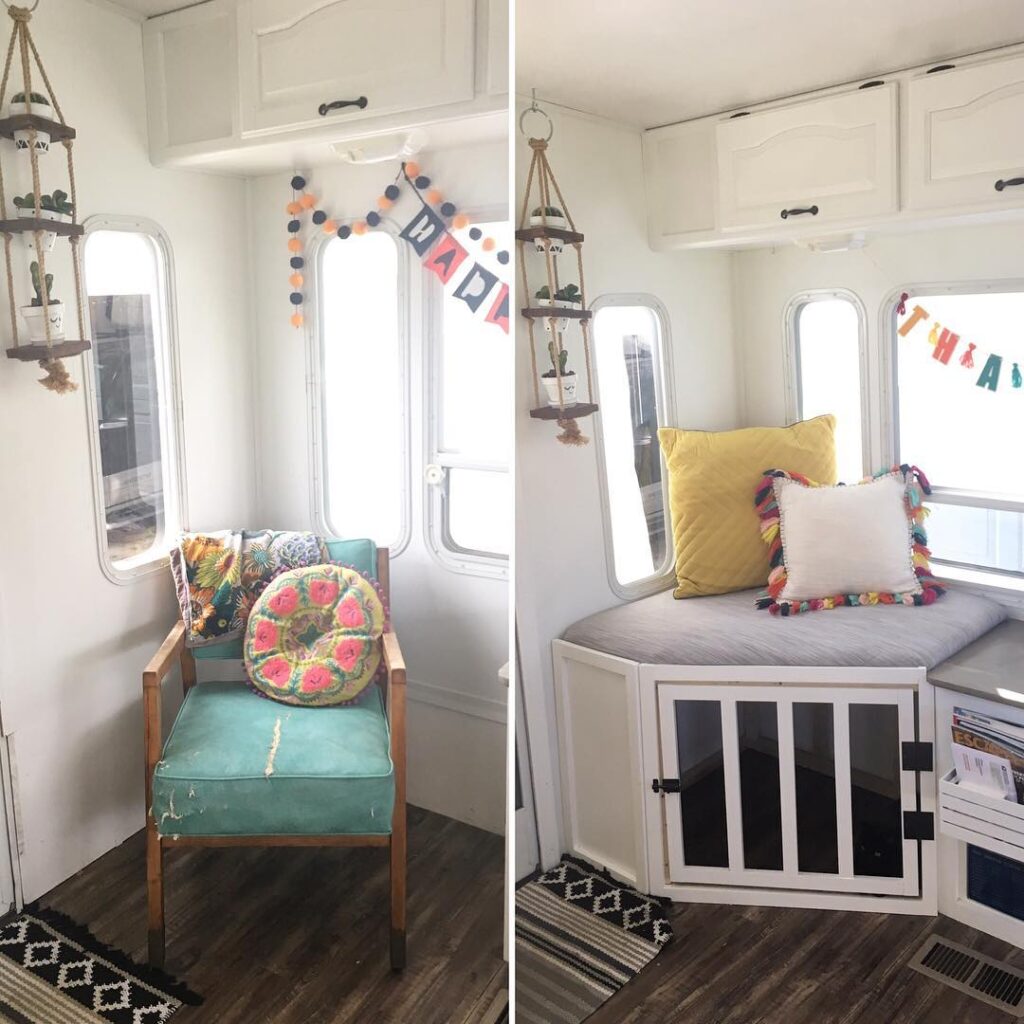
You know that moment when your golden is just sprawled across the living room floor and you’re stepping over her for the third time trying to get to the couch? Yeah. That’s exactly the chaos this build solves.
Prep Time: 30 minutes | Active Project Time: 6–8 hours | Difficulty Level: Intermediate
Materials & Tools You’ll Need:
– ¾-inch plywood (for the base, sides, and top bench seat)
– White semi-gloss paint (cabinet-grade)
– Wooden slat trim pieces in natural wood tone
– Black hardware — hinges, drawer pulls, latch closure
– Gray upholstery foam pad cut to seat dimensions
– Circular saw, drill, sandpaper (120-grit then 220-grit)
– Wood glue + pocket screws (1¼-inch)
– Black geometric area rug (optional but chef’s kiss)
Instructions
Start by measuring the wall space where the crate will sit — this build is flush against the RV wall, so every inch counts. Cut your ¾-inch plywood into a base panel, two side panels, and a top bench seat that overhangs slightly in front.
Sand all edges with 120-grit first, then finish with 220-grit so the surface feels smooth. This matters because your dog’s paws will rub the interior edges daily.
Build the front frame using your wooden slat trim pieces — three vertical slats with equal spacing, attached to a rectangular frame. The slats give ventilation and visibility, so your dog sees the room and feels less isolated. That openness feature reduces anxiety, which means fewer whine-fests at 6 AM.
Attach the slat door panel using black hinges and add a black latch closure so it stays secure but opens easy. Paint everything white semi-gloss — two coats minimum. This paint level handles scratches and wipe-downs without looking beat up after a month.
The bench top sits right over the crate space and doubles as extra seating. Drop a gray upholstery foam pad on top, toss a mustard yellow pillow and a white tassel throw pillow, and suddenly it looks like a Pinterest board came to life in your space.
I built something similar for my cousin’s camper last summer and honestly the hardest part was waiting for the second coat of paint to dry. We sat outside drinking iced tea and her dog kept nosing at the door like, excuse me, is my room ready yet.
Measure your dog crate dimensions before cutting anything — build the frame 2 inches larger on all sides so your dog has breathing room and the door swings without scraping. For more creative ways to blend pet furniture with your home style, 7 Creative DIY Dog Cage Furniture Ideas has some really clever approaches worth bookmarking.
📸 Photo credit: Instagram @musing_mandy
#2: DIY Bunk Bed Dog Crate From Pallet Wood (Yes, It’s As Good As It Looks)
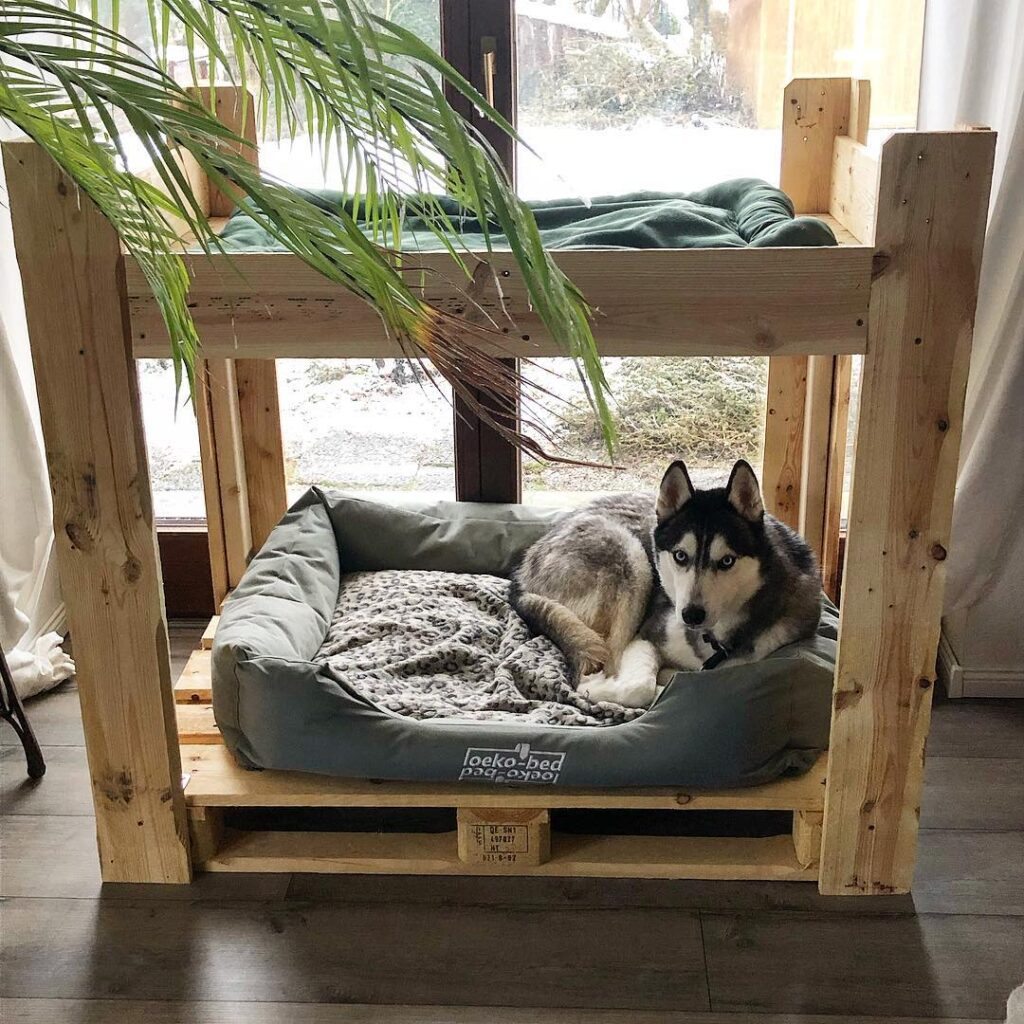
Okay so you know that moment when your golden has officially taken over the entire couch and your favorite throw blanket, and you’re like… where do I even sit anymore? That was me last winter, and honestly, it pushed me to finally build something that actually works for both of us.
This pallet wood bunk bed crate is giving me all the feelings. It’s got a bottom sleeping bay for your big pup and a smaller upper platform — perfect for a second pet or extra storage. The whole thing sits right by the window so your dog gets that natural light while you get your couch back.
Materials & Tools:
– 2 wooden Euro pallets (standard 120cm x 80cm)
– 8 pine lumber posts (4cm x 4cm, cut to 80cm height)
– Pine planks for the upper platform
– Screws (5cm wood screws, about 40–50)
– Drill + circular saw + sandpaper (120-grit then 220-grit)
– 1 gray “loeko-bed” dog bed (size L)
– Green fleece cushion for upper bunk
– Wood stain or sealant (optional)
Instructions
Sand every pallet surface first — splinters in paws are not the vibe. Start with 120-grit to knock down the rough edges, then finish with 220-grit for that smooth, clean feel.
Stand your four corner posts upright and attach the bottom pallet as your base platform using 5cm screws, drilling two screws per post. Make sure each post sits flush before tightening fully.
Then attach your upper platform planks across the top of the posts at about 75cm height, leaving no gaps wider than 3cm so nothing slips through. This upper shelf supports lighter weight, so use three evenly spaced planks and double-screw each one for stability.
Slide your loeko-bed into the lower bay with a cozy blanket layered inside. The raised platform keeps the sleeping surface off cold floors — better joint support for your dog means fewer stiff mornings and more happy zoomies.
And because the whole structure sits right by the glass door, your dog gets a full window view without you sacrificing your living room layout.
The natural pine wood works with almost any interior — seal it with a clear matte wood sealant if you want it to last through muddy paw seasons without warping.
Prep Time: 30 min | Active Project Time: 3–4 hours | Difficulty Level: Beginner-Intermediate
One thing I’d add — build the upper bunk slightly smaller than the lower one. It creates a natural “big dog, small dog” setup without any extra effort, and honestly it looks intentional and so Pinterest.
📸 Photo credit: Instagram @mountains.dogs.me
#3: Bentwood Bowl Bed — The Sculptural Dog Bed That Looks Like Modern Art
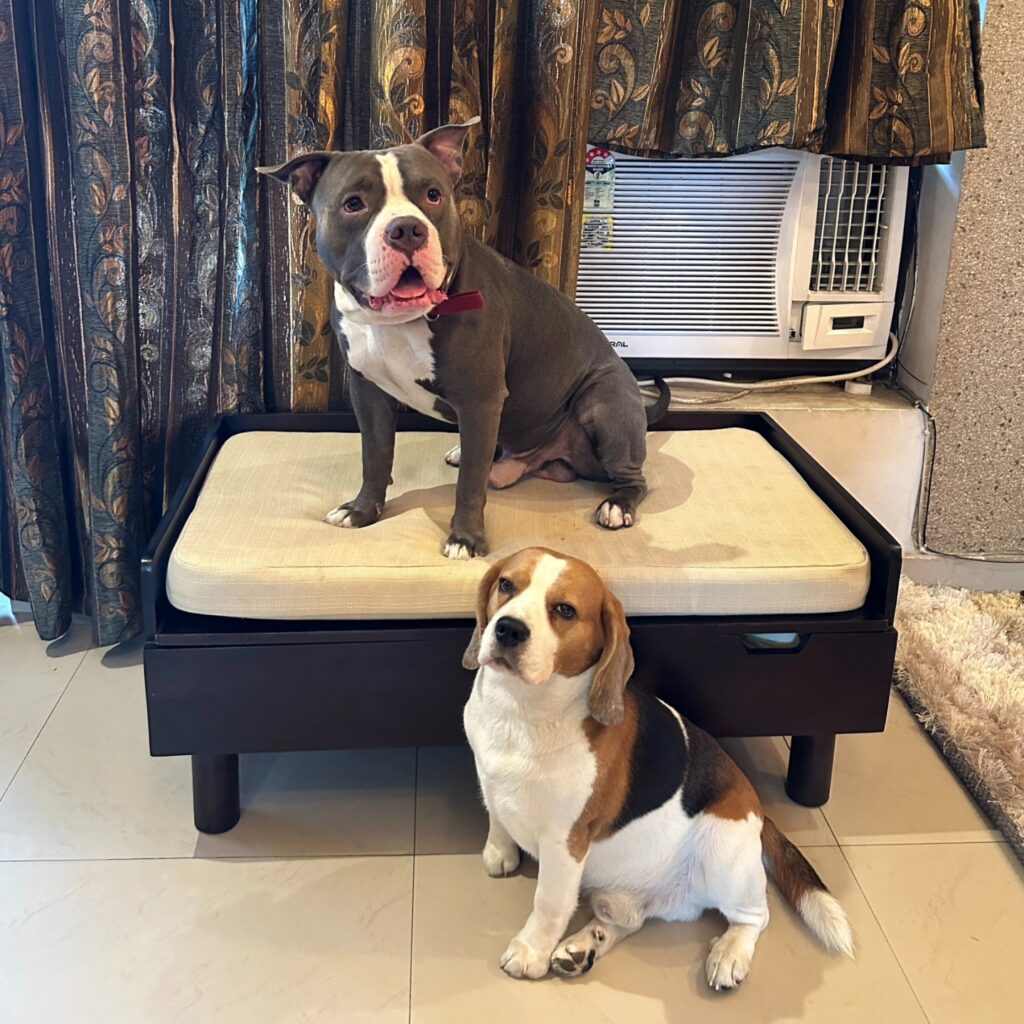
Your golden is currently sprawled across your linen sofa, shedding everywhere, zero shame. And you’re staring at plastic crates and ugly foam beds wondering why nothing ever matches your actual home.
This bent plywood bowl bed is the answer.
It’s a circular wooden shell — think drum shape — made from walnut-veneer plywood that curves into a deep, cozy nest. The bottom version in the image tilts at an angle, which gives your dog a scooped, cave-like entry point. So much cozier than a flat pad on the floor.
Materials & Tools:
– 1/8-inch walnut veneer plywood (flexible grade), 48×96 inches
– Gray upholstery foam cushion, 18-inch diameter, 2 inches thick (top version) or faux sheepskin liner (bottom version)
– Wood glue + clamps
– Circular mold or sonotube, 20-inch diameter
– Sandpaper (120 and 220 grit)
– Danish oil finish
Instructions
Cut your plywood into a 6-inch wide strip, long enough to wrap around your mold twice. Soak it in warm water for 30 minutes — this softens the wood fibers so it bends without cracking. Wrap it around your sonotube mold, applying wood glue between the two layers as you go. Clamp it overnight, at least 12 hours.
Once dry, trim the top edge so it sits level. For the angled version, cut the base opening at a 30-degree diagonal — this curved-entry design keeps drafts out and makes your dog feel enclosed, which means deeper, calmer sleep.
Sand everything with 120 grit, then finish with 220. Two coats of Danish oil bring out that warm walnut tone. Drop in your cushion or sheepskin liner.
The curved wood acts as a natural insulator, which means your dog stays warmer in winter without an electric pad.
Soaking time is everything here. Rushed plywood splits. Give it the full soak and the wood practically bends itself.
Prep Time: 45 min | Active Project Time: 3–4 hours | Difficulty Level: Intermediate
📸 Photo credit: Instagram @furryliving.in
#4: Built-In Dog Crate with Geometric Accent Wall and Open Bookshelves
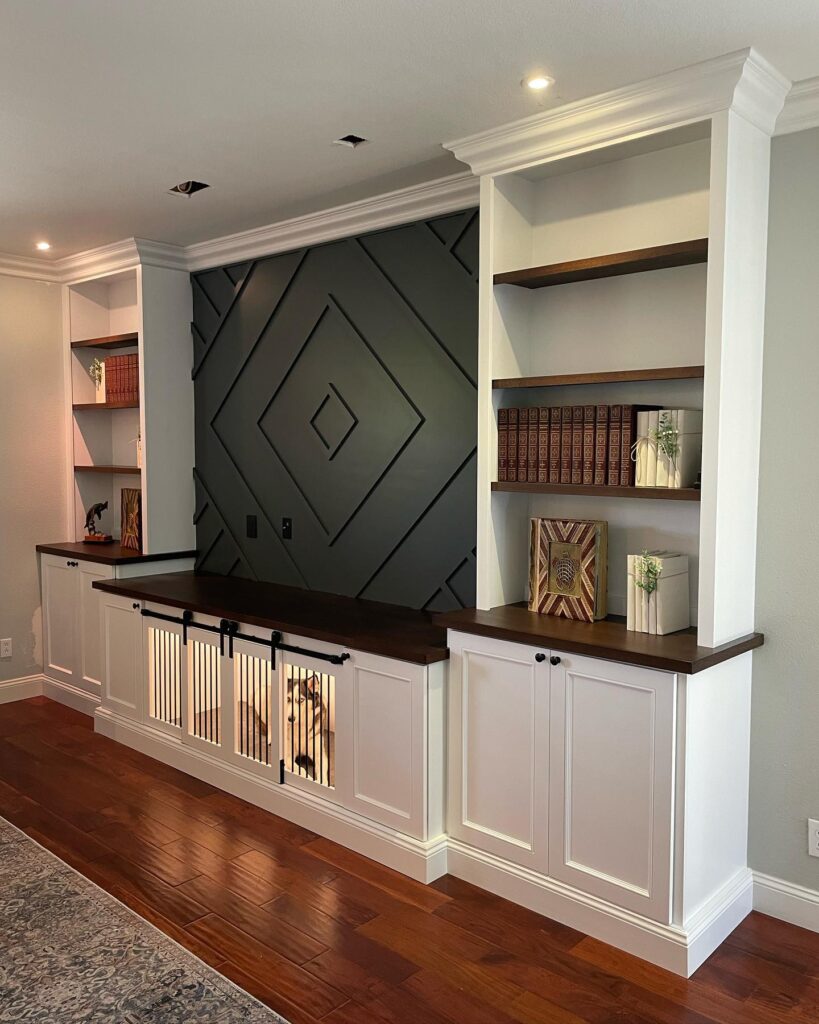
Your golden is finally napping — but she’s sprawled across the living room floor, right in the middle of everything, every single day. You’ve tried dog beds. She ignores them. What you actually need is a dedicated space that feels like hers but looks like it belongs in a Pinterest board.
This built-in is everything.
Materials & Tools You’ll Need:
– 3/4-inch MDF or plywood for cabinet boxes
– 1×4 and 1×6 pine boards for face frames and molding
– Walnut-stained pine shelving (approximately 3/4-inch thick)
– Black sliding barn door hardware kit with vertical slat panels
– Crown molding (to match existing room trim)
– Semi-gloss white paint (cabinet-grade)
– Dark charcoal/forest green paint for the accent wall panel
– Decorative diamond molding strips for the geometric wall detail
– Recessed LED lighting for upper shelf zones
– Miter saw, nail gun, brad nailer, level, wood glue, pocket hole jig
Prep Time: 2–3 hours | Active Project Time: 3–4 weekends | Difficulty Level: Advanced DIY
—
Instructions
Start by mapping your wall and marking stud locations — this whole build anchors directly into the wall framing, so don’t skip this part.
Build your base cabinet boxes first using 3/4-inch MDF, cutting each box to roughly 18 inches deep and 30 inches tall. The dog crate section sits dead center and needs to be sized for your dog — for a full-grown golden, aim for at least 42 inches wide by 28 inches tall interior clearance. That extra height means she won’t crouch, which matters more than people realize.
And this is where the barn door hardware changes everything. Install a black sliding barn door rail across the front of the crate opening, then hang vertical slat panels that let air move through and light filter in. The slats mean she can see out and you can see in — no dark, closed-off box energy.
Attach your face frames using pocket screws and wood glue, then add raised-panel cabinet doors on either side of the crate for hidden storage. Once your lower cabinets are secured to the wall, cut and install your walnut-stained pine countertop across the full run — this becomes the visual anchor of the whole piece.
For the accent wall, build a flat panel from 1/2-inch MDF, then layer 1×2 pine strips in a diamond grid pattern. Paint the whole surface dark charcoal green — that deep contrast is what makes the white cabinetry pop so hard.
The open bookcase towers on each side get walnut-stained floating shelves, crown molding at the top, and recessed LED lights in the ceiling above. Built-in shelving that holds books and hides a dog crate means you get a polished room without sacrificing a single square foot for a separate crate. That’s the payoff.
Prime everything twice before your finish coat — MDF will drink paint and look rough if you skip that step. Caulk every seam before painting so the whole unit looks like one solid piece built into the house.
📸 Photo credit: Instagram @alteredgraindesign
#5: The Designer Dog Crate End Table (Two Dogs, One Cozy Spot)
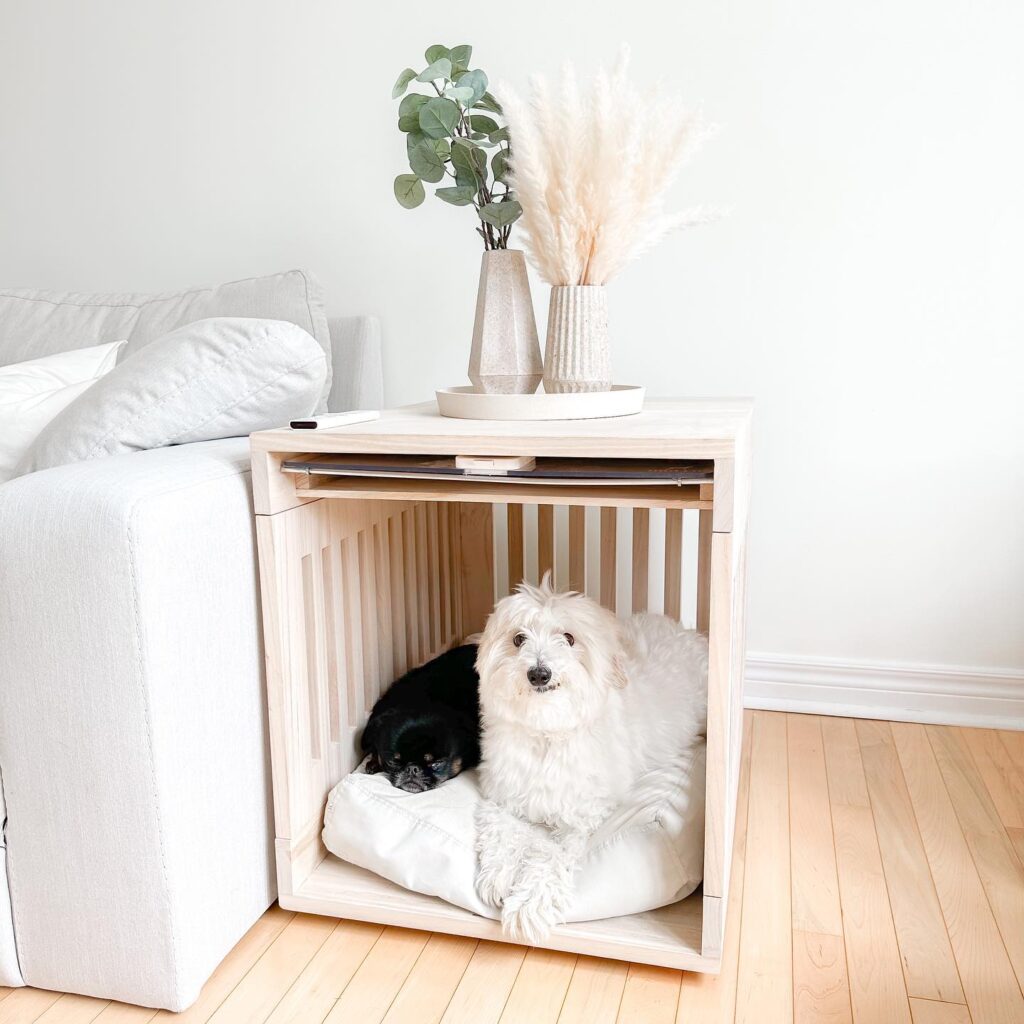
You know that moment when your golden has claimed the entire couch again and you’re left with approximately four inches of cushion? Yeah. This build fixes that — and it looks good doing it.
This light maple wood dog crate doubles as a side table, and honestly it’s giving me full Pinterest-board energy. The slatted ½-inch wood dowel sides let air flow through while keeping it open and airy. The flat-top surface holds a tray, two vases, a laptop — whatever you need within arm’s reach of the sofa.
Materials & Tools
– ¾-inch maple plywood (4 sheets)
– ½-inch wood dowels (approx. 20, cut to 14 inches)
– Wood glue + brad nails
– Sandpaper (120-grit + 220-grit)
– Natural wood stain or clear matte sealant
– Drill, saw, measuring tape, clamps
– White cushion insert (18×18 inches minimum)
Instructions
Cut your plywood into two 20×20-inch side panels, one 20×24-inch top panel, and one matching bottom panel. Sand every edge with 120-grit first, then finish with 220-grit — your dog’s coat will thank you, no splinters ever.
Drill evenly spaced holes along both side panels to receive your dowels. Space them 2 inches apart for that clean slatted look you see here. Press each dowel in with wood glue, then let it cure for a full 24 hours before adding any structural pressure.
Attach the top panel using brad nails and wood glue at each corner joint. The solid top surface holds everyday clutter off your floor, which means your living room finally looks intentional instead of chaotic. That’s the payoff — a functional table that earns its square footage twice over.
Finish with a clear matte sealant to protect the wood from dog drool and paw traffic. Tuck in a plush white cushion and watch your dog claim it immediately.
Prep Time: 30 min | Active Project Time: 3–4 hours | Difficulty Level: Intermediate
And if you’ve got a pup who also escapes every room in the house, 12 Creative DIY Dog Gate Ideas for Your Home pairs really well with this project.
One thing to remember: cut all your dowels to the exact same length before assembly — even a small variation throws off the whole slatted look and makes the top panel sit uneven.
📸 Photo credit: Instagram @parkerandcodogs
#6: DIY Console Table Dog Crate (The One That Actually Looks Like Furniture)
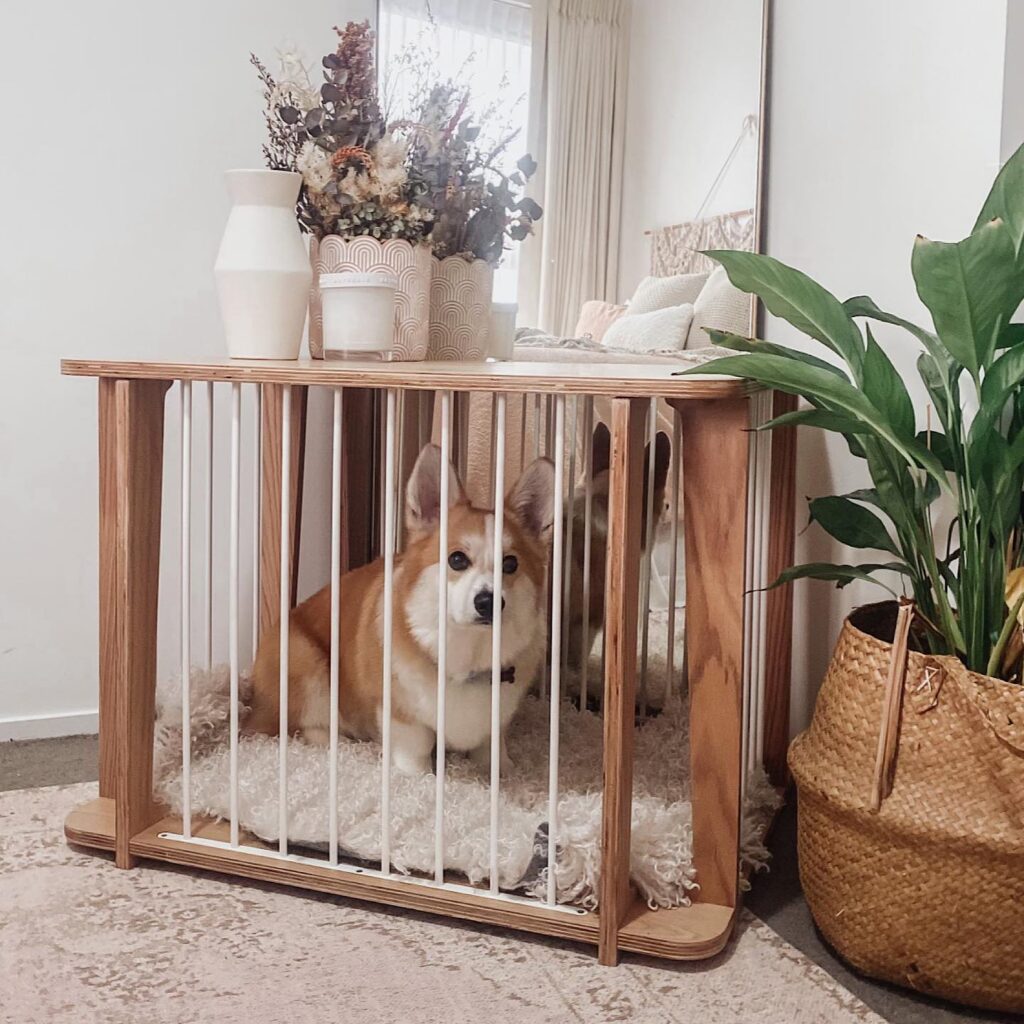
You know that moment when someone comes over and your golden is just sprawled across the living room floor, and you’re like… I wish she had a space that didn’t make my whole room look like a PetSmart?
Yeah. Same.
This build is giving me everything — warm wood tones, white metal spindles, a flat top surface styled with dried florals and a little vase. It genuinely looks like a console table. Because it basically is one.
Materials & Tools:
– 3/4″ plywood (for the top, base, and side panels)
– Red oak or pine lumber for corner posts
– White powder-coated steel rods (3/8″ diameter, cut to 18″ height)
– Wood stain (medium walnut tone)
– Wood glue + 1.5″ wood screws
– Drill, circular saw, sandpaper (120-grit then 220-grit)
– Steel rod end caps (optional but clean-looking)
Instructions
Start by cutting your plywood into a 48″ x 18″ top panel and a matching base. Sand both pieces smooth — first with 120-grit, then finish with 220-grit so the stain absorbs evenly.
Cut your four corner posts from oak at 22″ tall. These carry the whole structure, so drill pilot holes before screwing anything together. Attach the posts to the base first, then secure the top panel across all four.
Space your steel rods every 3.5″ along the front face and drill clean holes through the top and base panels. Tap each rod down with a mallet — snug fit means zero wobble. The rod spacing keeps your golden comfortably visible without gaps wide enough to stick a snout through and get stuck.
Keep this in mind: stain your wood before installing the rods, not after. Trying to stain around metal is a nightmare I learned the hard way on my cousin’s playroom shelf build. Total disaster.
Drop in a fluffy faux sheepskin mat on the base — the soft texture gives your girl a cozy surface, and having her own defined space actually helps with anxiety during guests.
The flat top is load-bearing enough to hold decor, which means storage + style + a dog den all in one footprint. That payoff is real when your living room suddenly looks intentional.
The finished crate works beautifully alongside ideas from 7 Cozy DIY Indoor Dog Kennel Ideas if you want to keep building out your pup’s little world.
Seal everything with a water-based polyurethane coat — two thin layers. It protects the wood from the inevitable drool situation without yellowing over time.
Prep Time: 30 min | Active Project Time: 4–6 hours | Difficulty Level: Intermediate
📸 Photo credit: Instagram @thepawsroom_dogcratefurniture
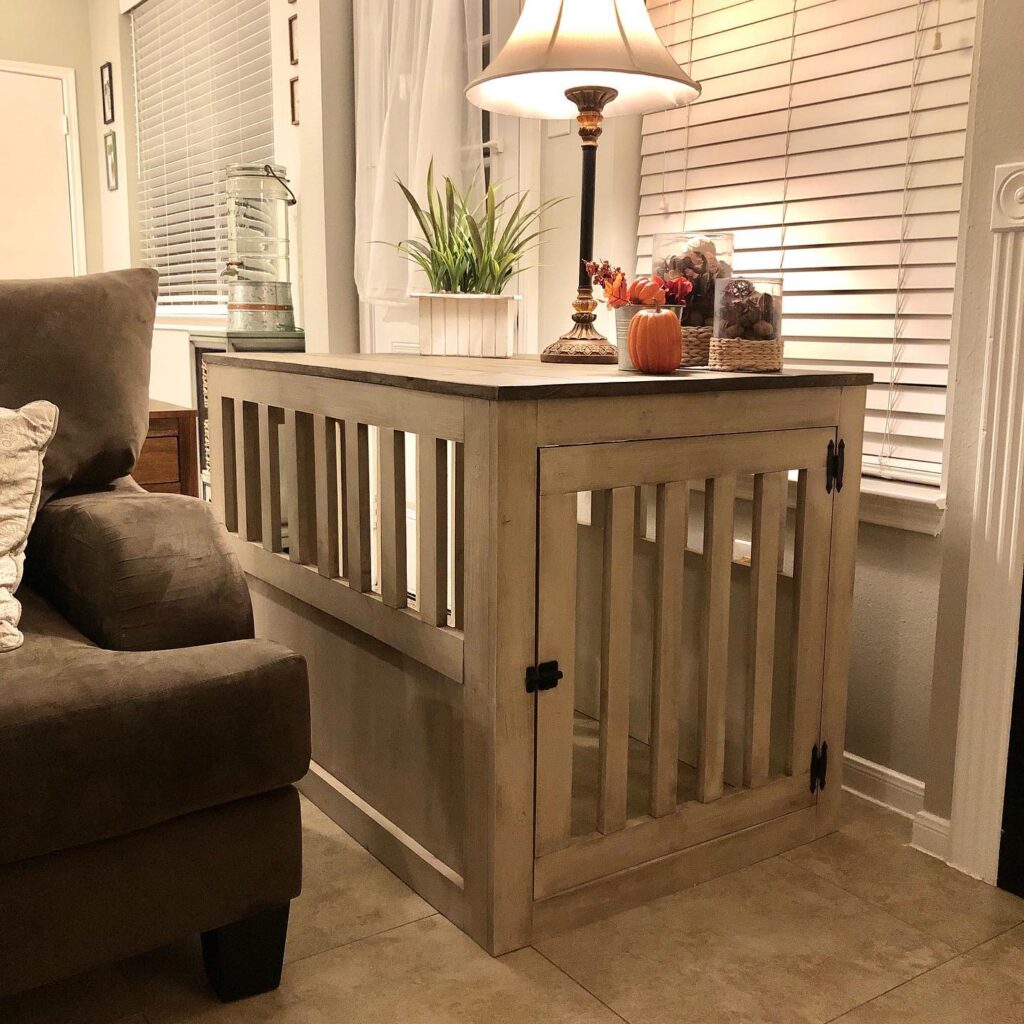
#7: DIY Dog Crate End Table With a Slatted Wood Frame (The One That Looks Like Actual Furniture)
Prep Time: 1 hour | Active Project Time: 6–8 hours | Difficulty Level: Intermediate
Okay so you know that moment when your golden retriever finally settles into her crate… but the crate is this ugly wire box just sitting there in your living room like a giant eyesore? Yeah. My cousin had the same thing happening and she almost cried because she’d just redone her whole living room in that warm farmhouse neutral palette. This build completely fixed that.
What you’re looking at here is a solid pine wood dog crate built to double as an end table. The finish is a gray-washed stain over natural pine, with a dark walnut stained top that creates that two-tone contrast. The front panel has a hinged door using black iron hardware, and the whole thing sits flush against the wall like it was always meant to be there.
Materials & Tools:
– 1×4 pine boards (approximately 8 feet each, qty 14)
– ¾-inch plywood sheet for the top surface
– Gray chalk paint or diluted gray stain
– Dark walnut wood stain (for the top)
– Black iron hinges (2) and black iron latch (1)
– Wood glue + 2-inch pocket hole screws
– Kreg jig or pocket hole jig
– Orbital sander + 120-grit and 220-grit sandpaper
– Paintbrush and lint-free rags
– Tape measure, miter saw, drill
Instructions
Start by cutting your 1×4 pine boards to size. You’ll need four corner posts at 28 inches tall, and your horizontal frame pieces will depend on your dog’s size — for a golden retriever, cut them at 42 inches for length and 24 inches for width. Sand every piece with 120-grit before you do anything else. Trust me on this, it saves you so much grief later.
Use your Kreg jig to drill pocket holes at both ends of every horizontal board. This is what gives the frame its strength without visible hardware on the outside. Assemble the two side panels first by attaching horizontal top and bottom rails between two corner posts, then fill in the vertical slats — cut these at roughly 18 inches and space them 2 inches apart. Even spacing is what makes this look high-end instead of homemade.
And here’s where the door panel comes in. Build it as a separate slatted frame using the same spacing, then attach it to the front right corner post using your black iron hinges. The door gives your pup easy access while keeping the whole structure solid — that enclosed feeling actually helps dogs feel secure, which means less anxious behavior and more calm evenings for you.
Once the frame is fully assembled, mix your gray chalk paint with a little water to get a thin, almost dry-brush consistency. Work it into the wood grain and wipe back with a rag. That’s what creates the weathered, layered look you see in the photo. Let it cure for at least 4 hours.
For the top, cut your ¾-inch plywood to overhang the frame by about 1 inch on each side. Apply the dark walnut stain in long even strokes and let it dry fully before placing it on top. You can secure it with L-brackets underneath so it doesn’t shift.
The two-tone finish — gray base with a dark top — means it reads as a real piece of furniture, not a pet product. Style the top with a lamp, a small plant, and some seasonal decor and nobody walking in will even think about what’s underneath.
Distress the gray-washed sections lightly with 220-grit sandpaper after it dries. Hitting the edges and corners adds that worn farmhouse character and actually hides any small imperfections in your cuts.
📸 Photo credit: Instagram @thenerdybuilder
The One Mistake That Ruins Most DIY Dog Crate Furniture (And How to Skip It)
Okay, so here’s the thing nobody tells you before you spend a whole weekend building a beautiful crate end table — ventilation gaps will make or break the whole project.
Most people frame the crate opening perfectly, then nail down decorative side panels that block 80% of the airflow. Your golden retriever ends up hot and anxious inside what feels like a wooden box. Not good.
Real talk: space your side slats at least 1.5 inches apart, even if it looks “too open” during the build. Once you style it with a throw and a lamp on top, trust me, nobody notices the gaps. But your dog absolutely notices the airflow.
Also — and this one saved me a serious headache — always build the furniture frame around a wire crate insert instead of replacing it. That wire insert keeps proper ventilation AND makes cleaning so much easier when muddy paw situations happen.
Prime every interior wood surface before your pup moves in. Untreated wood absorbs odors and moisture faster than you’d think, and refinishing the inside later is a nightmare.
Your Golden Deserves a Clean, Happy Home Too
Okay, you’ve got everything you need to stop dreading muddy paw prints and start actually enjoying your dog.
Pick one thing from this post and try it this week. Just one. Maybe it’s the rug swap, maybe it’s finally setting up a dedicated dog feeding station that doesn’t make your kitchen look chaotic. Small moves add up fast.
Your home can look exactly like your Pinterest board — golden retriever and all. You don’t have to choose between a beautiful space and a happy, slobbery dog.
So tell me — what’s the first change you’re making?