
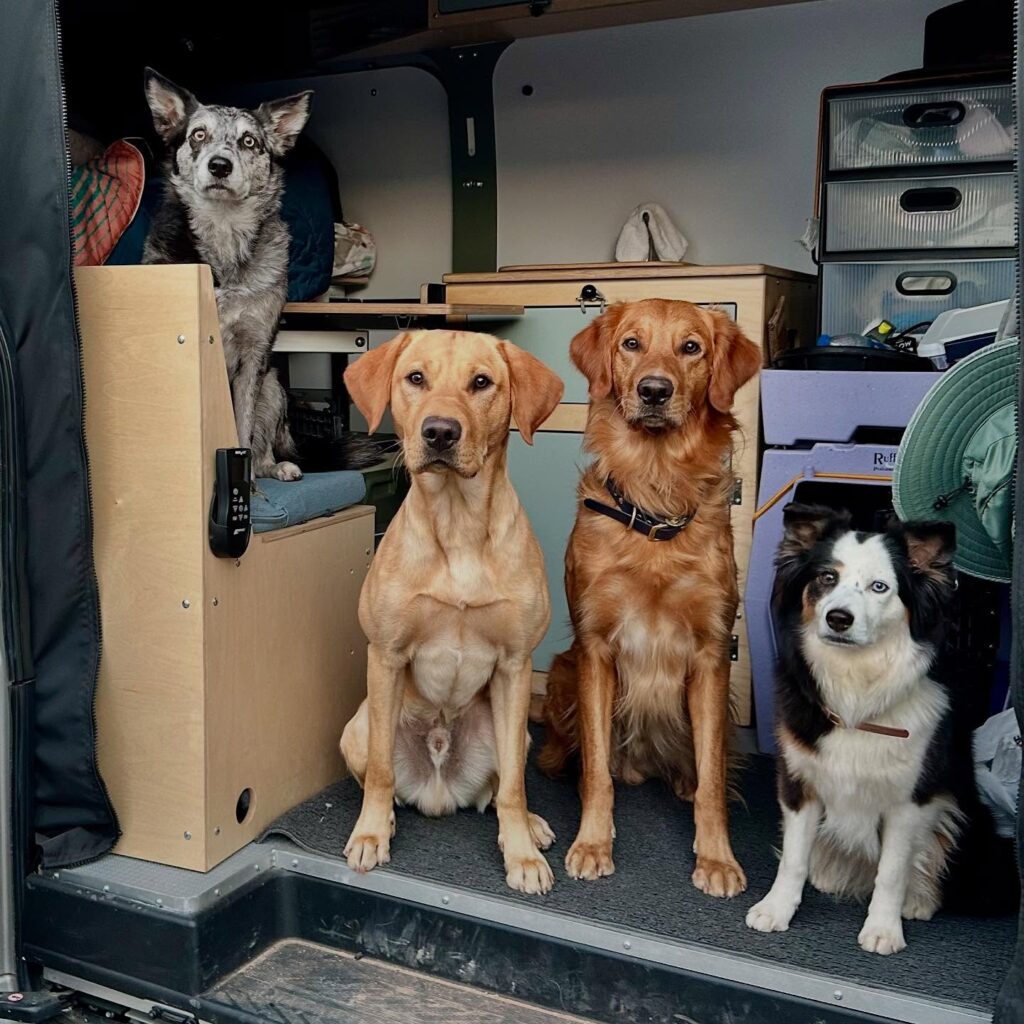
Your golden retriever is basically a walking mud machine, right? Mine too — I swear they find every puddle within a five-mile radius.
But here’s the thing. Some dogs aren’t just chaos in a fur coat. Some dogs literally save lives — guiding someone home safely, sensing a seizure before it happens, or pulling a wheelchair through a grocery store like it’s nothing.
And picking the wrong breed for that job? That’s not just inconvenient. It’s dangerous.
So if you’ve ever wondered which service dog breeds actually have what it takes — the focus, the calm, the drive — I’ve done the digging for you.
These 10 breeds aren’t just sweet faces (though they definitely have those too). Each one brings something specific to the table, matched to real human needs.
Let’s get into it.
#1: Standard Poodle — The Elegant Overachiever of Service Dogs
Picture this: your golden is flopped on the couch, shedding everywhere, and you’re thinking, okay, but what if my dog could also… help me? That’s exactly where Standard Poodles come in and honestly, they’ll blow your mind.
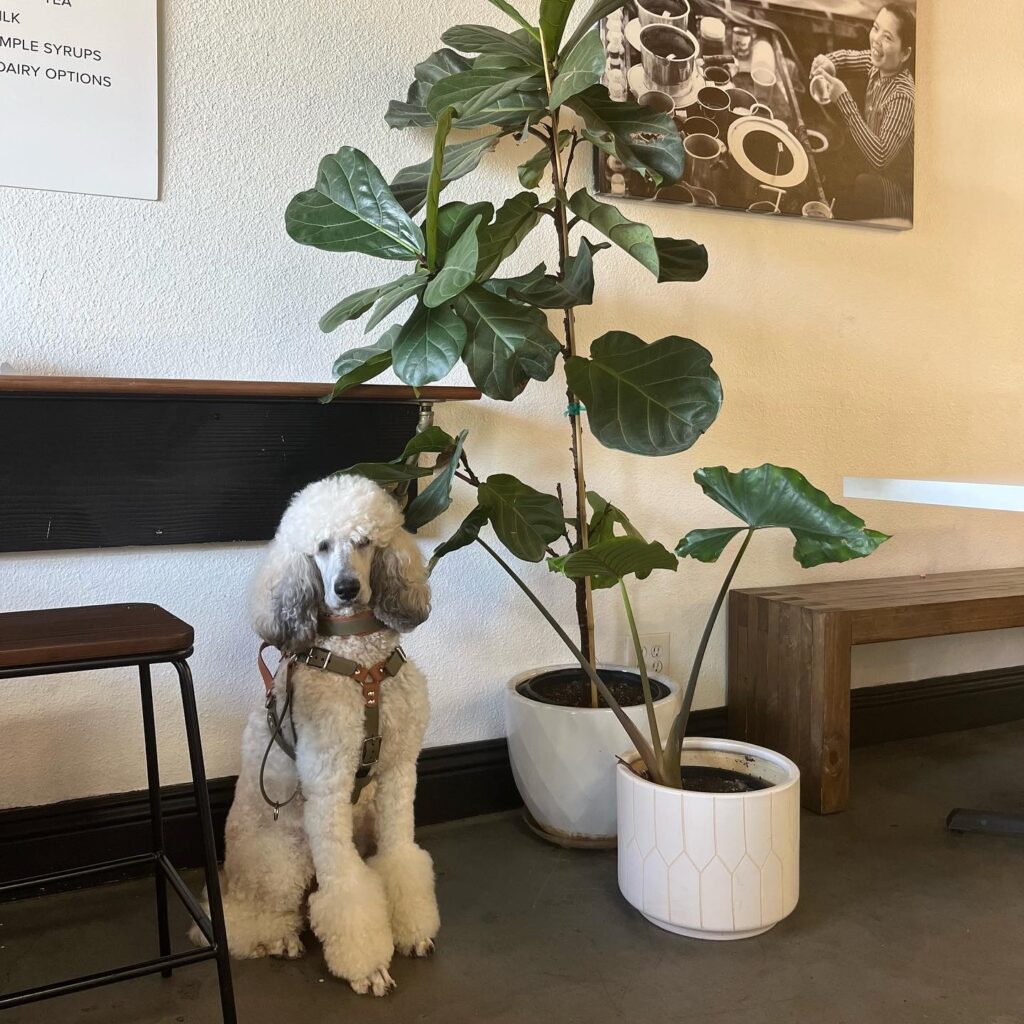
That fluffy white Standard Poodle in the photo — sitting perfectly still next to a fiddle leaf fig in a white ceramic pot, inside what looks like a dog-friendly coffee shop — is not just being cute. That’s a trained service dog doing its job. And the posture? Calm, alert, grounded. That’s breed-specific temperament, not just good training.
Standard Poodles wear a brown leather harness with double buckles — that’s not just aesthetic. Leather harnesses distribute pressure across the chest without pulling on the neck, which means a dog this size (typically 45–70 lbs) won’t throw you off balance mid-task.
They’re hypoallergenic, which means their dense, curly coat sheds zero — public spaces and people with allergies aren’t a problem. Trainers love them because their working memory rivals Border Collies.
Want an easy win? Pair a Standard Poodle’s natural retrieve instinct with mobility assistance training early — that instinct becomes a feature, the training becomes a tool, and you get a partner who can literally open doors for you.
For those just starting the dog ownership journey, Best Dog Breeds for First-Time Owners! is worth bookmarking.
📸 Photo credit: Instagram @cellosconcerto
#2: Australian Shepherd – The Brilliant, Blue-Eyed Service Dog That Never Misses a Beat
You know that moment when your golden is just staring at you, like he already knows you’re about to have a rough day before you even get up? That’s the kind of intuition we’re talking about here — but the Australian Shepherd takes it to a whole different level.
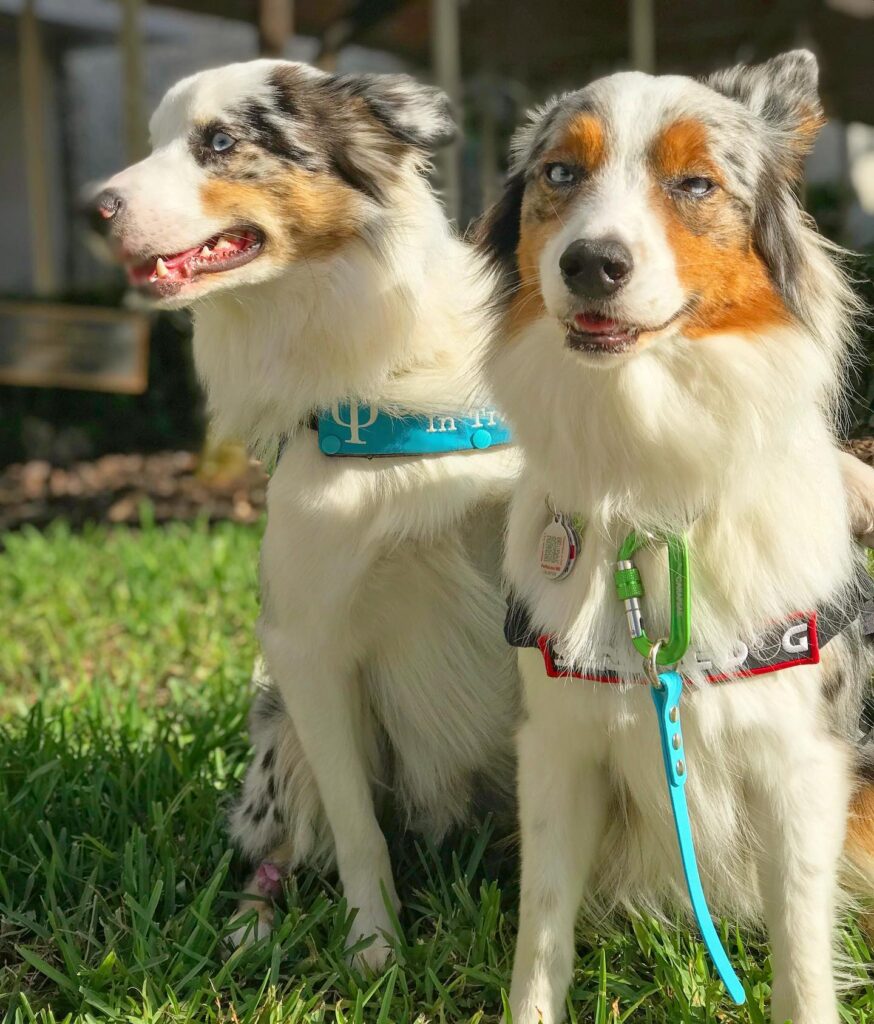
Look at these two. The blue merle on the left and the red merle on the right — both rocking those blue eyes that feel like they’re reading your soul. One’s wearing a teal embroidered collar, the other has a red and gray harness with a green carabiner clip attached to a teal leash. That setup isn’t just cute. That’s a working dog, dressed for the job.
Aussies come in four coat patterns — blue merle, red merle, black, and red — all with that signature medium-length double coat that’s thick enough to handle outdoor work but soft enough to curl up next to you after.
The harness you’re seeing here is key. A padded no-pull service harness with a front clip and handle gives the handler control and the dog comfort during long working hours. Pair it with a QR code ID tag (you can see one on the right pup) so anyone can scan it and pull up the dog’s info instantly.
Aussies rank in the top tier for trainability — they learn tasks like alerting to seizures, interrupting anxiety spirals, and guiding through crowds. Their herding instinct actually sharpens their focus on one person, which makes them naturally suited for psychiatric and medical alert work.
Train them young. Aussies need mental stimulation daily — think puzzle feeders, scent work, and task repetition — or that brilliant brain will find its own entertainment (and you won’t love it).
📸 Photo credit: Instagram @galactic_k9
#3: Long-Haired German Shepherd — The Loyal Gentle Giant of Service Work
You know that moment when your golden does something so perfectly timed — like nudging your hand right when you’re stressed — and you think, “how did you know?” That’s exactly the energy a Long-Haired German Shepherd brings to service work, but turned up to a whole other level.
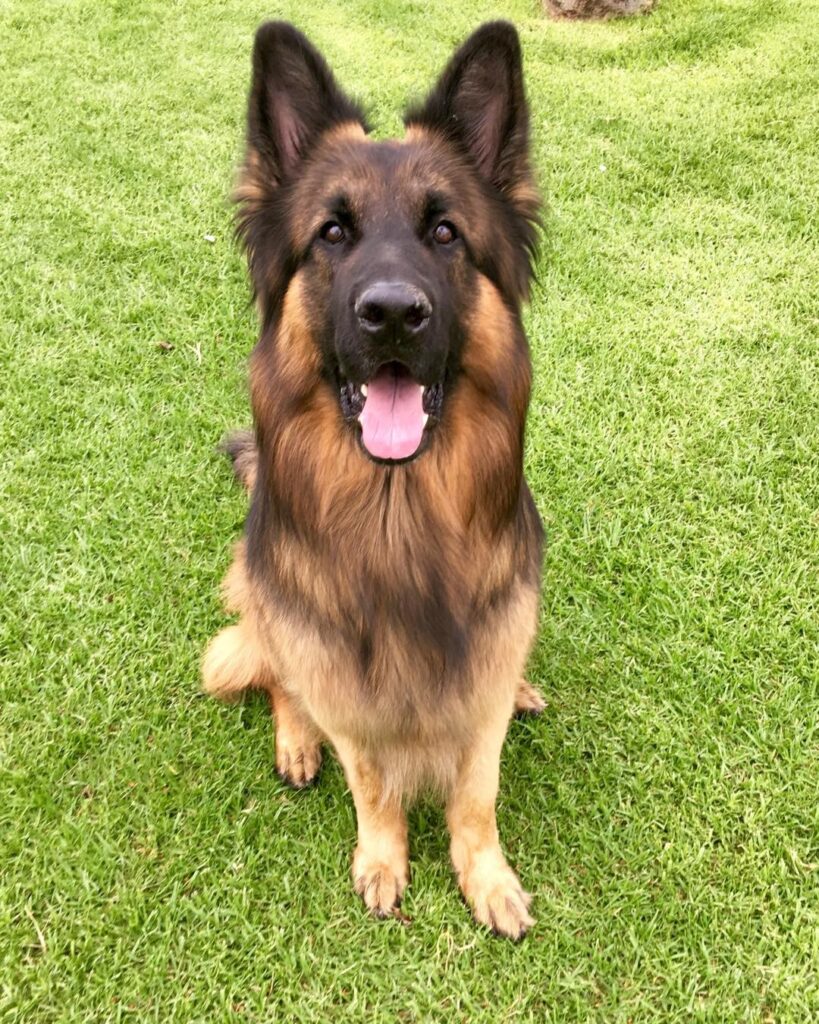
This dog in the photo? Look at that posture. Sitting upright on the grass, ears sharp, eyes locked on their person — that’s not just a pretty dog. That’s years of selective breeding for focus and emotional attunement showing up in one calm, grounded sit.
The Long-Haired German Shepherd carries the same working genes as the standard coat variety, but with a dense, flowing double coat in the classic black-and-tan saddle pattern you see here. That coat — longer around the chest, ears, and hindquarters — isn’t just gorgeous. It actually signals a slightly softer temperament compared to short-coat lines, which makes them exceptional candidates for psychiatric and mobility service roles.
What this means for you: these dogs bond hard. They track your mood before you do.
They typically stand 24–26 inches at the shoulder and weigh 75–95 lbs — big enough for forward momentum support, grounded enough for crowd navigation work.
Keep their coat mat-free with a slicker brush every 2–3 days. Shedding season is real, so a diet supporting skin and coat health makes a noticeable difference in coat quality and overall comfort.
📸 Photo credit: Instagram @daybyday76
#4: American Staffordshire Terrier – The Misunderstood Hero of Service Work
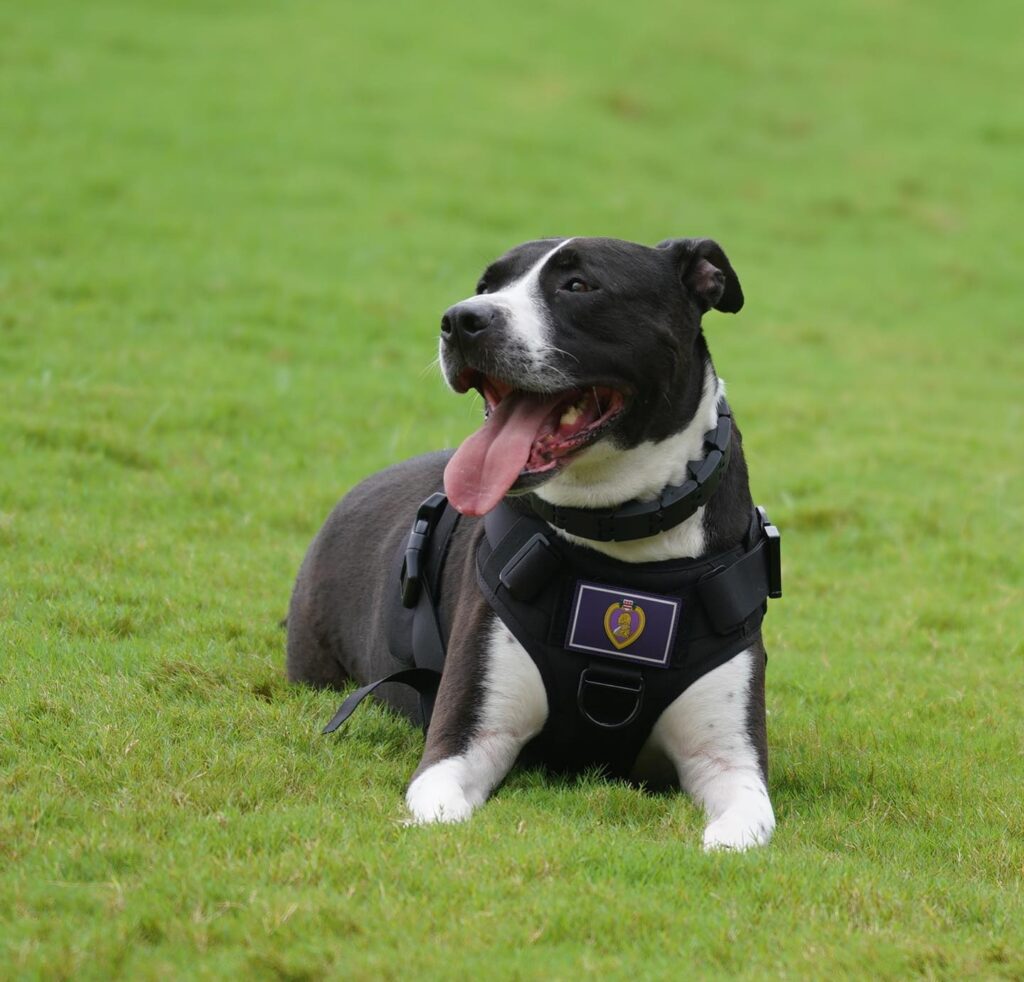
Okay, so you know that moment when your golden does something so ridiculously smart and you think — why isn’t she doing something official with this brain? That’s literally how I felt the first time I saw an AmStaff in a service vest. I had no idea.
This gray-and-white American Staffordshire Terrier is wearing a black tactical harness with a Purple Heart patch — and honestly? He looks born for it. That broad chest, those focused eyes, that calm-but-alert posture while lying on the grass. This is not a random dog in a costume. This is a working dog doing his thing.
AmStaffs weigh between 40–70 lbs and their short, dense coat in classic blue-gray with white markings makes them easy to groom between service shifts. Their muscular, compact build isn’t just for looks — it gives them the physical stability to perform deep pressure therapy, which means they press their body weight against their handler during anxiety episodes.
The MOLLE-compatible tactical harness you see here — all-black nylon with side-release buckles and a D-ring handle — lets handlers redirect or guide the dog without pulling on the neck.
My cousin has PTSD and her AmStaff literally woke her from a nightmare three times last week. That’s the payoff nobody talks about.
Train early with positive reinforcement and socialization — their loyalty, once earned, is unshakeable.
📸 Photo credit: Instagram @ncr1183
#5: English Springer Spaniel — The Devoted Search-and-Rescue Partner
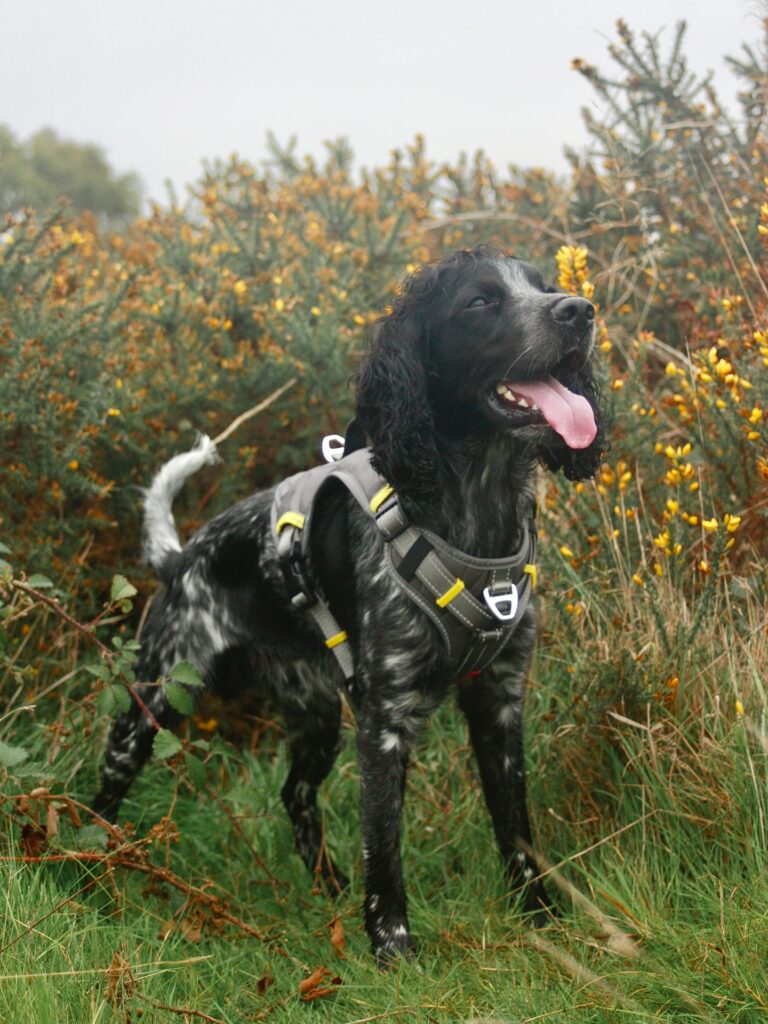
Your golden is a sweetheart, but picture this — a dog that doesn’t just follow you around the house but actually reads the room. Like, senses when something is genuinely wrong before you do.
That’s the English Springer Spaniel in a nutshell.
The dog in this photo? Classic black-and-white Springer, coat still damp from working through wet brush, harness locked on, tail mid-wag. And that look on his face — tongue out, eyes scanning upward — that’s not just happiness. That’s a dog built to work.
Springers carry a double-layered coat — a dense, weather-resistant outer layer over soft insulating fur — which lets them push through gorse, bramble, and mud without slowing down. You can see exactly that in the image. The yellow gorse behind him isn’t decorative background. That’s his actual office.
The gray tactical harness with yellow accents the dog is wearing isn’t random. Search-and-rescue handlers pick high-visibility hardware so they can spot their dog in dense brush fast. The front D-ring clip controls direction without pulling on the spine.
Springers rank among the top breeds for scent detection work — their nose processes smell at roughly 40x the capacity of a human’s. That’s why they work airports, disaster zones, and trail searches.
Keep their ears checked weekly. That gorgeous floppy fur traps moisture after outdoor work, and ear infections can ground a working dog fast.
📸 Photo credit: Instagram @button.boops
#6: Black Labrador Retriever — The Loyal, Always-Ready Service Dog
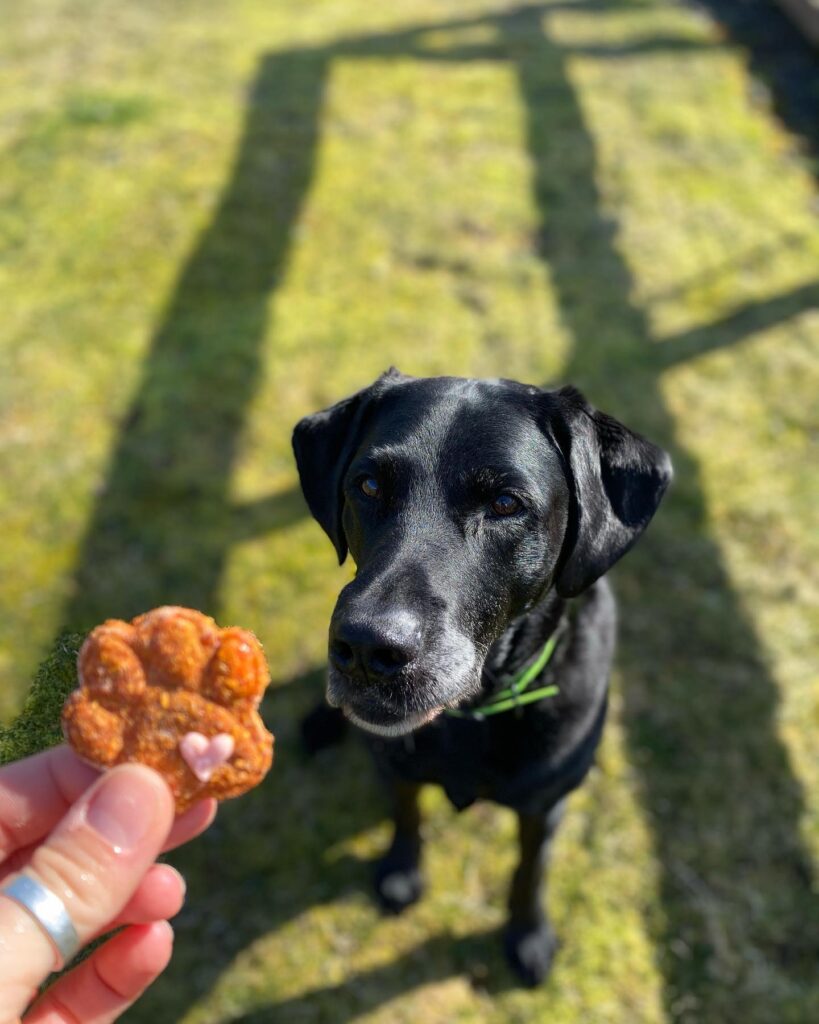
You know that moment when you hold out a treat and your dog just locks eyes with you like you’re the only person on the planet? That’s not just good manners — that’s instinct. And for the black Lab in this photo, that calm, focused gaze is basically a superpower.
Black Labrador Retrievers are one of the most requested service dog breeds, and honestly, it makes total sense. That short, dense double coat in classic jet black isn’t just gorgeous — it’s low-maintenance enough that your dog stays clean and workable even after a long day out. The green collar here signals an active working dog, and Labs wear that role effortlessly.
The paw-shaped treat being held up is a homemade dog biscuit, likely made with sweet potato, oat flour, and peanut butter — all Lab-approved ingredients that support joint health (super important for a breed that can hit 55–80 lbs). Making your own treats means you control exactly what goes into them, which matters big-time for a working dog’s diet.
Real talk: Labs have a soft mouth grip — they can carry a raw egg without cracking it — which makes them ideal for mobility assistance, medical alert, and guide work.
If you’re baking treats for your golden, swap oat flour for almond flour and add a pinch of turmeric for inflammation support.
📸 Photo credit: Instagram @pawsitive_chance
#7: Siberian Husky — The Loyal, Eyes-Wide-Open Service Dog You Didn’t See Coming
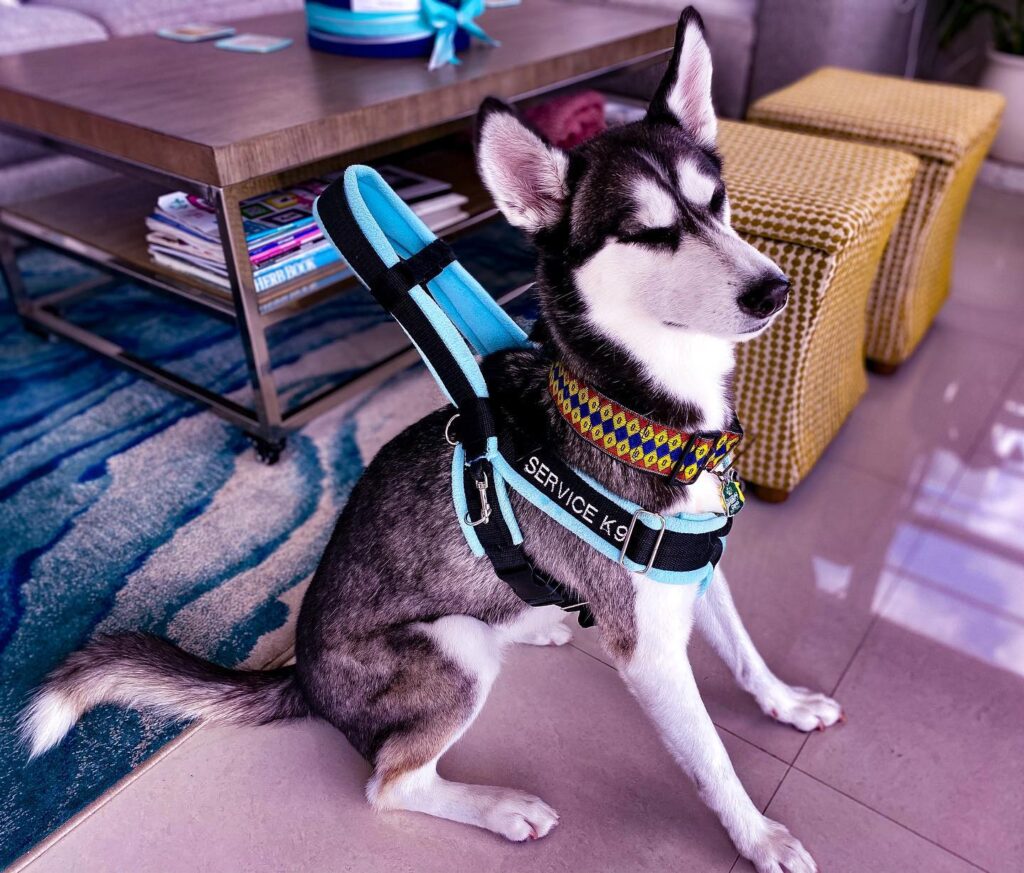
You know that moment when your golden is pressed against your leg at 2am and you just know he felt something shift before you did? That’s exactly the kind of bond we’re talking about here.
This black-and-white Siberian Husky is wearing a black nylon “Service K9” harness with teal blue padding and a vertical grab handle — that handle is the whole story. It lets a handler grip and stabilize with one firm pull, no fumbling. Paired with a multicolor diamond-pattern collar in red, yellow, and navy, this dog is dressed for a real job.
The harness setup here is a dual-attachment Y-front design, which distributes pressure across the chest instead of the throat. That means the dog can alert, brace, or guide without strain. The teal foam padding on the straps prevents chafing during long work sessions — comfort enables focus, and focus saves lives.
Huskies bring intense loyalty and a near-telepathic sensitivity to human emotion. They’re surprisingly effective for psychiatric service work, seizure alert, and mobility assistance for lighter-framed handlers.
The living space behind him — warm tile floors, a low metal-frame coffee table, stacked books, and that bold yellow geometric ottoman — gives him clear sightlines and room to reposition fast. A low-clutter floor layout like this matters more than people think for a working dog.
Keep the harness handle unobstructed. Never clip accessories or bags to it — that handle needs to be grab-ready, always.
📸 Photo credit: Instagram @servicesnowdog
#8: Rottweiler — The Loyal Powerhouse You Didn’t Know Could Be a Service Dog
Your golden is sprawled across the couch, shedding everywhere, and you’re thinking — okay, I get dogs. But then someone walks by with a Rottweiler in a service vest and you do a double-take.
Yeah. That happened to me at a farmer’s market last summer. This massive, black-and-tan Rottweiler was guiding a woman through the crowd, calm as anything, totally locked in. And I just stood there with my coffee going — wait, really?
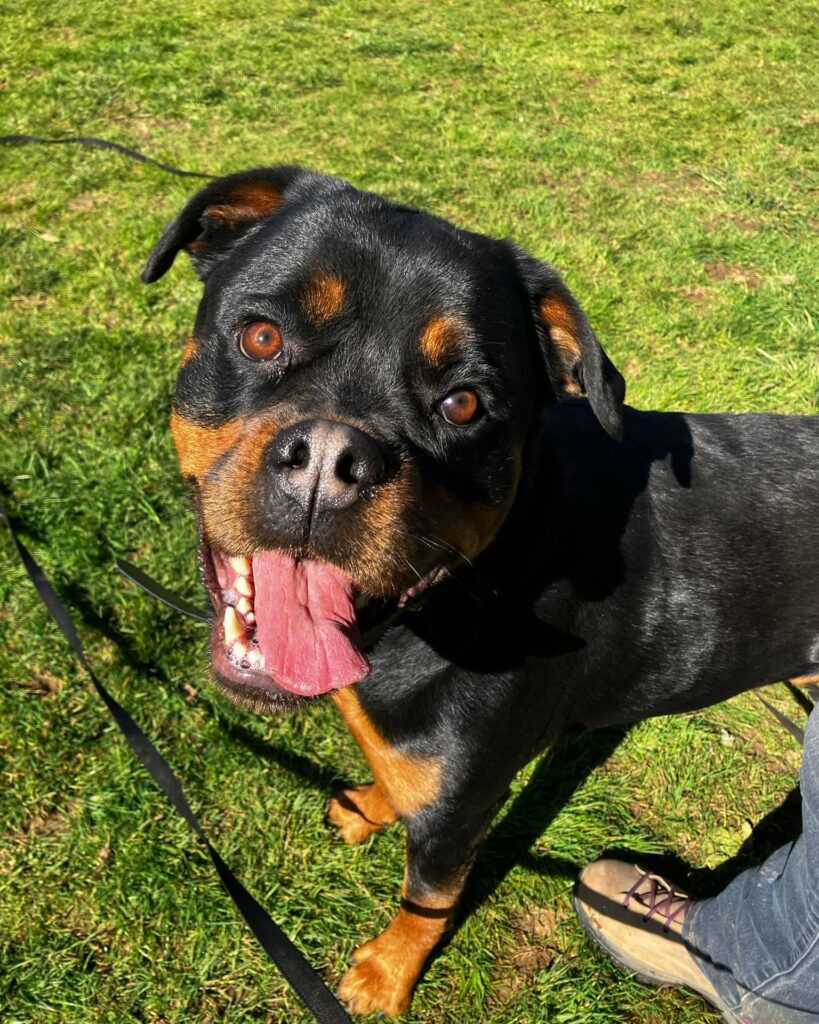
Rottweilers are one of the most underestimated service dog breeds out there. They carry 60–135 pounds of pure, focused muscle, built with a short, dense black coat with distinct mahogany tan markings above the eyes, on the muzzle, chest, and legs — exactly like the beauty in this photo. That open-mouthed, tongue-out grin? Don’t let it fool you. Behind those warm brown eyes is a dog that’s actively working, reading its handler, and staying present.
Their broad chest and low center of gravity make them ideal for mobility assistance — bracing, counterbalancing, even pulling a wheelchair. They’re also used in psychiatric service roles, PTSD support, and diabetic alert work because of their sharp scent detection ability.
And here’s something most people don’t know — Rottweilers bond hard to one person. That intensity, which people mistake for aggression, is actually what makes them such precise, reliable service animals. A well-socialized Rottweiler on a standard 6-foot leash (like the black nylon one you see here) is focused, not reactive.
Training typically starts at 8–10 weeks and requires 18–24 months of structured work with a certified trainer before they’re placed in a service role.
Keep their short coat brushed weekly and watch their hips and joints — Rottweilers are prone to hip dysplasia, so a high-protein diet and joint supplements from 12 months onward matter a lot for working dogs.
📸 Photo credit: Instagram @shannon.walker.dog.trainer
#9: Dogo Argentino — The Powerhouse Service Dog You Probably Didn’t See Coming
Okay so you know that moment when your golden does that full-body wiggle and somehow takes out your coffee table decor? Now picture that energy but channeled into something incredibly focused and intentional. That’s a Dogo Argentino in work mode.
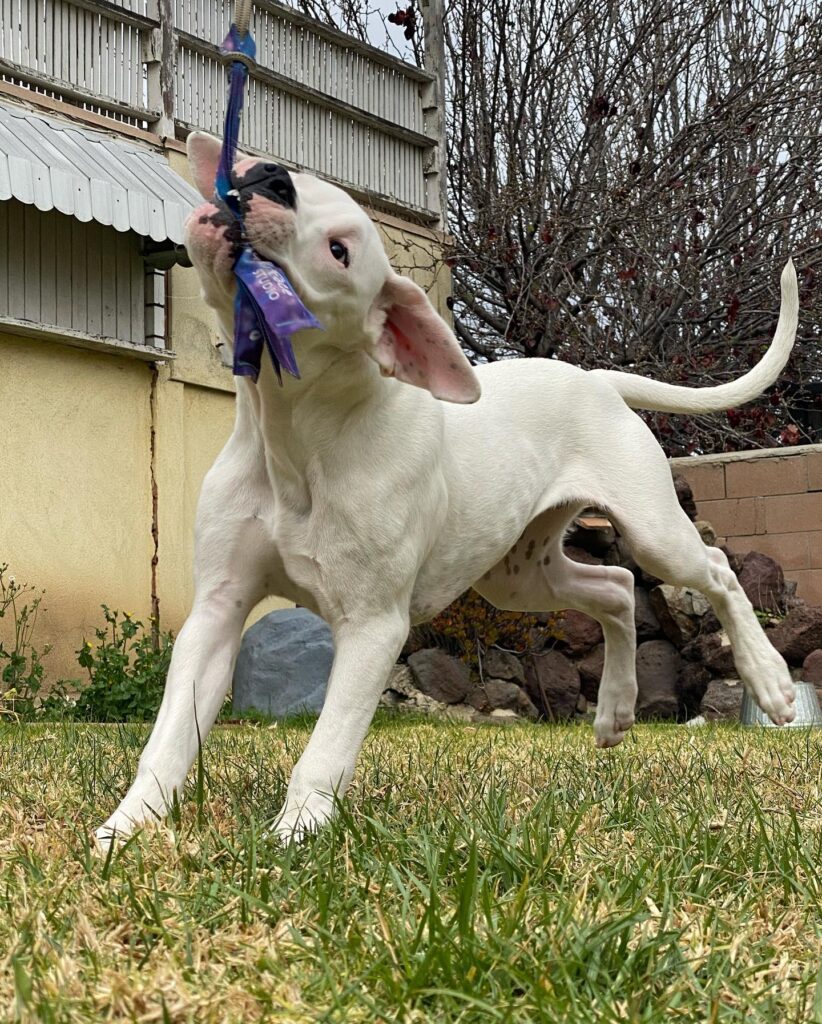
This all-white, short-coat breed is built like an athlete — muscular frame, deep chest, and a jaw strength that makes tug toys disappear fast. And that’s not just for show. That drive and physical power is exactly what makes them exceptional mobility assistance and personal protection service dogs.
The Dogo’s pure white coat isn’t just striking. It actually makes vest markings and service dog gear pop with zero visual confusion in public spaces — handlers can spot their dog in a crowd immediately. That short, single-layer coat means grooming stays simple, which is a real bonus when your dog is working a full schedule.
That athletic crouch you see in this photo? That’s prey drive meeting trainability. Dogo Argentinos carry South American mastiff and bull terrier lineage, which gives them both endurance and a calm-under-pressure temperament when properly socialized young.
Start leash and impulse control training before 12 weeks. That prey drive that makes them brilliant service candidates can get ahead of you fast if you wait. Pair physical training with best dog backyard ideas for a safe and fun outdoor space — a secure yard is non-negotiable for this breed.
And don’t skip the ear checks. White Dogos carry a higher rate of congenital deafness, so early BAER testing matters a lot for service placement.
📸 Photo credit: Instagram @thatdogobeau
#10: Siberian Husky — The Stunning Service Dog That’ll Stop You in Your Tracks
Your golden retriever probably leaves a trail of fur on every surface you own — the couch, the rug, that Pinterest-worthy entryway mat. Now picture a dog twice as striking, twice as intense, and surprisingly capable of medical alert work.
That’s a Siberian Husky as a service dog.
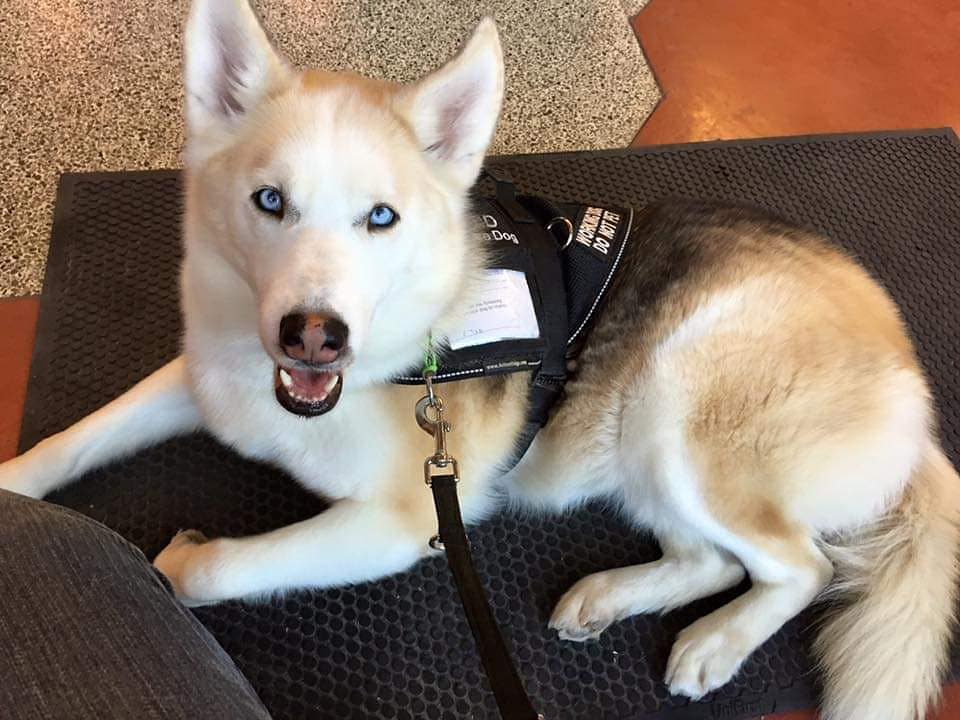
This photo says everything. A cream-and-tan Husky with piercing blue eyes lies calm on a black rubber anti-fatigue mat, wearing a black nylon service vest with bold white lettering that reads “Working Dog — Do Not Pet.” The leash is black leather, clipped to a stainless steel D-ring on the harness. And honestly? The whole setup looks almost too beautiful to be functional.
But it is functional.
Huskies working as service dogs are most often trained for psychiatric service work — specifically PTSD alert, anxiety interruption, and deep pressure therapy. Their thick double coat (cream white with tan saddle markings) isn’t just gorgeous — it makes them ideal for tactile grounding work, where the dog’s weight and warmth calm their handler during a crisis.
The harness shown here is a no-pull tactical vest with a document pouch on the chest — that’s where handlers carry their dog’s certification paperwork. It’s a size medium, which fits most adult Huskies at 45–60 lbs.
Huskies require 2+ hours of daily exercise to stay focused during service work. A bored Husky in a vest is not a working Husky — keep their body tired so their mind stays sharp on the job.
📸 Photo credit: Instagram @watchmy6service
The Breed Trait Most Service Dog Handlers Learn Too Late
Okay, real talk — most people pick a service dog breed based on how they look in training videos. Golden retrievers trotting perfectly beside someone. Labs sitting at attention. It looks so clean.
Here’s what those videos don’t show you: stress recovery time matters more than obedience scores.
A dog that bounces back fast after a loud noise, a stranger’s sudden movement, or a chaotic grocery store — that dog will outlast a “perfectly trained” dog who just… shuts down under pressure.
Golden retrievers actually excel here, by the way. Their emotional reset button is almost unfair compared to other breeds.
My cousin trained service dogs for six years, and she told me the number one pitfall families hit is choosing a breed with high intelligence but low resilience. Border collies, I’m looking at you. Brilliant dogs. Terrible at unpredictable environments.
So when you’re researching breeds, ask the trainer specifically about stress recovery — not just task completion.
That one question will save you years of frustration.
Your Couch Deserves Better — And So Do You
Okay, so here’s the thing. You’ve already got the golden retriever, the Pinterest board, the gorgeous home. The only thing missing? A cover that actually keeps up with your dog’s chaos.
Pick one that fits your vibe and just try it. Wash it once. Watch it come out looking brand new. That moment alone will make you want to cover every piece of furniture you own.
And honestly? Your living room can be both dog-friendly and beautiful — no compromises. So which room are you tackling first: the couch your golden claims every night, or the armchair he’s not supposed to be on?