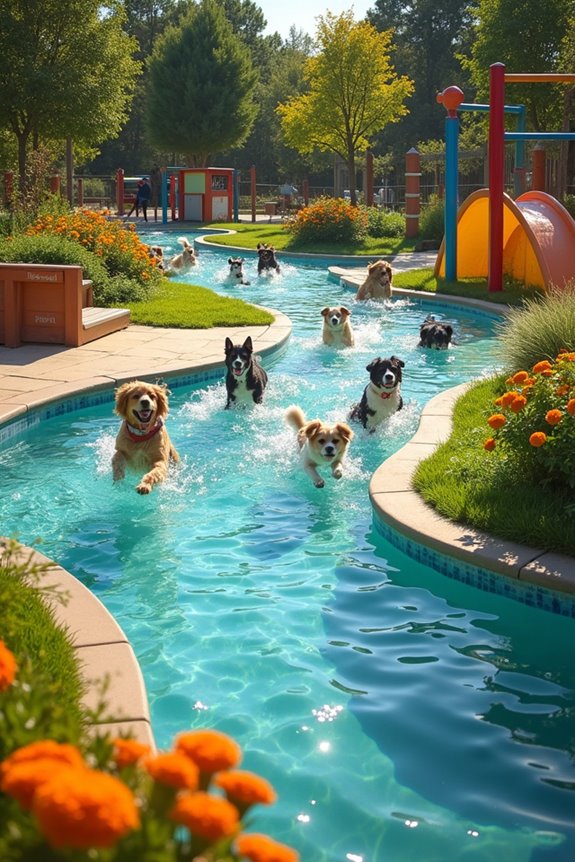
Planning your next dog park adventure? You’ll want to spice things up a bit. Imagine colorful agility courses, splash zones for a quick cool down, and themed play areas that keep tails wagging. Ever considered how much fun a few obstacles could add? Or how about cozy seating for you and your fellow dog lovers? Stick around, because there’s a lot more you can do to create the ultimate day in the park for both you and your furry friends.
The Agility Course Layout
When you think about setting up an agility course for your pup, you’ll want to keep the layout fun and engaging.
Have you ever watched your dog try to navigate obstacles?
Picture colorful signs guiding them through a themed zone, with just the right arrangement of hurdles and tunnels to keep them excited and enthusiastic to play. It’s essential to invest in dog agility equipment that enhances their training experience and helps build their skills effectively. Additionally, incorporating premium dog gadgets can greatly improve their enjoyment and motivation during training sessions.
1. Obstacle Course Configuration
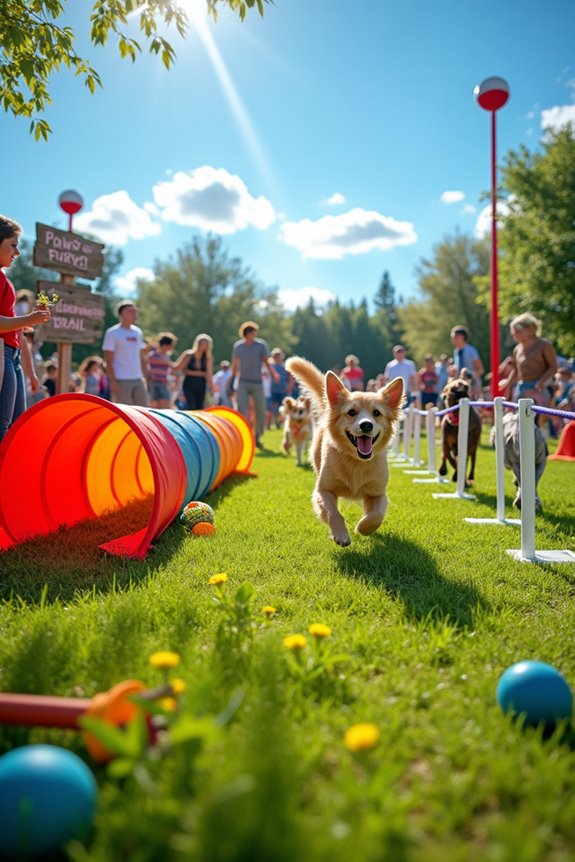
When it comes to creating an unforgettable dog park experience, an obstacle course is like the cherry on top of a sundae. Not only will it give your pup a workout, but it adds that extra layer of excitement and fun, turning an ordinary day at the park into an epic adventure. Plus, it creates a vibrant atmosphere packed with wagging tails and happy barks—who wouldn’t want to be a part of that? Additionally, using premium dog toys during the agility course can enhance engagement and motivation for your furry friend.
So, let’s talk about how to set up your own agility course. First things first, gather your supplies. You’ll need a mix of items: some tunnels (you can make these with hula hoops and some lightweight fabric), jumping hurdles (think PVC pipes), and maybe a couple of weave poles (old broomsticks jammed into the ground will work perfectly). Your dog’s whimsy is the limit, so don’t hesitate to get creative.
Next, think about your layout. Arrange the obstacles in a fluid pattern where dogs can flow from one challenge to another. Envision this: start with a tunnel, follow with a jump, then some weave poles, and finish with a treat station. Get some nice big signs to label each part—because what’s more fun than a course with a title? For extra flair, you could even theme it. How about “The Wilderness Trail” or “Paws of Fury”? Hey, the sky’s the limit!
Once you’ve set it all up, your work isn’t done yet! Test it out with your dog. I found out the hard way that my border collie thinks weave poles are merely suggestions. So, practice runs are essential—not just for your pup but also to see if your layout flows smoothly. Remember, it’s all about having fun, making adjustments, and cheering each other on. Additionally, investing in some professional dog agility equipment can elevate your course to help your pup reach new heights.
Don’t forget to invite your friends, four-legged ones and two-legged ones alike. You’ll be amazed at how quickly you create a community. Seriously, there’s nothing quite like a group of doggos barking joyously through an obstacle course while their humans cheer (or laugh at their own pups going the wrong way).
2. Obstacle Arrangement Strategy
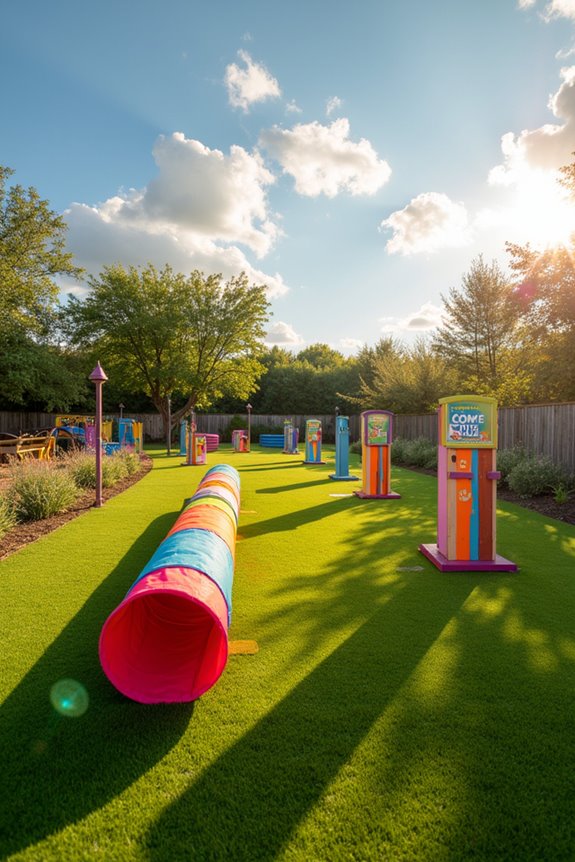
When planning an agility course layout, you want to strike a balance between challenge and fun. Well-thought-out obstacles create not just a place for exercise, but a vibrant environment that encourages socialization and tail-wagging excitement.
Conceive of watching dogs expertly weave through poles, bounding over jumps, and maneuvering through tunnels—all while their owners cheer them on, sharing laughs and stories. It’s like a mini festival for pups.
So, what’s the key to a well-arranged agility course? Start with a flow that feels natural. I like to envision a path that leads dogs from one obstacle to the next, almost like a dancer showing off their moves.
Consider this: the entry point is a soft grassy area where dogs can sniff around, then, without missing a beat, they encounter the first challenge, perhaps a tunnel made from colorful fabric. After that, a jump awaits, and finally, some weave poles. Make sure these obstacles are spaced out enough for quick run-throughs but close enough to create excitement.
Next, think about signage. I mean, who doesn’t love a sign that says “Paws of Fury”? These markers not only inform but also add a playful theme to your course. Your dog will feel like they’re on a mission, and their energy will be contagious.
You might want to keep your phone handy for those Instagram moments—because nothing says “best day ever” like your dog jumping through hoops in a heroic pose.
Now, make sure you mix it up. No one wants a monotonous routine, and neither do your four-legged friends. Swap out hurdles for wobble boards or add a ball pit for some extra surprise and delight. Outdoor dog playground equipment enhances all these activities even further, providing options for varied challenges.
We all know how dogs love to dig. If you have some spare tires or logs lying around, they can create new challenges too. The goal is to keep your pup guessing and engaged—a little mental stimulation goes a long way.
As you finalize your layout, don’t be afraid to test-run it with your canine buddy. Believe me, you might find out that not every challenge works as intended—like when my dog tried to climb over the jump instead of jumping over it. Classic.
Adjust as necessary, and before you know it, your course will be just the right mix of excitement and ridiculousness.
3. Interactive Play Area Setup
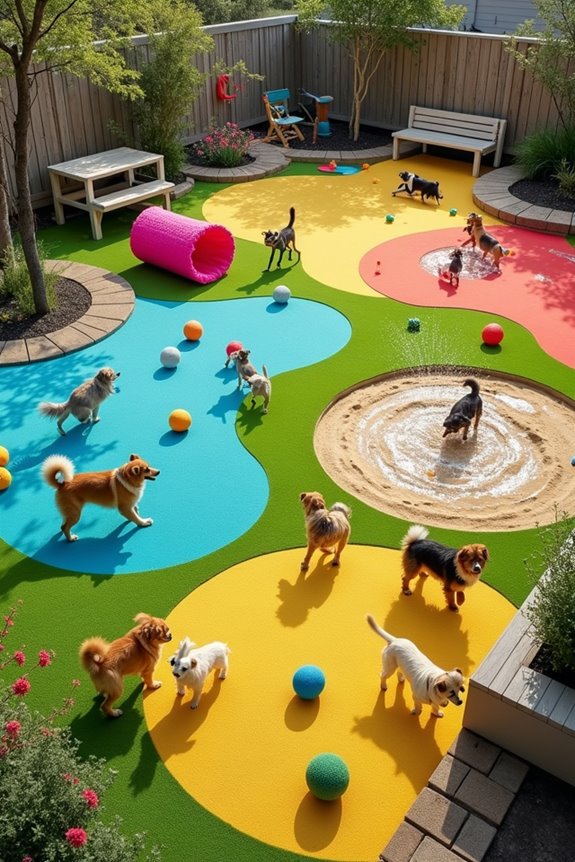
Setting up an interactive play area within your dog park is a game-changer. It’s where the real fun happens, encouraging dogs to engage not just with equipment but with each other. Imagine a space brimming with energy—dogs romping around, squeaky toys flying, and laughter echoing from enthusiastic owners. This isn’t just about exercise; it’s about creating connections, memories, and pure joy.
First off, choose your location wisely. It should be spacious, yet cozy enough that dogs can easily find their friends. Think about using colorful mats or turf to designate the area, creating a vibrant and inviting atmosphere that beckons pups to join in. You want a layout that feels less like a classroom and more like the world’s biggest playroom.
You could even add props—like soft, oversized balls or plush tunnels that encourage curiosity. Just picture your dog darting through a bright pink tunnel, looking like a little superhero about to save the day.
Then, consider incorporating interactive elements. Maybe you set up a splash zone with shallow pools or a gentle sprinkler—nothing fancy, just enough to get paws wet and tails wagging. Or you could create a digging pit, filled with sand or dirt, so pups can release their inner archeologists. I mean, who doesn’t love a good ol’ dig?
Just remember to bring a towel—muddy pups have a way of getting a little too enthusiastic.
For a bit of structure, think about games that foster interaction, like a fetch wall or ring toss. These can be simple but give dogs a chance to work together, even if their enthusiasm is slightly chaotic. Trust me, watching a group of dogs try to figure out who gets to the toy first is a comedy show in itself.
Just be prepared, because you may end up covered in turf and laughter.
Finally, sprinkle in some seating for the humans. You’re going to want a place to watch the antics unfold. Trust me, once you sit back and enjoy the hilarity of dogs bouncing off of each other, you won’t want to leave.
4. Colorful Signage Installation
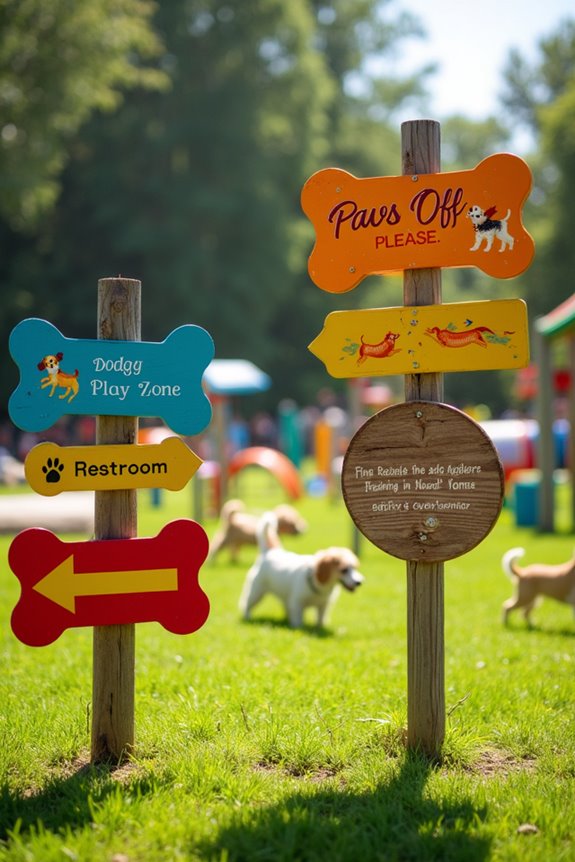
Setting up colorful signage for your dog park can be a game-changer. Not only does it help guide visitors through the park, but it also adds a splash of personality and fun. Imagine brightly colored signs that not only serve a purpose but also create a joyful vibe—because who doesn’t love a little pizzazz while watching their furry friends play?
Start by thinking about the different areas in your park. You might want signs for the agility course, play zones, and even the restroom. Go for bright colors that pop against the green grass; think vibrant blues, reds, and yellows. These colors don’t just look good—they also catch the eye, making it easy for park-goers to find their way around.
I still remember the first time I saw a giant bone-shaped sign pointing to the agility course. It was playful and inviting, making me feel like I was entering a whimsical dog wonderland.
Next, get creative with the wording. Instead of a boring “No Dogs Allowed,” why not use something like “Paws Off, Please!” It instantly brings a smile, doesn’t it?
Another playful touch could be adding illustrations of dogs performing agile jumps or running through tunnels. Those images can rally the excitement and curiosity of fellow dog owners, encouraging them to explore more and perhaps inspire their pups to try new things. It’s like adding a little personality to what might otherwise be a straightforward list of rules.
Placement is key too. Position these signs at strategic spots—near entrances, along pathways, and at different play zones. This way, whether you’re busy chatting up a fellow dog parent or laughing at a dog chasing their own tail, the colorful signs will guide you without interrupting the fun.
I remember once wandering around a park for ages because a sign had fallen over. Seriously, who knew a simple twist of fate could lead to such a prolonged adventure—or accidental workout?
Finally, don’t forget to add some fun facts or tips on the signs. You could write about the benefits of agility training or even fun trivia about dog breeds. This adds an educational twist while keeping the atmosphere light and social. After all, learning about dog agility equipment might just inspire some owners to try them out during their next visit. Additionally, showcasing premium dog training equipment can encourage responsible ownership and enhance community engagement.
Just think—you might spark a conversation with another dog owner, sharing laughs and insights, all thanks to a cheeky sign about Golden Retrievers.
5. Themed Play Zones Creation
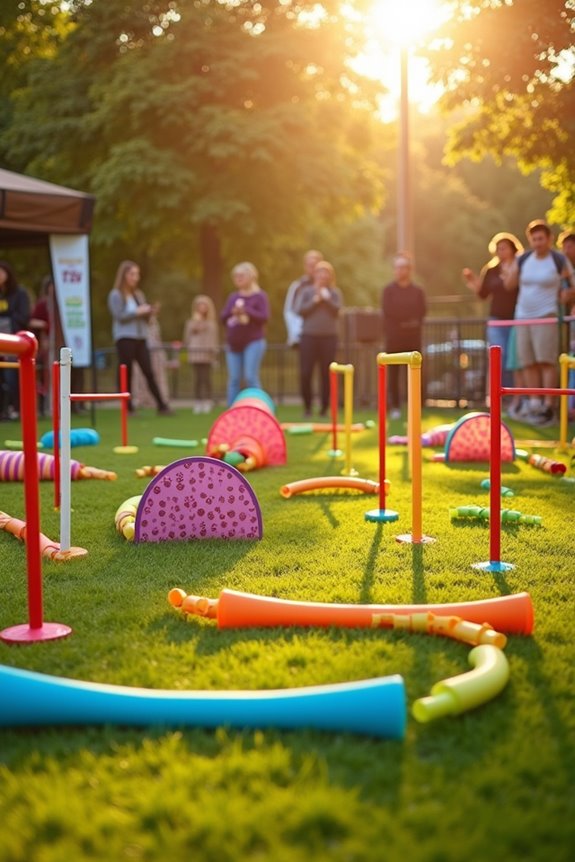
Creating themed play zones in your dog park elevates the experience for both pups and their humans. It’s not just about giving them a place to run; it’s about crafting a memorable adventure that encourages interaction, play, and learning.
First up, let’s talk about the agility course layout. Picture a dynamic space where dogs can leap over hurdles, weave through poles, and scamper through tunnels. It’s like an amusement park for dogs, isn’t it? Now, to make it all work smoothly, lay out the equipment in a way that flows naturally. Start with the lower obstacles for beginners just finding their feet and progress to those intimidating jumps for the more daring pups. This way, all dogs—whether they’re a timid terrier or a raucous retriever—can safely find their groove.
Grab a few colorful cones to mark the different stations. I once had the idea to use those bright foam pool noodles to create fun, soft barriers for dogs to jump over. Maybe it was the summer sun, or maybe I was just feeling creative, but those noodles turned out to be a hit. Not only are they soft and safe, but their bright colors also added a pop of fun to the area. Plus, watching a dog bound over a noodle can be quite the spectacle, right? For added convenience, premium pet food storage solutions ensure that you have nutritious snacks on hand after the exercise.
Designing these zones with flow is essential. Imagine setting up the course in a circular layout. It not only helps keep the energy levels up—dogs can go from one obstacle to the next without getting distracted—but it also encourages spectators to cheer on their favorites, adding a communal feel to the experience.
Thinking back, I remember a dog doing an epic slow-mo jump over a barrier, leaving everyone in stitches and applause. That connection among onlookers is such a joy to witness.
Don’t forget about signage here too. Remind owners how to help their pups participate in the agility fun. Maybe slap a sign on a nearby fence that reads, “Jump for Joy—It’s Playtime!” There’s magic in taking pictures of their pups mid-flight or mid-weave—so grab those moments! You might find that some folks leave the park thinking about how to get their little buddy into a doggy agility class—a triumph of inspiration, thanks to a fantastic layout.
In the end, a well-designed agility course isn’t just a space for physical exercise. It’s an invitation to bond, to push boundaries—both for dogs and their owners. Who knows, you might end up with a little agility champion on your hands, or at least a dog who isn’t afraid to explore the great outdoors with his favorite person. Furthermore, investing in an outdoor dog playpen premium can enhance your pup’s experience by providing a safe area to relax after all that exciting physical activity.
6. Shade Structures Implementation
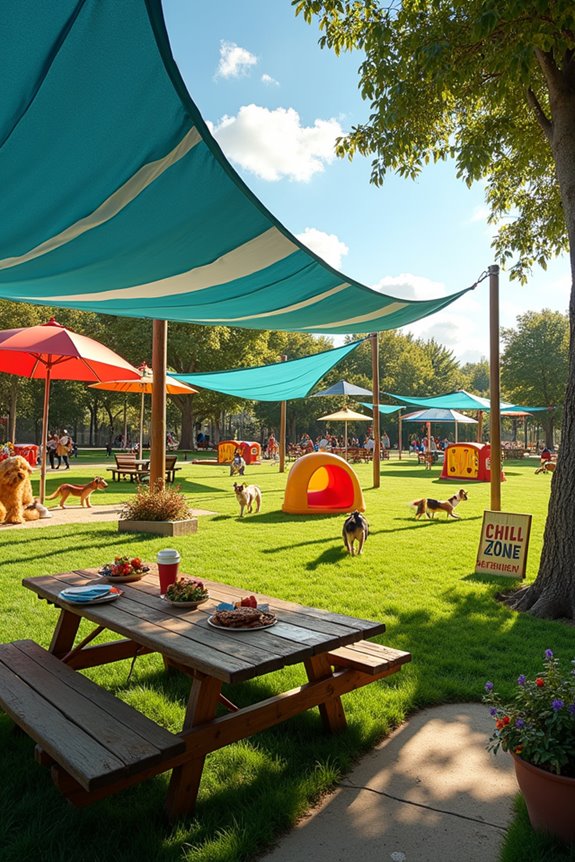
When you think about a dog park, one of the first things that might come to mind is how hot those sunny afternoons can get for our furry friends and their humans. That’s where shade structures come into play. Imagine dogs frolicking around an agility course, their tails wagging enthusiastically, but with a cozy spot to take a breather from the sun. Ah, the bliss of shade! It not only protects our pups from overheating but also invites people to lounge around, fostering a sense of community.
Now, let’s get into the nitty-gritty of shade structures. You’ll want to take into account options like large trees, canopies, or even colorful umbrellas that can offer interesting focal points. When I first planned out my local park, I was convinced we could use a massive sail-like canopy to create an Instagram-worthy look – and wouldn’t you know it? It brightened up the whole space while keeping us cool. Furthermore, it’s essential to consider adding luxury dog accessories that complement the aesthetic of your park, making it appealing for visitors and their pets.
Just think of dogs sprawled out on the ground, humans chatting, and the warm sun filtering through the fabric. It’s like a scene from a feel-good movie.
Placement is key, though. Strategically position these shade structures near the agility course to encourage a quick nap break after a round of leaps and bounds. Maybe set up a little seating area under the shade, complete with benches and tables for a picnic vibe. Picture people sipping iced coffee while watching their pups play—doesn’t that sound idyllic?
And for the dogs, having a shaded resting spot nearby offers a chance to rehydrate and regroup before diving back into play. The right accessories can also enhance your dog’s experience at the park, making it even more enjoyable for both pets and owners, such as luxury labrador dog accessories that provide both functionality and style.
Contemplate adding some playful, informative signs near your shade structures too. Something like, “Chill Zone: Rejuvenate Here!” can give it that fun touch while reminding dog owners to make sure their beloved pets stay hydrated. It’s those little details that make the park feel welcoming.
In the end, implementing shade structures is about creating an inviting atmosphere where dogs and their humans can enjoy the park to the fullest, no matter how hot it gets. So, let’s make our dog parks a cool haven—not just a place to run, but a place to relax, connect, and soak in the joy of being with our best friends.
7. Pathway Layout Planning
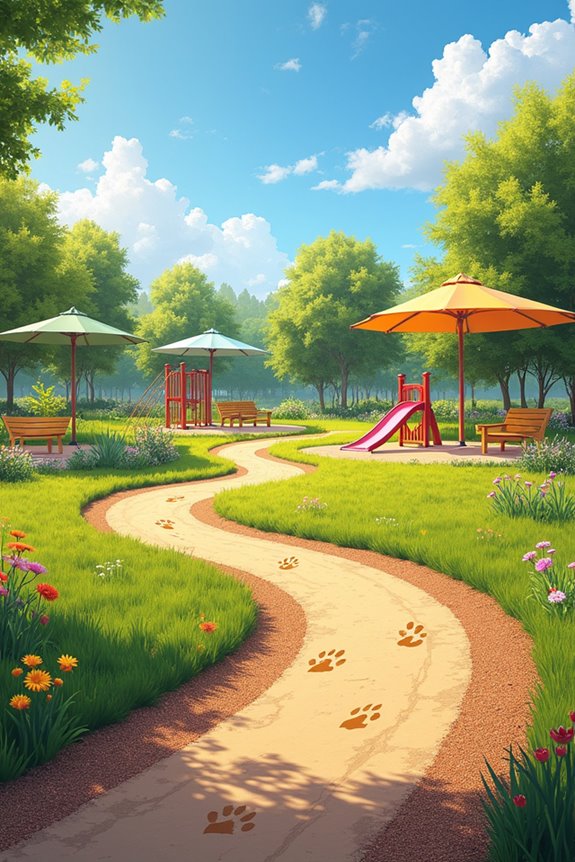
When designing a dog park, think of the pathway layout as the backbone of the entire space. A well-planned pathway not only guides visitors through the park but also enhances the overall vibe, encouraging both pups and their humans to explore. A winding trail that leads to different sections of the park can create a sense of adventure, making every walk feel like a whimsical journey.
First things first, consider the flow. You don’t want to have paths crisscrossing each other like a chaotic spider web. Instead, aim for a looping design that allows dogs to roam freely while keeping an eye on the humans (and vice versa, because let’s face it, we’re all a bit protective).
Picture a path that connects the agility course to play areas, shade structures, and seating spots. It allows everyone to take a leisurely stroll without feeling boxed in.
Now, let’s talk about materials. Durable, non-slip surfaces are a must. A mixture of packed gravel and wood chips can provide a natural look while ensuring dogs don’t take unexpected tumbles. Plus, it’s easy to maintain. Adding chew ring toys for pups to enjoy along the way can also make the journey more engaging.
You can even incorporate some fun elements, like painted paw prints leading the way—who doesn’t love a little whimsical touch?
And ambiance matters too. As you design your pathways, think about integrating nature. Line the edges with wildflowers or dog-friendly plants. This adds color and fragrance, making the experience not just functional but visually delightful.
Imagine walking with your pup, surrounded by blooming flowers while they sniff around happily. It’s like a sensory adventure!
Finally, don’t forget signage along the paths. Clear directions and fun facts about the park can enhance the experience for visitors. Perhaps something quirky like, “This Way to the Tails & Trails Adventure!” can lighten the mood and guide families effortlessly through the park.
In the end, a well-thought-out pathway layout is all about creating a space where both dogs and their humans can enjoy their time together, exploring, playing, and connecting. It’s not just about getting from point A to B—it’s about making every step of the journey fun and engaging. Additionally, consider elevating your pup’s snack experience with a luxury dog treat maker that can create delicious homemade treats for their post-adventure delight!
Who knew a walk in the park could be such a delightful escapade?
8. Seating Area Design Essentials
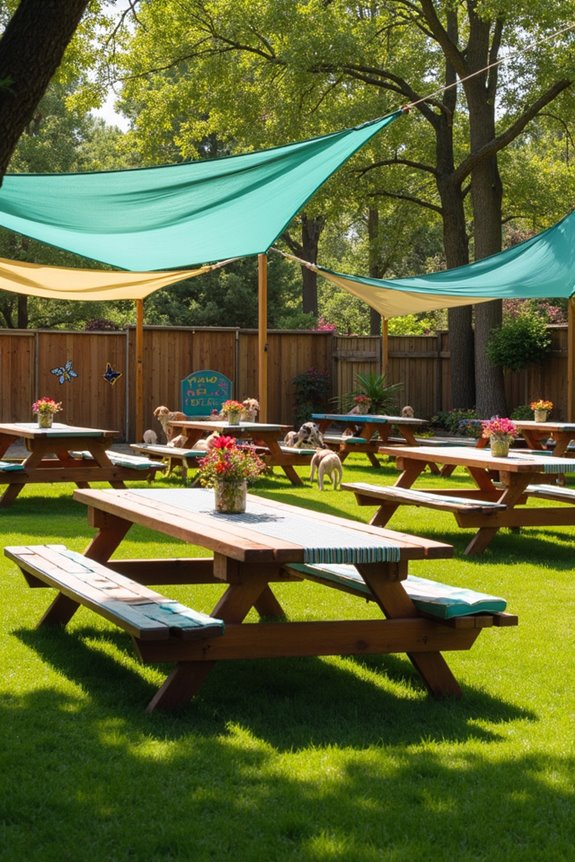
When planning a dog park, creating the seating area is vital to enhance the overall experience for both pups and their owners. A well-designed seating area can provide a comfortable spot for humans to relax while keeping an eye on their furry friends. It’s all about striking that perfect balance between functionality and vibe—somewhere that feels welcoming and cozy, amidst all the tail-wagging excitement.
Start by choosing locations that offer visibility. You want to see the whole park, right? I mean, who wouldn’t want a front-row seat to the cute chaos of dogs chasing after balls or zooming around each other? Position benches and picnic tables at strategic vantage points. Think about placing them near the agility course or play zones, so owners can cheer on their canine athletes while enjoying a coffee or snack. Oh, the joy of watching those pups leap over hurdles while you sip a latte. Sounds like a good time to me.
Material selection is just as important. Go for weather-resistant seating options—wood or composite materials work great. Here’s a tip: consider using recycled materials for a “green” touch. Not only do you help the environment, but you also spark conversations with fellow park-goers about sustainability. And maybe just maybe, you can steer the chat towards your amazing dog, Sparky, who can totally jump higher than any other pooch at the park (even if that’s a slight exaggeration). Using premium dog food for sensitive stomachs can also benefit pups with dietary needs, making it easier for all dogs to enjoy playtime.
Adding shade is a smart move as well. Your human visitors, and their dogs, will love a cool spot on sunny days. Think about installing shade sails or surrounding your seating area with trees. An instant picnic oasis! Just imagine chatting with fellow dog lovers while Sparky plays in the shade of a lovely tree. And let’s be honest, having a break from the sun when chasing energetic pups is a game-changer.
Don’t forget about fun! Incorporating playful elements, like quirky signage or decorative plantings, can add personality to your seating area. Picture a sign that says, “Paws & Relax,” or vibrant flower beds that attract butterflies. It’s the little touches that create a sense of whimsy and connection. Additionally, you may want to consider having premium dog food brands available for purchase, as this can further enhance the experience for pet owners during their visit.
Ultimately, a well-thought-out seating area makes dog parks feel like community hubs, enhancing the experience for everyone involved. So, go ahead, create a space where humans can relax while their pups frolic. Because, in the end, it’s all about enjoying those special moments together—paw-sitively delightful, wouldn’t you say?
9. Natural Landscape Integration
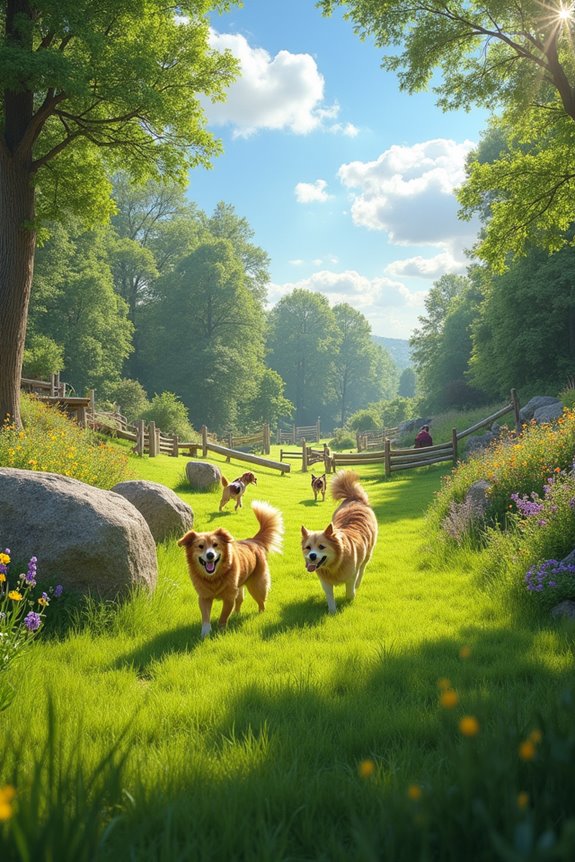
So, let’s chat about integrating natural landscapes into your dog park, especially when laying out an agility course. This idea really rocks because it allows the playful spirit of your park to blend seamlessly with the natural environment.
Just picture it—dogs maneuvering through trees and bushes, making each leap feel like an adventurous quest. Not only does it keep tails wagging, but it also creates a calming, nature-filled vibe that everyone can enjoy.
When you’re planning, think about how you can utilize the existing landscape. If you’ve got hills, dips, or even a few boulders, why not make them part of the course? It’s like building your very own canine Everest. Dogs love a good challenge, so incorporating these features encourages them to think and explore, all while showing off their agility skills.
Just imagine Sparky bounding over a rock like a furry Jack and the Beanstalk, right?
Adding in fragrant bushes or low greenery can create boundaries for agility zones too. This not only helps guide the pups through their course—“over here, Sparky”—but it also makes the setting super inviting.
And don’t stress if your park isn’t perfectly flat; those natural slopes can add excitement and give your pups a mini workout on the incline. Plus, who doesn’t love watching a dog tackle a small hill with all the enthusiasm of a kid in a candy store?
Now, let’s talk about safety. Confirm any natural features are dog-friendly. This means no sharp rocks or thorny bushes. We want our furbabies to have fun and leave with wagging tails, not scraped paws.
You might want to throw in some signage to guide the dogs and their owners around—after all, a little laughter over a confused dog maneuvering around rocks can do wonders for the park atmosphere.
Oh, and I can’t forget about sightlines! It’s super important to have clear views of each agility spot so owners can watch their sweet pups prance around.
Make sure there’s space for everyone to stand back and cheer them on—what a sight it will be when those furry champs are flying through the course.
In the end, blending nature with agility courses doesn’t just enrich the park’s layout—it also makes each visit feel like a delightful escape for both dogs and humans.
Who wouldn’t want to come spend a sunny afternoon surrounded by trees and trails, breathing in that puppy-magic ambiance?
10. Water Feature Installation
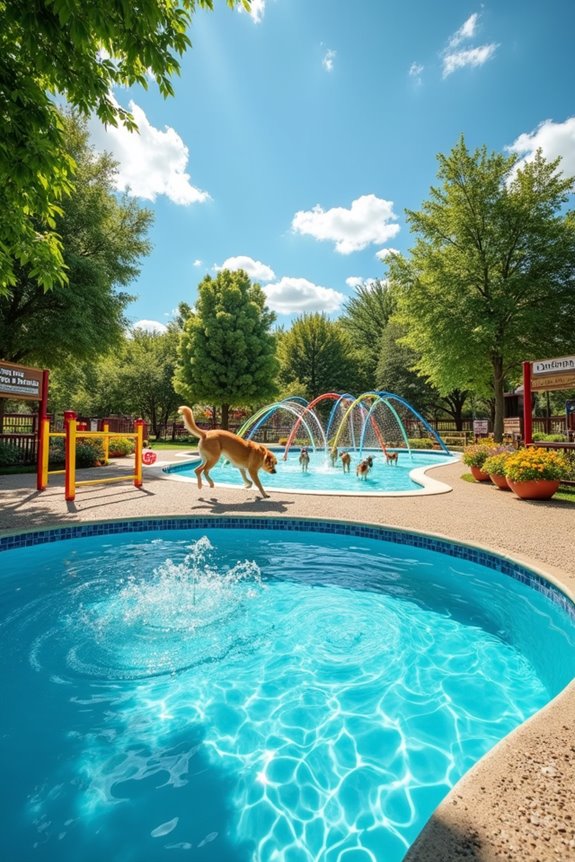
Water features in a dog park, especially alongside an agility course? Now that’s a game-changer. Not only do they give pups an invigorating splash zone on warm days, but they also create a vibrant atmosphere that enhances the overall experience.
Imagine this: dogs gleefully plunging into a shallow pool or racing through a gentle mist, tail-wagging joy galore.
First step, consider the layout of your agility course and how a water feature can weave into it. A simple pond or a small splash pad can act as a natural pause point between obstacles. It’s all about rhythm—dogs get to dash through an agility jump, then take a quick dip, and leap right back into action.
This dynamic keeps them alert and engaged. And let’s be real, who doesn’t love watching a dog shake off water like they just won the lottery?
When designing your water feature, think about size and depth. You’ll want it shallow enough for all breeds to enjoy. A foot or two is just right—enough for a playful paddle, but not so deep that it feels like a swim meet.
Maybe even include gentle slopes leading in and out of the water, giving pups an easy entry and exit without slipping and sliding everywhere. Safety first, right?
Don’t forget about drainage and filtration. A murky puddle is seriously uninviting. So, make sure to install a simple filtration system to keep that water clean and clear. Above ground dog pools are a great addition to keep your furry friends cool and entertained.
You might even want to add plants around the edges for aesthetic appeal, making it feel more like a natural oasis and less like a doggy swimming hole.
And signage? Yup, you guessed it. Clear markers indicating the splash zone can help guide owners and pups alike, ensuring everyone stays safe while having a blast.
Add some fun facts about water safety or mini dog swimming tips for a little extra flair.
Picture it: a sunny day at the park, dogs darting from obstacle to obstacle, stopping to cool off in the water. It’s a scene that brings smiles, laughter, and wagging tails all around.
With a thoughtfully placed water feature, you’re not just enhancing the agility course—you’re creating a little slice of paradise for your canine pals. Sounds like pure paw-some joy, right?
Safety Gear Recommendations
While it might seem like just another day at the dog park, ensuring your furry friend’s safety shouldn’t be an afterthought.
You wouldn’t let your kid run around without a helmet, right? So, gear up your pup with a sturdy harness and a reflective leash, especially for those evening adventures. A traffic handle leash can provide additional control in busy places, helping to keep your dog close by.
Have you thought about dog booties to protect their paws from hot pavements or sharp objects? They’re great dog park ideas for keeping those little toes safe.
Consider dog booties to shield those precious paws from scorching pavement and sharp debris at the park!
Don’t forget a well-fitted collar with an ID tag—what happens if they make a break for it?
And, hey, if your dog’s prone to mischief, a muzzle can be a good safety net. Always better safe than sorry, right? Consider using a dog sling carrier for easier transportation in crowded spaces or long walks.