
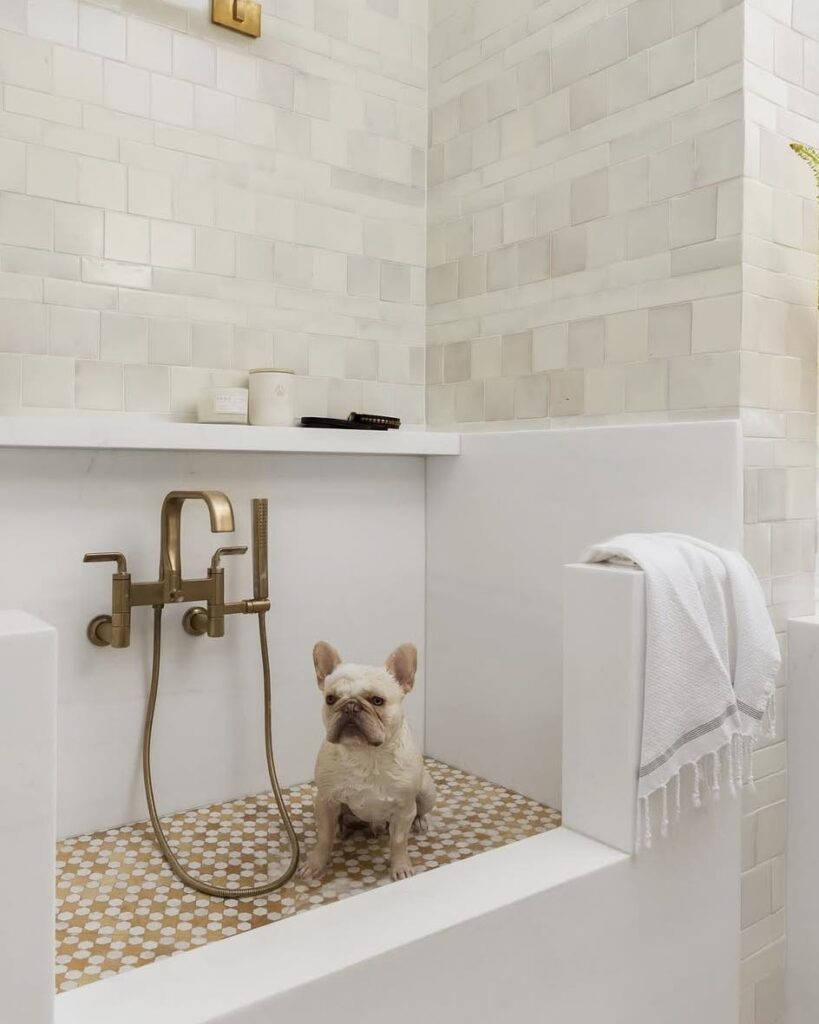
Okay so you know that moment when your golden comes barreling through the back door after a rainy walk — and suddenly your gorgeous entryway rug looks like a crime scene?
Yeah. That.
I’ve been there with my dog Bear, and honestly the cleanup almost made me cry. Mud on the floors, wet paw prints on the sofa, that soggy-dog smell clinging to everything you just styled to look Pinterest-perfect.
It gets old fast.
And bathing him in the tub? My back was done after two minutes. Water everywhere. Him shaking suds onto my freshly washed mirror. A whole disaster.
Here’s what actually fixed it: a dedicated DIY dog bathing station built right into your home or backyard.
These 7 ideas are designed for real dog moms — the ones who want their space functional and beautiful. Let’s get into it.
#1: Build a Built-In Dog Wash Station (The Pinterest Dream That Actually Works)
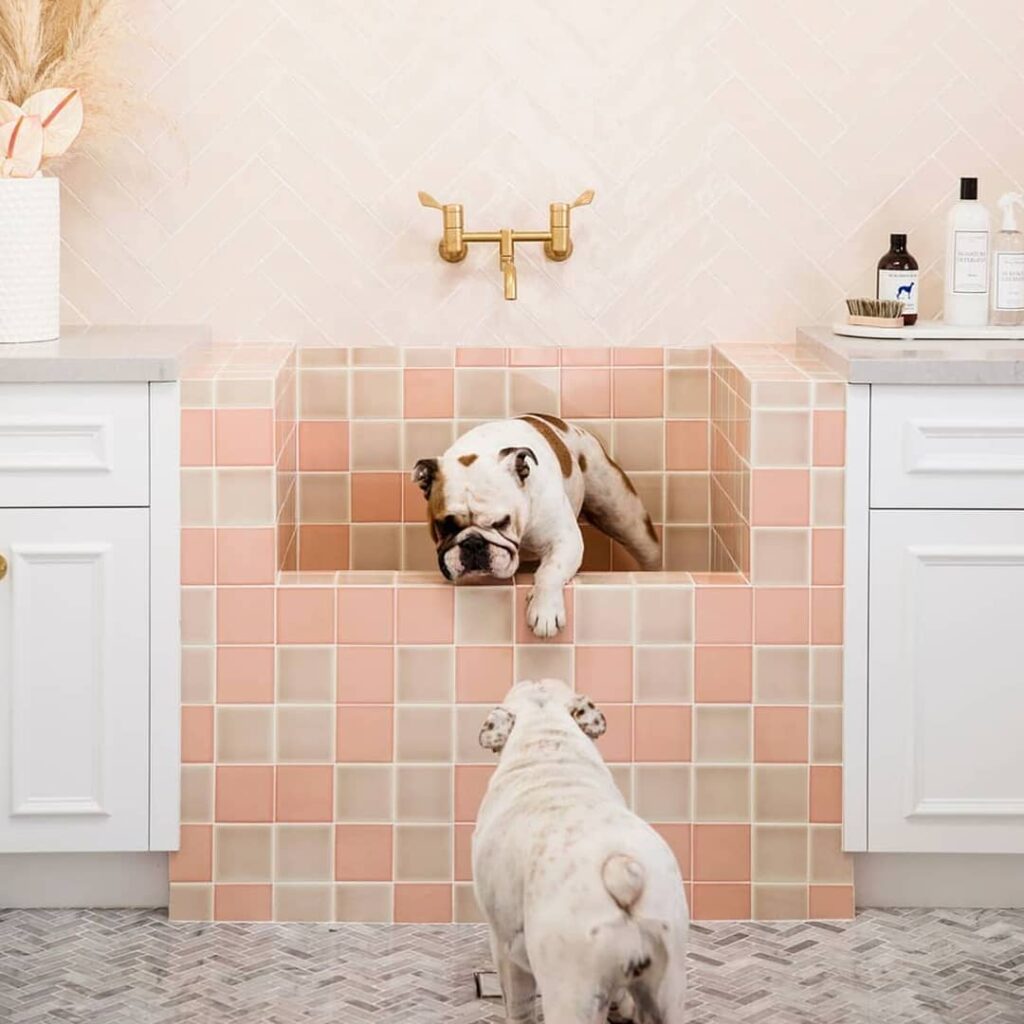
You know that moment when your golden comes barreling through the back door, paws caked in mud, tail going a million miles a minute — and she heads straight for the couch? Yeah. My friend’s lab did that last Thanksgiving and honestly it still haunts me.
This built-in dog wash station is exactly what you need.
Prep Time: 2–3 hours | Active Project Time: 2 full weekends | Difficulty Level: Intermediate
Materials & Tools:
– Pink and taupe 4×4-inch ceramic tiles (mix both for that checkered pattern)
– Herringbone subway tiles for the wall backsplash
– Brass wall-mount pot filler faucet (double-joint style)
– White shaker base cabinets on both sides
– Marble or quartz countertop slabs
– Tile adhesive, grout, grout sealer
– Wet saw, trowel, level, measuring tape
– Dog shampoo, brush, spray bottles for the shelf
Instructions
Start by framing out a 24×24-inch recessed basin between your two base cabinets, leaving 18 inches of depth so a medium-to-large dog can stand comfortably. The low front wall — roughly 12 inches high — lets your dog rest her chin right on the edge (you’ll see exactly that vibe in this photo, and honestly it’s the cutest thing).
Apply your tile adhesive and lay your pink and taupe ceramic tiles in a checkerboard pattern across the basin walls and front face. Alternate colors row by row so it reads as a grid, not random. Press each tile firm and use spacers for even grout lines.
Once the adhesive cures — give it 24 hours minimum — grout everything with a light gray grout. Seal it after another 24 hours. This is non-negotiable because a sealed grout line means zero mildew smell creeping in after bath number fifty.
Mount your brass wall-mount faucet centered above the basin, about 8 inches above the back wall tile. The double-joint arm swings side to side, which means you can rinse under her belly without fighting a fixed spout — that flexibility keeps bath time fast and your dog calm.
Install your white shaker cabinets flush on both sides and cap everything with your marble countertop. Add a small tray on the right counter for shampoo and a brush so everything’s within arm’s reach.
Real talk: the herringbone wall tile above the basin does two things — it protects your drywall from splash and makes the whole setup look like it belongs in an interior design magazine. Feature-benefit-payoff right there: the wall tile takes the water damage, your walls stay dry, and you stop repainting every spring.
Keep grout lines at 1/8 inch for a cleaner look on smaller tiles. And if your golden is on the nervous side during baths, a rubber non-slip mat inside the basin makes her feel more grounded — literally.
📸 Photo credit: Instagram @get_patch
#2: The Built-In Tiled Dog Wash Station That’ll Make Bath Time Actually Enjoyable
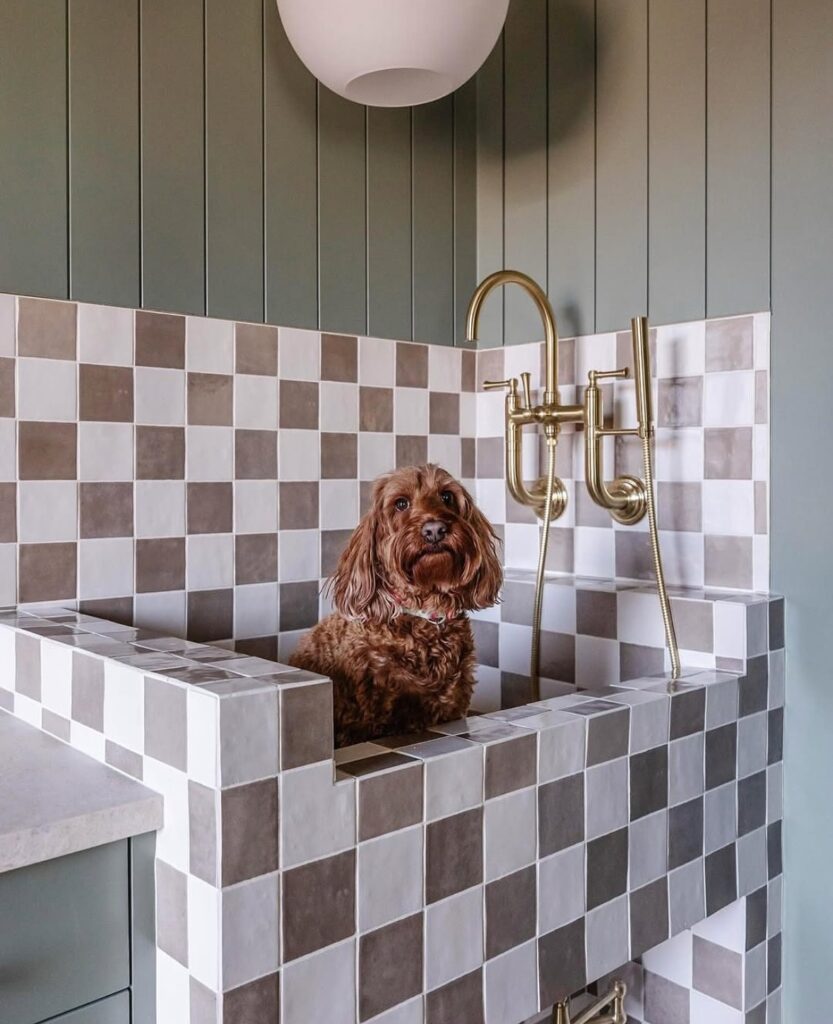
You know that moment when your golden comes barreling through the back door, soaking wet and covered in mud, and you’re just standing there watching her sprint across your clean floors? Yeah. That’s the moment that made me obsessed with this setup.
This built-in dog wash station is everything. We’re talking a zellige checkerboard tile surround in warm taupe, grey, and white tones, a brass wall-mounted faucet with handheld sprayer, and a recessed tub basin built right into the mudroom cabinetry. The wall is done in sage green shiplap paneling, and a globe pendant light sits overhead. It looks like a Pinterest board came to life.
My cousin built something similar last year and said it completely changed how she handles bath day. No more wrestling a soaking wet dog in a human tub.
Materials & Tools You’ll Need:
– Zellige or handmade ceramic tiles (approx. 4×4 inches) in two tones
– Cement board backer for waterproofing
– Tile adhesive and grout (unsanded, 1/8 inch joints)
– Brass wall-mount faucet with handheld shower attachment
– Pre-formed fiberglass or concrete basin insert (24×30 inches recommended)
– Sage green shiplap panels
– Globe pendant light fixture
– Notched trowel, tile cutter, level, drill, waterproof sealant
Prep Time: 1 day | Active Project Time: 2-3 days | Difficulty Level: Intermediate
Instructions
Start by framing the basin area into your mudroom wall, leaving a 24×30 inch opening at roughly knee height so your dog can step in without strain on her joints — that lower entry point means zero jumping, which is huge for bigger dogs like goldens.
Drop in your basin insert and secure it to the framing. Then apply your cement board over every surface that’ll get wet. And this step is non-negotiable — skipping it causes tile failure within months.
Mix your tile adhesive and start laying your zellige tiles in a checkerboard pattern. Work from the bottom up. These handmade tiles aren’t perfectly uniform, and that’s the point — the slight variation in glaze gives that warm, organic look you see in the image. Use a level constantly. Grout with unsanded grout once tiles are set, then seal everything with a penetrating waterproof sealant.
Mount your brass wall-mount faucet at about shoulder height on the back wall. The handheld sprayer attachment means you can rinse under her belly and between her paws without fighting her — a brass fixture resists rust and stays gorgeous for years, which means less maintenance and more bath-day confidence.
Finish the walls above the tile line with your sage green shiplap, painted in a muted, matte finish. Wire in your globe pendant overhead for that warm, spa-like glow.
Seal the basin floor with an extra coat of non-slip tile sealant so your pup has solid footing. Bath time goes from chaotic to calm when she doesn’t feel like she’s sliding around.
If you love building functional spaces for your dog, 13 Genius DIY Dog Stuff Every Pet Parent Needs to Try Today! has more projects worth bookmarking.
Grout color matters more than people think — going one shade lighter than your tiles makes the checkerboard pattern pop without looking harsh. And always do a water test before you tile. Run the faucet, check every corner for drips, fix them before the tiles go up.
📸 Photo credit: Instagram @carterfamilyranchhome
#3: Built-In Dog Grooming Station With Kennel Nook
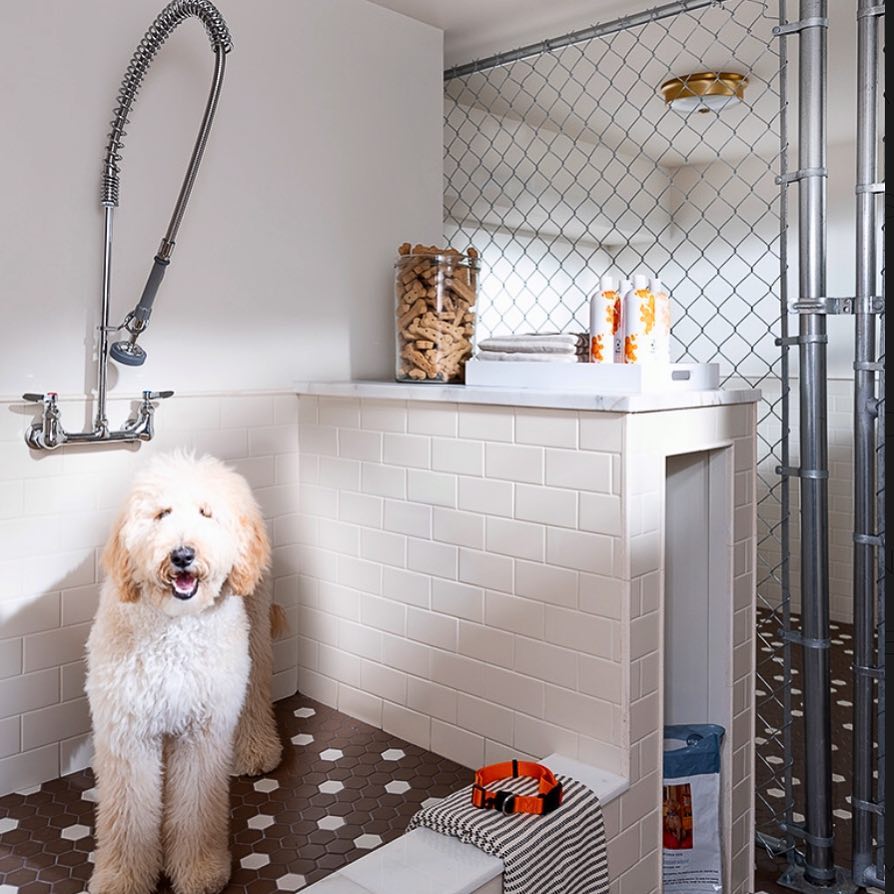
Your golden just rolled in something unidentifiable in the backyard. Again. And now you’re doing that awkward thing where you’re trying to hold her still in your regular bathtub while she shakes muddy water all over your bathroom walls. I’ve been there. My aunt’s lab mix destroyed two shower curtains before she finally built a dedicated dog wash space, and honestly? It changed everything.
This setup in the photo is giving me all the feels — white subway tile walls, hexagonal brown-and-white mosaic floor tiles, a marble-top prep counter, and a built-in chain-link kennel nook with its own flush-mount brass ceiling light. It’s practical and gorgeous, which is a combo I didn’t think was possible in a dog washing space.
Materials & Tools
– White 3×6 subway tiles (for walls)
– Brown and white hexagonal mosaic floor tiles
– White-painted MDF or plywood for the counter base cabinet
– Marble or quartz slab (counter top — ¾ inch thick)
– Wall-mount utility faucet with flexible stainless steel pre-rinse sprayer hose
– Chain-link fencing panels + galvanized steel pipe frame (for kennel enclosure)
– Brass flush-mount light fixture
– Glass treat jar + grooming product bottles (for counter styling)
– Tile adhesive, grout, waterproof backer board
– Drill, level, tile saw, pipe cutter
Prep Time: 1–2 days (tile prep + drying) | Active Project Time: 3–4 days | Difficulty Level: Intermediate–Advanced
Instructions
Start with waterproof cement backer board on every wall surface that’ll get wet — this is the foundation that keeps tiles from cracking or peeling two years down the road.
Once the backer board is secured, lay your subway tiles starting from the center of the wall and working outward. Use a ⅛-inch grout spacer for that clean, even look. Grout in a bright white to keep things crisp against the warm floor tiles.
For the floor, the hexagonal mosaic sheet tiles come pre-mounted on mesh backing — press them into the thin-set mortar and use a rubber mallet to seat them flat. The textured surface gives your dog grip when she’s wet and wiggly, which means fewer slips and way less anxiety for her during bath time.
Build your counter base cabinet from ¾-inch MDF, paint it matte white, and top it with a marble slab cut to size. That counter gives you a spot to stage treats, grooming bottles, and folded towels — everything within arm’s reach so you’re not dripping water across the house hunting for shampoo.
Mount the wall-mount utility faucet at about 48 inches from the floor and attach the pre-rinse sprayer. The sprayer’s flexible hose reaches every corner of your dog’s body, rinses deep into thick fur, and cuts your bath time in half — that’s the feature-benefit-payoff that makes this whole build worth it.
For the kennel nook, build a galvanized steel pipe frame using 1-inch diameter pipes and connect your chain-link panels with standard fence ties. The kennel should be at minimum 36×24 inches for a golden retriever. Mount the brass flush-mount light inside the ceiling of the nook — your dog gets her own cozy, well-lit space to dry off or hang out while you clean up.
And if you want your dog to actually love this space, tuck a familiar blanket inside the kennel from day one. Association is everything.
Keep a sealed glass treat jar on the counter where your dog can see it — visible treats during bath time make the whole process smoother. Seal all grout lines with penetrating tile grout sealer for long-term waterproofing, especially on the floor where water pools most. If you love personalizing spaces for your pup, 12 Heartfelt Designs for DIY Dog Accessories has some great add-ons that pair well with a setup like this.
📸 Photo credit: Instagram @melanieturnerinteriors
#4: The Glass Panel Splash Guard Shower Station
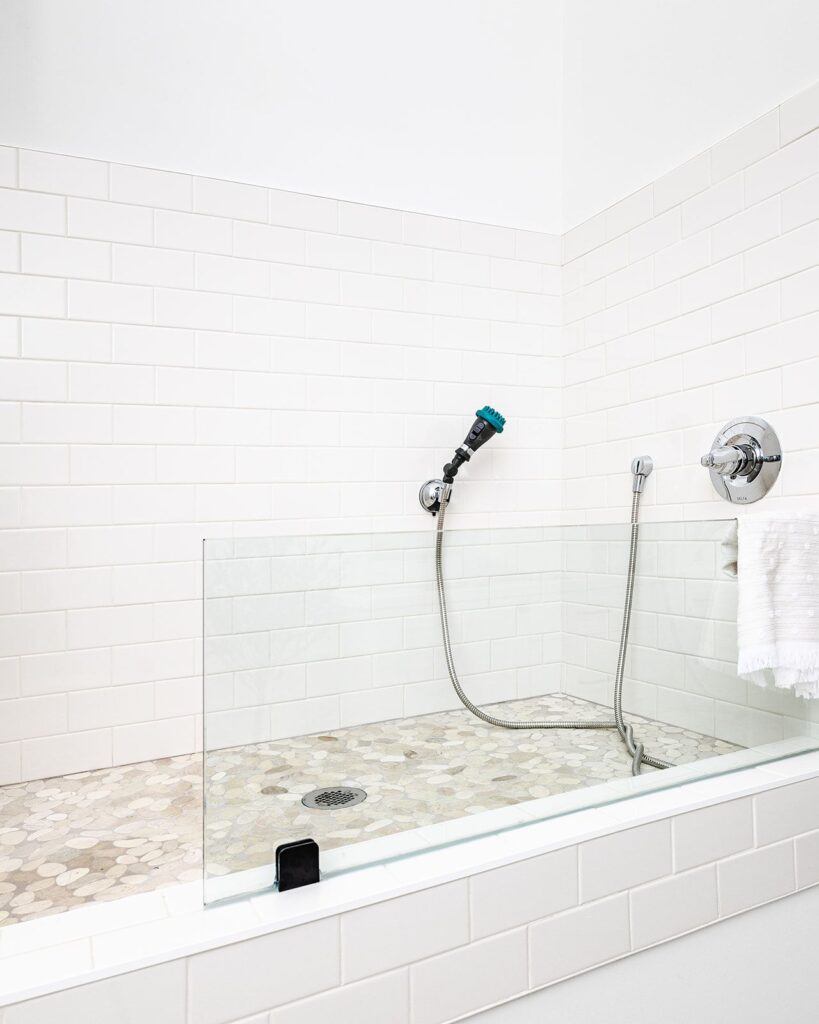
You know that moment when your golden shakes mid-rinse and your entire bathroom wall is soaked? Yeah. My friend Dani has the same problem — she told me her dog Biscuit once drenched her freshly painted accent wall during bath time. Not great.
This setup from the image is exactly what we both needed to see.
It’s a built-in dog bathing station using white subway tiles, a pebble stone floor, a partial glass panel splash guard, and a handheld shower hose mounted with a suction bracket. Clean, Pinterest-worthy, and actually functional.
Materials & Tools:
– 3×6 inch white subway tiles
– River pebble mosaic floor tiles
– tempered glass panel (12 inches wide)
– Delta chrome handheld shower kit
– suction cup shower head holder
– tile adhesive + grout
– Notched trowel, tile cutter, grout float
Instructions
Start by waterproofing your shower pan with RedGard membrane — two coats minimum. Lay your pebble mosaic tiles on the floor first, pressing them into tile adhesive and working from the drain outward. The textured surface gives your dog grip, which means less panic-scrambling and a calmer bath overall.
Tile your walls with subway tiles in a running bond pattern, keeping grout lines at 1/16 inch. Once grouted and dried, slot the tempered glass panel into a aluminum track along one side — this blocks the worst of the splashing without making the space feel like a cage.
Mount your Delta chrome handheld kit at 48 inches height and clip the hose holder to the tile with a suction bracket. The adjustable spray head means you control the pressure, so sensitive dogs don’t freak out.
Seal all grout lines with a penetrating silicone sealer after 72 hours — grout that’s sealed resists mildew and saves you a full re-grout job down the line.
Keep a folded towel on that built-in ledge right there at the edge. Game changer for the post-bath shake moment.
Prep Time: 2 hours | Active Project Time: 2–3 days | Difficulty Level: Intermediate
📸 Photo credit: Instagram @hawkinsandgraydesign
#5: Built-In Tiled Dog Wash Station With Cabinetry Storage
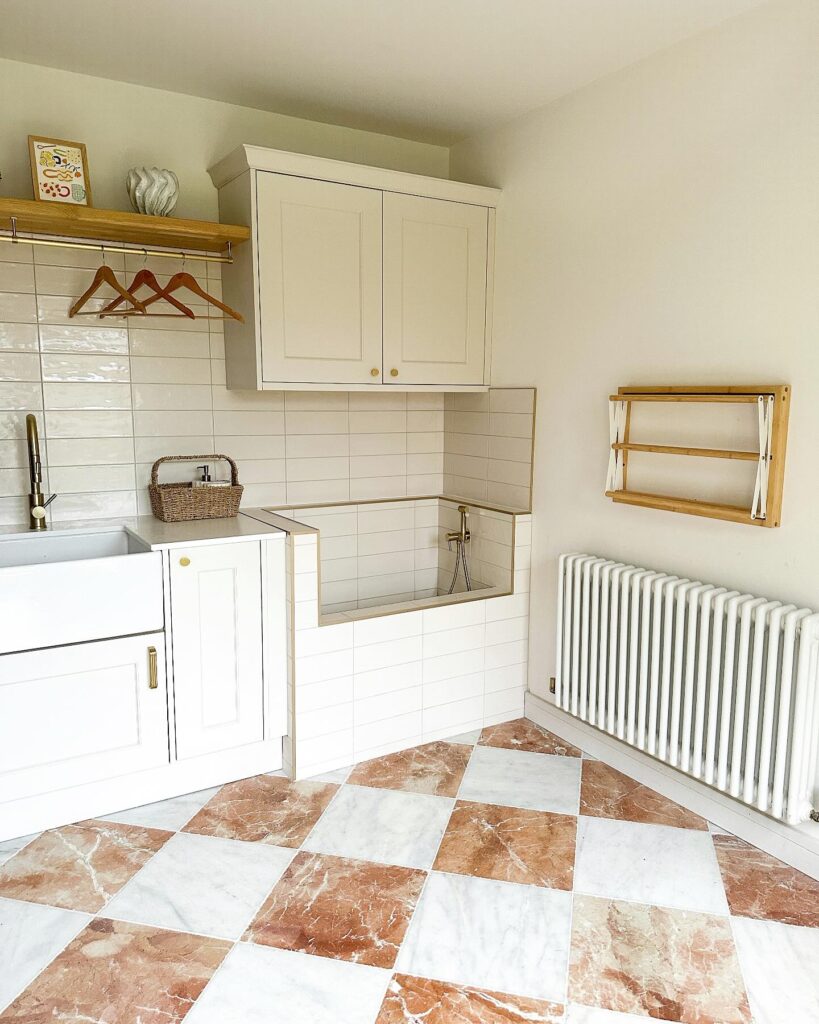
Okay so picture this — your golden comes barreling through the back door after a full afternoon at the dog park, paws caked in mud, shaking water everywhere before you even get close to her.
And you’re standing there with a bucket and the garden hose like… this cannot be my life.
That’s exactly what this built-in dog wash station solves. We’re talking a tiled, floor-level wash bay framed in white subway tiles with brass trim edging, tucked right into the corner of a laundry room. It’s functional and genuinely gorgeous — the kind of thing that makes your whole house feel intentional.
My cousin built something similar last spring and said the handheld brass shower fixture alone changed her entire dog-washing routine. No more soaked sleeves.
Materials & Tools You’ll Need:
– White ceramic subway tiles (standard 4″ x 8″ format)
– Brass tile edging trim strips
– Cement board backer for the wash bay walls
– Waterproof tile adhesive and grout
– Handheld shower head fixture with wall-mounted brass valve
– Shaker-style white cabinetry (upper and lower units)
– Stainless steel or concrete countertop slab
– Harlequin marble floor tiles (alternating terracotta and white marble, 12″ x 12″)
– Wooden open shelf with brass hanging rail
– Wall-mounted bamboo drying rack
– White column radiator (for towel and room warmth)
– Tile saw, notched trowel, level, drill, silicone sealant
Prep Time: 2–3 hours | Active Project Time: 3–4 days (including tile cure time) | Difficulty Level: Intermediate
Instructions
Start by framing your wash bay enclosure in the corner of your laundry room. Frame a low three-sided box — roughly 24″ wide x 30″ deep x 18″ tall works well for a medium-to-large dog — using 2×4 lumber, then line every interior surface with cement board before you touch a single tile. Skipping the cement board is the number one mistake people make, and water will wreck your walls within months.
Once your cement board is screwed in and seams are taped, apply your waterproof tile adhesive using a notched trowel and start laying your white subway tiles horizontally across the interior walls. Work from the bottom up, pressing each tile firmly and using spacers to keep grout lines consistent at about 1/16″. Run your brass trim edging along every exposed top edge of the tiled bay — this detail is what makes the whole thing look custom and finished rather than DIY.
Install your wall-mounted brass handheld shower valve at about 36″ from the floor, high enough to direct water downward into the bay with control. The handheld fixture means you can rinse under her belly and between her paws without chasing her around — built-in fixture, full rinse coverage, zero soaked bathroom floors.
For the floor, lay your harlequin-pattern marble tiles in a diagonal orientation, alternating terracotta marble and white marble squares. Use a wet tile saw to cut border pieces and keep your lines laser straight with a chalk snap line.
Mount your shaker cabinets above the wash zone for storing shampoos, towels, and brushes completely out of reach from curious noses. Add an open wood shelf with a brass rail on the side wall — hang a few wood coat hangers for drying towels right in the room.
The wall-mounted bamboo drying rack opposite the wash bay folds flat when you don’t need it, and the white column radiator below it means wet towels dry fast and the room stays warm during winter baths.
Seal all grout lines and tile edges with penetrating silicone sealant once everything cures — do this step twice on the interior bay walls. Reseal every six months to keep moisture from creeping in behind the tiles.
Here’s the simple fix: grout the floor tiles in a warm gray tone rather than bright white so muddy paw prints between cleans don’t show as much. Trust me on that one.
📸 Photo credit: Instagram @renovationliving
#6: The Built-In Pet Shower Nook With a Dedicated Dog Bathing Ledge
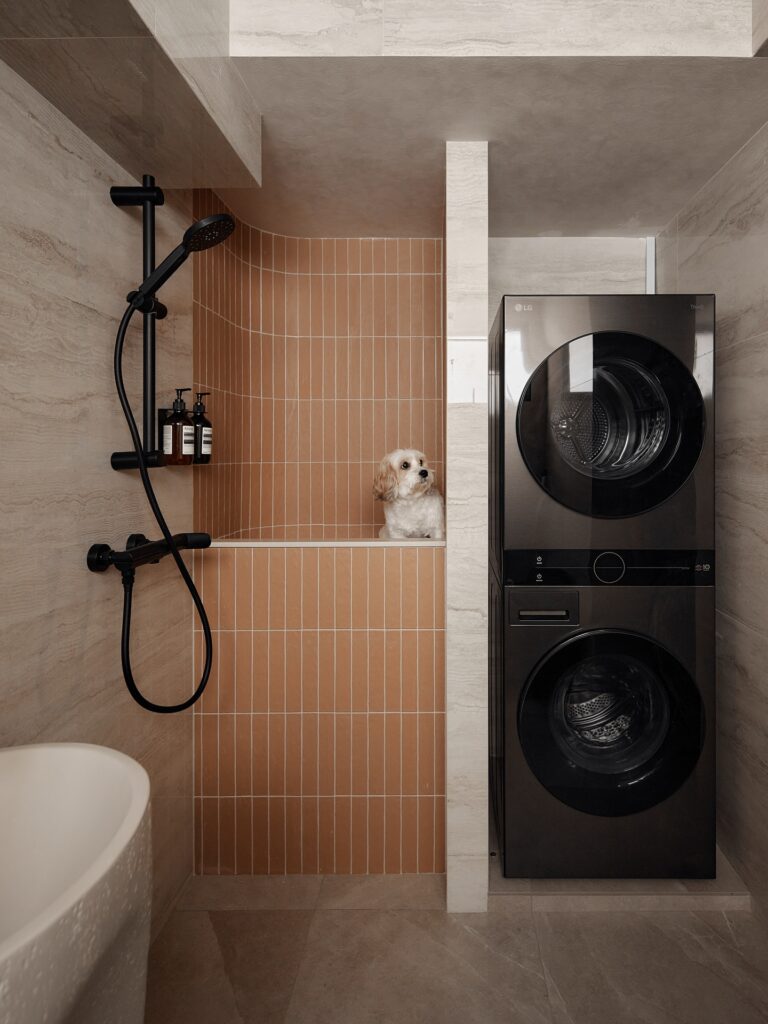
Your golden just rolled in something unidentifiable in the backyard. You’re chasing her through the house, she’s dripping mud on your travertine floors, and the only option is the bathtub — which means you’re basically bathing yourself too by the end of it.
This setup from the image? It’s the answer.
A recessed shower nook tiled in warm terracotta subway tiles (laid vertically in a 2×8 inch format) with a built-in knee-height ledge — that’s where the magic happens. The ledge sits at roughly 18–20 inches off the floor, giving your dog a stable platform so you’re not hunching over the tub floor wrecking your back.
Materials & Tools
– Terracotta ceramic subway tiles (2×8 inch, matte finish)
– White grout for contrast lines
– Cement board backer for wet-area walls
– Black matte handheld shower rail (adjustable slide bar)
– Black matte fixtures — valve, hose, showerhead
– Tile adhesive (waterproof, polymer-modified)
– Waterproof membrane (RedGard or similar)
– Notched trowel, tile saw, level, grout float
– Built-in recessed shelf (tiled to match)
Instructions
Start by framing out the nook opening — roughly 36 inches wide by 48 inches deep gives enough room for a large dog without feeling cramped. Frame the ledge at 18 inches high using treated lumber, then sheathe everything in cement board before any tile goes up.
Apply your waterproof membrane to every surface — walls, ledge top, floor. Two coats minimum. This step protects your subfloor from years of splashing, which means the whole structure stays solid instead of rotting out quietly behind your tiles.
Once dry, start tiling the back wall first using your terracotta 2×8 tiles in a vertical stacked pattern. Vertical lines make the nook feel taller and give it that intentional, designed look you’re going for. Use white grout with tight 2mm joints — that crisp contrast is what gives it the Pinterest-finish.
Tile the ledge top with a bullnose edge tile so there are no sharp corners. And tile the floor of the nook in a matching or complementary tone to keep it cohesive.
Mount your adjustable black matte slide rail on the side wall, connect the handheld hose, and set the valve at a comfortable standing height for you. The handheld head means you control exactly where the water goes — no soaked ceilings, no panicked golden jumping out mid-rinse.
Add a small recessed shelf niche in the back wall at shoulder height while you’re tiling — just a 12×6 inch cutout — and that’s where your dog shampoo, conditioner, and detangler live. Built-in storage means zero bottles cluttering your shower floor.
The ledge does the real work here. A raised platform keeps your dog still and secure, cuts your rinse time in half, and saves your lower back from a full bath-night workout — so bath time stops being a thing you dread.
Keep a rubber non-slip mat on the ledge surface even with tile. Wet paws on tile can startle a dog mid-wash and make them associate the station with something scary. A mat fixes that before it starts.
Prep Time: 1 day (waterproofing + dry time) | Active Project Time: 2–3 weekends | Difficulty Level: Intermediate
📸 Photo credit: Instagram @leinterioraffairs
#7: The Geometric Tile Walk-In Dog Shower That’ll Make Your Bathroom Look Like a Boutique Hotel
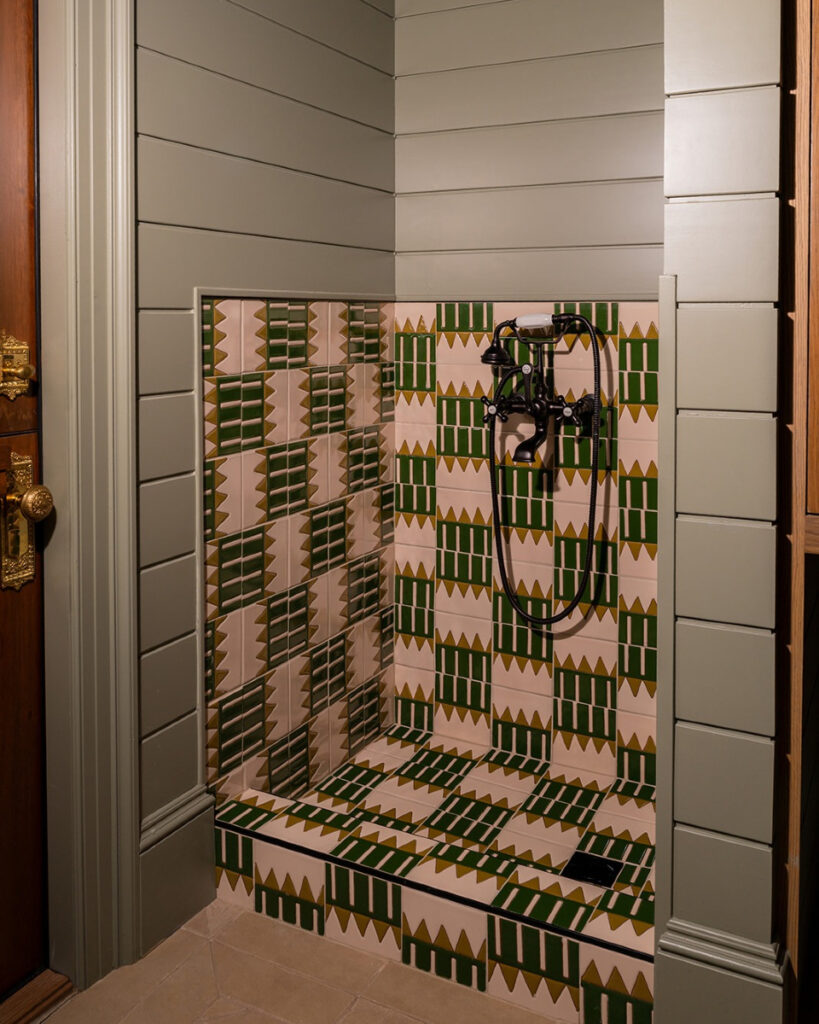
Okay, real talk — you know that moment when your golden retriever bolts through the back door after a rainy walk and you’re just standing there, hose in hand, trying to convince her to stay still on the slippery bathroom floor? Yeah. That’s the exact chaos this build was made for.
This walk-in shower station uses handmade ceramic tiles in a blush pink, forest green, and mustard gold geometric pattern. The walls feature a zigzag triangle and stacked rectangle motif — it’s giving Art Deco meets southwest textile, and I am obsessed. The fixtures are matte black cross-handle wall-mount faucets with a handheld spray attachment — which is the whole game-changer here.
Materials & Tools:
– Blush pink ceramic subway tiles (base field tiles)
– Forest green and mustard geometric pattern tiles (custom or handmade)
– Matte black wall-mount faucet set with handheld hose
– Black linear floor drain
– Waterproof tile backer board
– Tile adhesive mortar + grout
– Wet saw + tile spacers
– Waterproof sealant
– Level + measuring tape
– Gray shiplap-style wall panels (surrounding walls)
Prep Time: 2–3 hours | Active Project Time: 2–3 weekends | Difficulty Level: Advanced
Instructions
Start by framing out a recessed niche in your bathroom wall — you want at least 36 inches wide by 48 inches deep to give a mid-size dog room to move around without bumping the walls. My cousin built one slightly smaller and regretted it the second her lab mix hit adolescence.
Install your waterproof backer board on all interior surfaces first. Don’t skip this step — moisture gets into everything, and you want zero mold surprises six months later. Apply a layer of waterproof membrane over the backer before any tile goes up.
For the floor, set your black linear drain along the back edge of the niche. Slope your mortar bed slightly toward it — about a ¼ inch drop per foot — so water drains toward the back instead of pooling near the opening. This keeps wet paw prints from spreading across your floor, which means your golden stays contained and your grout stays cleaner longer.
Now the fun part — the tile layout. Start your geometric patterned tiles from the center of the back wall and work outward. The zigzag triangles need to align at every grout joint, so dry-lay your full wall before committing to adhesive. Use 1/16-inch tile spacers to keep those lines sharp.
Once tiles are set and grouted, seal everything with a penetrating waterproof grout sealer. Mount your matte black faucet set at about 48 inches from the floor — high enough to rinse your dog’s back without bending over, which saves your spine on bath day.
The handheld hose attachment is honestly the hero here — directional control means you rinse under the belly and behind the ears without soaking yourself. And the surrounding gray shiplap panels keep the rest of the wall dry while tying the whole space into a cohesive, magazine-worthy look.
Seal the transition between the tile niche and shiplap walls with a flexible silicone caulk in a matching gray tone. It moves with the wall and won’t crack when steam builds up.
Regrout your floor tiles every 12–18 months depending on use — dog showers get more wear than human ones because of the grit, fur, and frequent rinsing.
📸 Photo credit: Instagram @clayimports
The One Mistake That’ll Flood Your Entire Bathroom (And How to Skip It)
Okay, real talk — the biggest mistake I see people make with DIY dog bathing stations? They forget to angle the floor toward the drain.
Like, even a tiny slope matters. Without it, you’re standing in three inches of muddy golden retriever water. I learned this the hard way when my cousin’s lab mix turned bath time into a literal flood situation. It was not cute.
Here’s the pro secret nobody talks about: seal every single grout line before your dog ever steps in. Dog nails are brutal on unsealed grout, and moisture creeps in fast. Use epoxy grout instead of regular cement-based grout — it resists staining, odor, and bacteria way better.
Also? Mount a handheld sprayer at your dog’s shoulder height, not your hip height. You’ll rinse under the belly and legs without bending your back into a pretzel.
One more thing — build in a non-slip mat niche directly into the floor design. A mat that slides around defeats the whole purpose and stresses your pup out before you even start.
Your Dog’s Comfort Starts This Weekend
Pick one spot in your home that drives you crazy — the muddy entryway, the drool-covered couch corner, whatever it is. Start there. One small change makes the whole space feel intentional again.
Grab your golden, measure that spot, and just start. You don’t need a full renovation. You need one good piece that works for your life, not against it.
And honestly? Your home can be beautiful and dog-friendly at the same time. I promise those two things aren’t enemies.
So tell me — what’s the one area in your home where your pup has completely taken over? 🐾