
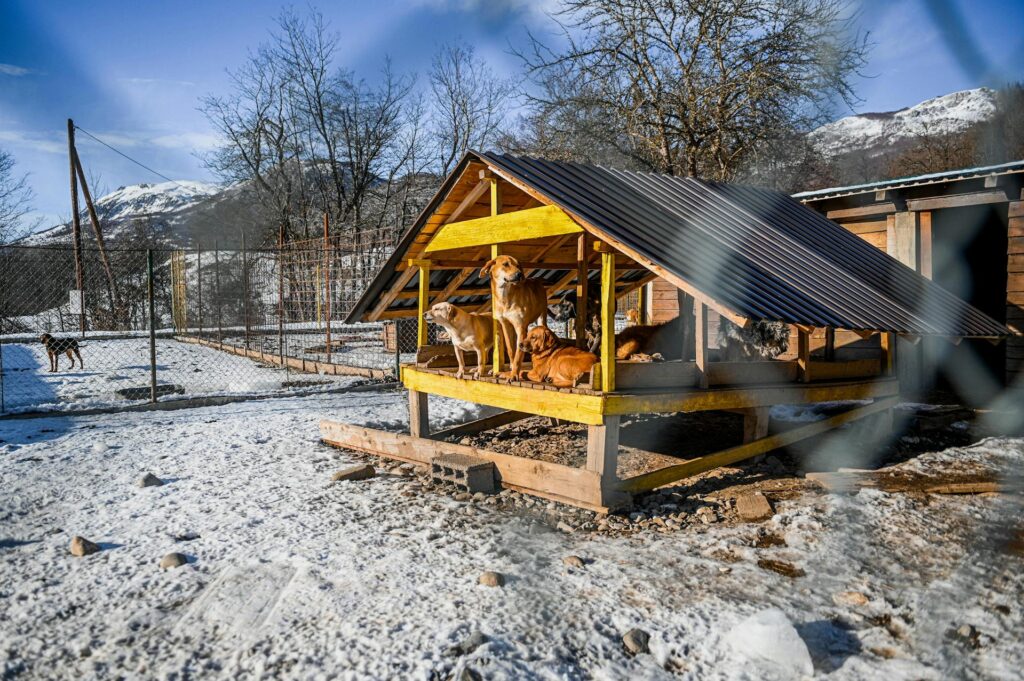
Okay, so you know that moment when your golden retriever has been zooming around your backyard again and tracks mud straight across your freshly mopped floors?
Yeah. I lived that every single day last summer.
My dog Koda destroyed my back porch, my sanity, and honestly? My Pinterest aesthetic. I had this whole vision — cute outdoor space, cozy furniture — gone. Replaced by a dirt crater and chewed-up planters.
Here’s the thing though: giving your dog their own dedicated space actually fixes all of that. A solid DIY dog run keeps the chaos contained, your yard looking gorgeous, and your floors mud-free.
And it doesn’t have to look like a kennel. These 7 ideas are budget-friendly and genuinely cute — the kind of setup that fits right into a styled backyard, not against it.
#1: DIY Backyard Dog Run With a Plush Toy Station — Because Your Pup Deserves a Whole Setup
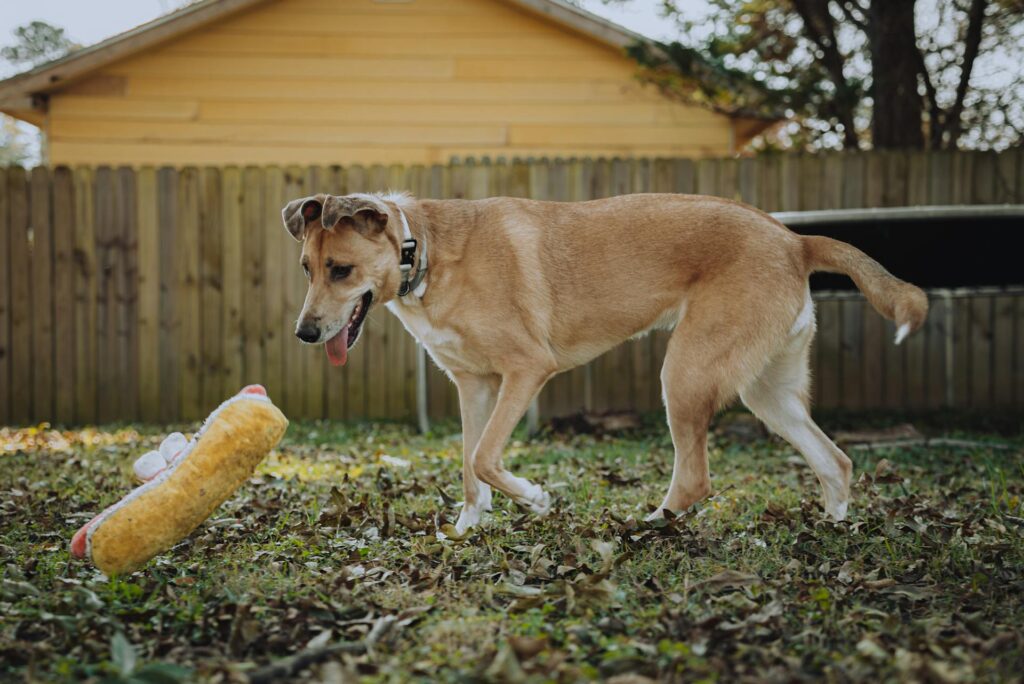
You know that moment when your golden retriever bolts across the backyard, grabs her favorite squeaky toy, and somehow ends up tracking half the lawn through your kitchen? Yeah. That muddy chaos is exactly what this DIY dog run is here to fix.
This setup gives your dog a dedicated play zone — think a 10-foot x 6-foot enclosed grass run with a designated toy drop spot right at the entrance. The dog in this photo is playing with a plush hot dog toy on natural grass inside a cedar-fenced backyard enclosure, and honestly? It looks like the cutest little dog paradise.
Materials & Tools You’ll Need:
– 4×4 cedar posts (x6) — 8 feet tall
– 2×4 pressure-treated lumber for framing
– 16-gauge galvanized wire mesh — 4-foot height rolls
– Heavy-duty U-post staples
– Gate latch hardware kit
– Gravel base (pea gravel, 2-inch depth)
– Weed barrier fabric
– Natural bermuda sod or turf rolls
– Post hole digger, drill, wire cutters, level
Prep Time: 1 hour | Active Project Time: 4–6 hours | Difficulty Level: Intermediate
Instructions
Start by marking your 10×6 foot perimeter with stakes and string. Dig post holes 24 inches deep at each corner and two midpoints along the long sides — this keeps the wire mesh from bowing under pressure when your dog runs full speed into it (and she will).
Set your 4×4 cedar posts in concrete mix, let them cure 24 hours before touching anything else. Rushing this step is the one thing that ruins the whole structure.
Once the posts are solid, roll out your 16-gauge wire mesh and staple it to the posts using U-staples every 6 inches along each post. The tighter the stapling pattern, the less your dog can push the mesh out from the bottom.
Lay your weed barrier fabric flat inside the run first, then pour your pea gravel layer 2 inches deep around the perimeter edges. Lay your sod or turf rolls in the center section — this keeps the natural grass feel that dogs genuinely prefer under their paws.
Hang your gate on one short end using a self-closing latch kit. Position it so it swings outward — that way your dog can’t barrel into it and pop it open mid-zoomie session.
The best part: add a small cedar wood shelf or crate just inside the gate entrance as a toy station. Keep a basket of her favorite plush toys there. She learns where playtime lives, and you stop finding squeaky hamburgers under your couch cushions.
The galvanized wire mesh resists rust through every season — meaning this run stays safe and sturdy year after year without you replacing panels every spring.
Soak the sod well after installation and keep it watered for the first two weeks. Grass roots in a dog run need that extra establishment time before paws start pounding on it daily. And if you love building things for your pup, 13 Genius DIY Dog Stuff Every Pet Parent Needs to Try Today! has even more weekend project ideas worth bookmarking.
📸 Photo credit: pexels
#2: DIY Artificial Turf Dog Run with Horizontal Slat Fence
Prep Time: 2–3 hours | Active Project Time: 1–2 weekends | Difficulty Level: Intermediate
You know that moment when your golden retriever bolts through the back door and tears up every inch of your yard? Yeah. Mud prints on the patio, dead grass patches, the whole thing.
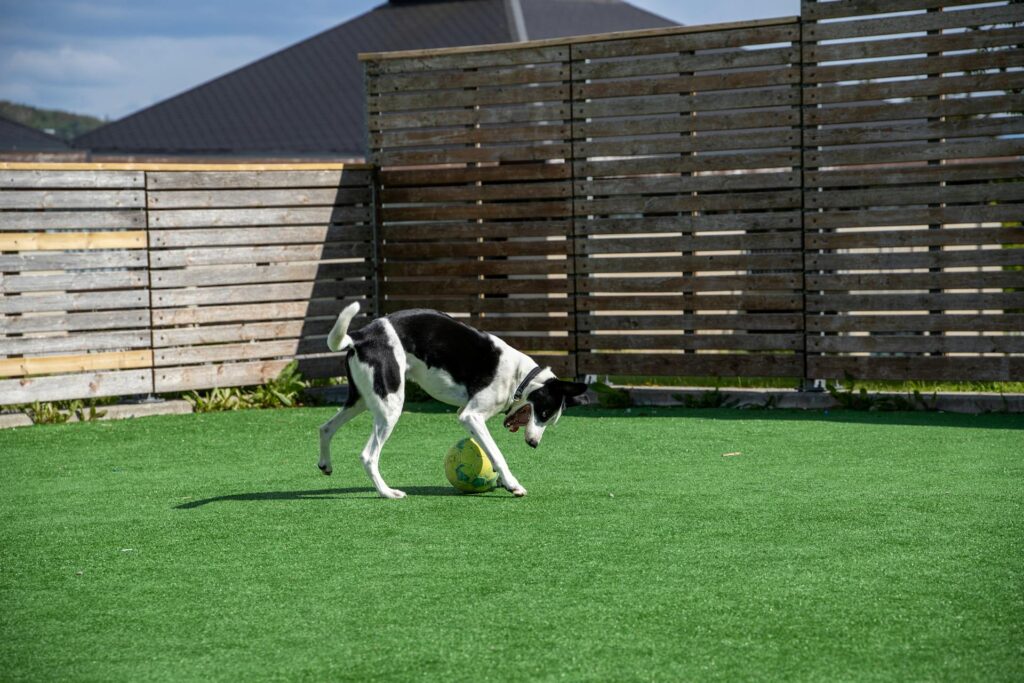
This setup in the photo is exactly what you need.
Materials & Tools:
– Artificial turf roll (3/8″ pile height, polyethylene, green) — measured to your yard dimensions
– Horizontal cedar or pressure-treated wood slats — 1″ x 4″ boards, weathered gray finish
– Concrete deck blocks for fence posts
– Landscape fabric underlayer
– Galvanized nails or outdoor screws (2.5″)
– Rubber turf adhesive
– Box cutter and measuring tape
– Power drill
– Tamper or hand compactor
Instructions
Start by clearing your yard space down to flat, compacted dirt. Roll out your landscape fabric first — this blocks weeds from punching through your turf and keeps the surface level for years.
Cut your artificial turf to size using a sharp box cutter. Always cut from the back side so the blade follows the grid lines cleanly. Press the edges down with rubber adhesive and let it cure for at least 4 hours before your dog uses it.
For the fence, set your concrete deck blocks every 6 feet around the perimeter. Slot your vertical posts in, then attach your horizontal cedar slats with 2.5″ galvanized screws, leaving a half-inch gap between each board. That gap lets airflow through and gives the fence that Pinterest-worthy slatted look you see here.
And honestly? The artificial turf feature means zero muddy paw prints tracked through your house — which pays off every single rainy Tuesday.
The yellow ball the dog in the photo is chasing? Totally optional. But a 12 Creative DIY Dog Gate Ideas for Your Home would pair with this run to keep your pup contained without a full fence rebuild.
Seal your cedar boards with an outdoor wood stain before assembly. It adds maybe 30 minutes to your build but protects the wood from graying too fast in rain.
📸 Photo credit: pexels
#3: Build a Multi-Run Dog Kennel With Brick Pillars and Wire Mesh Panels
Your golden girl bolts out the back door, and thirty seconds later she’s back — paws caked in mud, tail going a hundred miles an hour, heading straight for your cream linen sofa. You know that feeling.
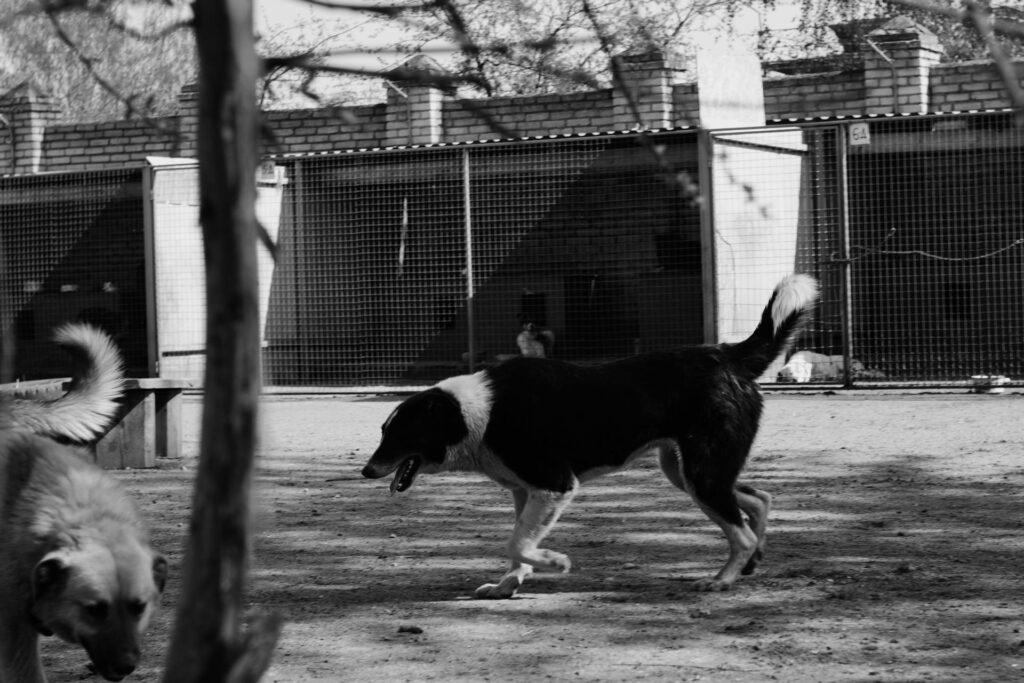
This setup from the photo is the fix. It’s a proper multi-bay kennel run using brick or concrete block pillars, galvanized wire mesh panels, and a gravel or compacted dirt floor base. Think structured, clean, almost Pinterest-worthy — with numbered bays so you can separate dogs by size or mood.
Materials & Tools
– Concrete blocks or brick (standard 4x8x16 inch units) for corner and mid-span pillars
– Galvanized welded wire mesh panels (4 ft x 8 ft, 14-gauge)
– Steel U-channel posts for panel framing
– Exterior metal screws and zip ties (heavy-duty, UV-resistant)
– Concrete mix for footing bases
– Gravel (¾ inch crushed stone) for drainage layer
– Number plates (optional, like the “54” visible in the photo)
– Shovel, level, drill, wire cutters, masonry trowel
Instructions
Start by marking your run layout with stakes. Each bay in the photo looks roughly 6 ft wide x 10 ft deep — enough room for a golden to actually stretch and trot without spinning in circles.
Dig 12-inch deep footing holes where each pillar sits. Pour your concrete mix, let it cure 24-48 hours before stacking your blocks. Stack pillars to about 5-6 ft tall, keeping a level on every third course — one crooked pillar throws the whole panel alignment off.
Once pillars are set, slide your U-channel steel posts between them to frame each bay opening. This is where your mesh panels anchor. Secure panels to the channels using exterior screws every 6 inches along the frame edge, then reinforce corners with heavy-duty zip ties. The wire mesh — pulled tight before fastening — keeps panels from bowing when your dog leans into them.
Lay 3-4 inches of compacted gravel across the floor of each run. Gravel drains fast, dries fast, and doesn’t hold mud the way bare dirt does. Wire mesh panels allow airflow and visibility, which keeps dogs calmer and reduces barking — that’s the feature-benefit-payoff right there: open sightlines keep anxiety low, which means a quieter, happier dog all day.
If you’re building more than two bays, number each one. It sounds small, but when you’re managing feeding time or vet records, you’ll thank yourself.
Bolt a simple latch gate (same mesh-and-frame construction) on the front of each bay. Leave at least 18 inches of clearance between the gate and the opposite fence wall so you can swing it open fully while holding food bowls.
Prep Time: 1 day (concrete curing) | Active Project Time: 6-8 hours | Difficulty Level: Intermediate
The whole structure in the photo sits against an existing brick perimeter wall — smart, because that back wall does half the structural work for you. And if you already have a boundary wall, you can anchor your rear panel directly into it with masonry anchors, which cuts your material list down.
If your golden tends to dig, bury a strip of hardware cloth horizontally, 12 inches out from the base of each panel and 6 inches underground. Dogs almost never dig through a horizontal barrier — they just give up and go find their water bowl instead.
📸 Photo credit: pexels
#4: Build a Cozy Wooden Cabin Dog Run Your Pup Will Never Want to Leave
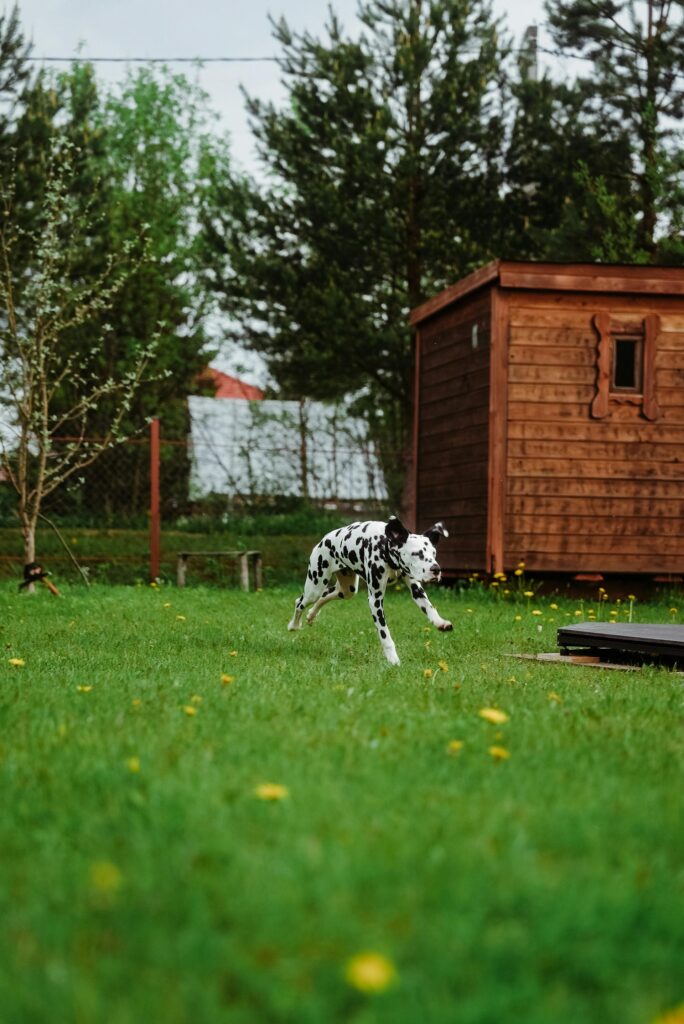
Prep Time: 1–2 hours planning | Active Project Time: 2–3 days | Difficulty Level: Intermediate
You know that moment when your golden bolts out the back door and you still can’t catch her before she’s rolled in something questionable? Yeah. This setup is the answer to that chaos.
This DIY dog run pairs a lush grass play area with a cedar wood cabin shelter — and honestly, it looks like something straight off a Pinterest board. The kind your neighbors ask about.
Materials & Tools:
– Cedar planks (1×6 and 2×4) for the cabin frame and siding
– Corrugated metal or cedar shingles for the roof
– Pressure-treated 4×4 posts for corner framing
– Small decorative window frame (approx. 8×8 inches)
– Exterior wood stain in a warm walnut or red-brown tone
– Grass seed or sod for the run floor
– Jigsaw, drill, screws, level, measuring tape
Instructions
Start by marking your run boundary — mine was roughly 10×15 feet — and clearing the area down to bare soil. Lay your sod or seed the ground first so it has time to establish while you build the cabin.
Frame the cabin using 2×4 lumber, building a simple box structure at about 4 feet wide by 5 feet deep. The upright corner posts anchor everything — drill pilot holes before screwing planks horizontally across each wall panel so the cedar doesn’t split. Attach the siding planks tight, leaving zero gaps where drafts could sneak in during cooler months.
Cut out the small window opening with a jigsaw — roughly 8 inches square — then frame it with thin trim pieces for that decorative cabin look. And trust me, this detail alone makes the whole build feel intentional rather than thrown together.
Stain all exterior wood with a water-resistant cedar stain before assembly. The stain seals the grain against rain and mud, so your cabin holds up season after season without warping — that’s the payoff you want for all this effort.
Finish by adding a low wooden step platform at the entrance. It keeps paw mud from tracking straight inside and gives your dog a clear entry point she’ll actually use.
A slightly raised cabin floor — even just 3–4 inches off the ground — keeps moisture from sitting under the structure and rotting the base. Worth the extra step.
If you want more layout inspo before you finalize your design, 10 Inspiring Dog Run Designs for Your Side Yard has some really solid ideas for working with different yard sizes.
📸 Photo credit: pexels
#5: Build a Glass Greenhouse-Style Dog Run Your Pups Will Actually Use
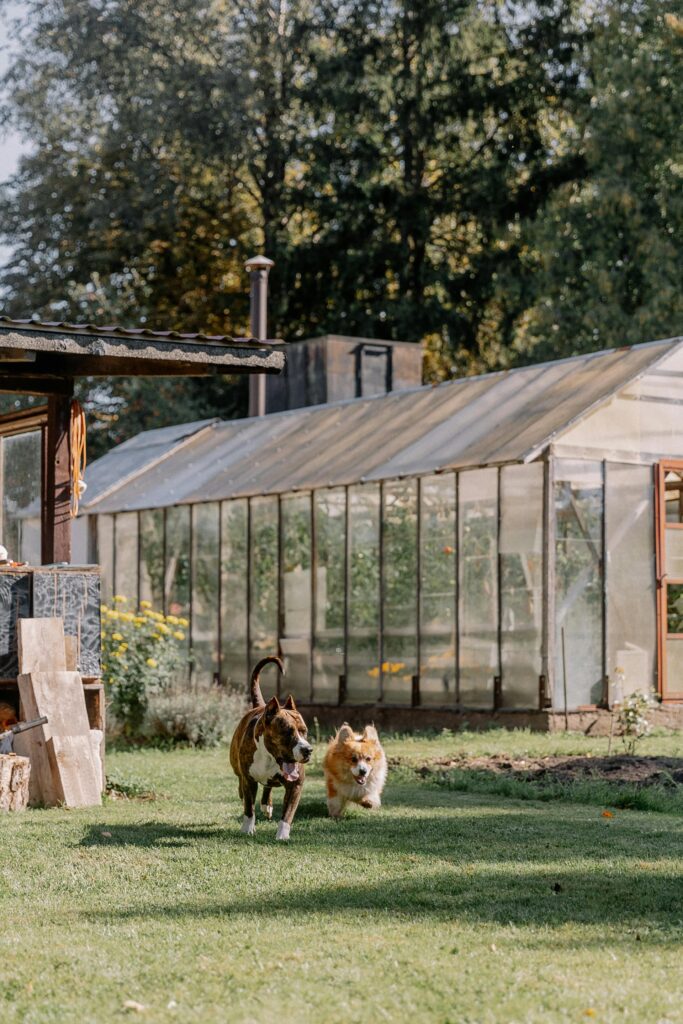
Your golden retriever just bolted through the garden again. Mud on the greenhouse glass, paw prints across the lawn, and you’re standing there holding a hose wondering how two dogs can cause this much chaos in thirty seconds flat.
I had the same moment watching my cousin’s pit bull and her little Pomeranian tear through her backyard last fall. That’s when she built this — and honestly, it changed everything.
This setup uses the greenhouse structure as a natural boundary wall, turning dead garden space into a structured, actually beautiful dog run.
Materials & Tools:
– 8×16 ft glass panel greenhouse frame (existing or kit)
– 4×4 pressure-treated lumber posts
– 16-gauge galvanized wire mesh fencing
– Concrete mix (2 bags per post)
– Rust-resistant gate hinges and latch
– Grass seed or rubber mulch ground cover
– Post hole digger, drill, level, wire cutters
Instructions
Dig post holes 24 inches deep along the greenhouse’s open side, spacing posts 4 feet apart. Pour concrete, let it cure 48 hours — don’t rush this part.
Attach wire mesh panels between posts, pulling the mesh taut before securing. A loose mesh sags fast and dogs will find it.
Install the gate on the greenhouse-facing side so the structure itself closes off one full wall — that’s less fencing you buy, and a sturdier enclosure your dogs can’t bulldoze.
Seed the interior with grass or lay rubber mulch for joint-friendly footing, which keeps bigger dogs like a golden comfortable during long play sessions and saves your lawn from becoming a dirt bowl.
Want an easy win? Add a water-resistant hook on the post for leashes, so everything stays in one spot.
Trim the bottom mesh edge flush to the ground and pin it with landscape staples every 6 inches — this stops diggers cold.
Prep Time: 1 hour | Active Project Time: 6–8 hours | Difficulty Level: Intermediate
A solid greenhouse-adjacent run like this gives your dogs defined space to run, which means fewer zoomie disasters through your flower beds and zero muddy sprints through the back door.
If you love this kind of structured outdoor setup, 7 Cozy DIY Indoor Dog Kennel Ideas are worth bookmarking for winter months when outdoor time gets limited.
Make sure both dogs are familiar with the space before closing the gate the first time. Walk them in together, let them sniff every corner, and stay inside with them for the first ten minutes. It turns the run from “strange enclosure” to “our place” way faster than you’d think.
📸 Photo credit: pexels
#6: Set Up a Backyard Water Play Zone for Your Dog
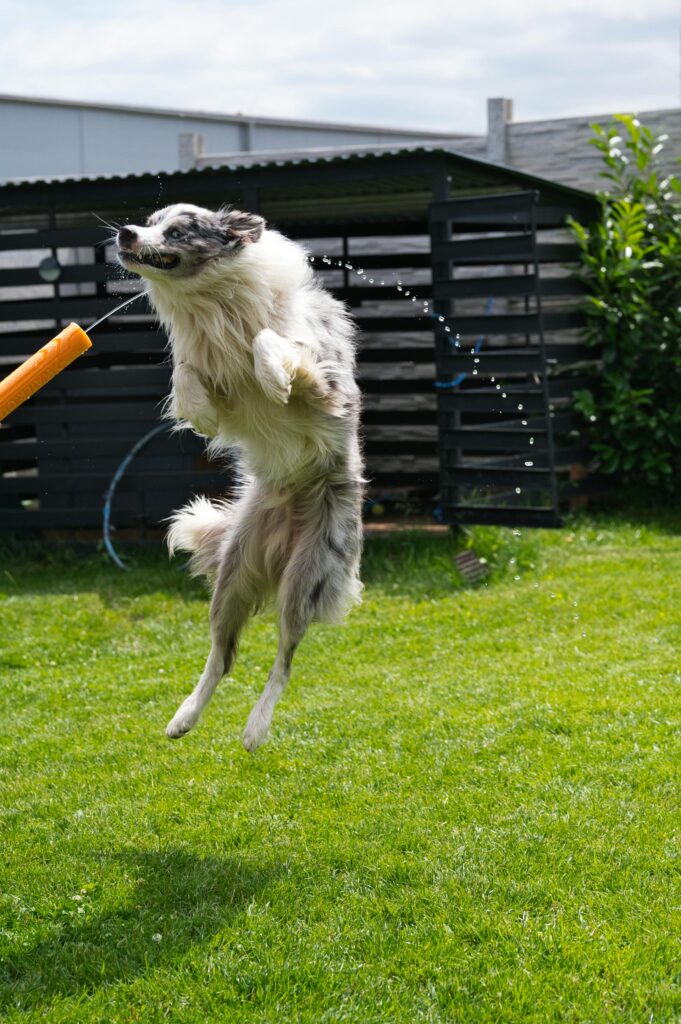
Prep Time: 15 minutes | Active Project Time: 30 minutes | Difficulty Level: Easy
You know that moment when your golden is losing her mind in the backyard heat, and you’re standing there with a hose just… winging it? Yeah. Water going everywhere, muddy paw prints on the patio, and your dog is still somehow bored.
This DIY water play station fixes that.
Materials & Tools You’ll Need:
– Orange handheld garden hose nozzle (adjustable spray setting)
– Garden hose (25–50 ft, standard ½-inch diameter)
– Rubber-backed grass mat or designated lawn section (minimum 6×6 ft)
– Wooden slatted privacy fence panels (optional backdrop, dark stained cedar)
– Hose stake or ground anchor
– Waterproof sunscreen for yourself — trust me on this one
Instructions
Start by picking your spot. You want a flat patch of grass away from your deck — that 6×6 ft open zone becomes your dog’s personal splash pad.
Connect your ½-inch hose to the outdoor spigot and attach the orange adjustable nozzle at the end. That nozzle is everything here. The adjustable stream setting lets you control pressure — high pressure engages your dog’s prey instinct to chase, while a softer mist cools her down after a sprint. My cousin’s border collie literally trembles with excitement before the water even turns on.
Hold the nozzle steady at nose height — around 2–3 feet off the ground. Angle the stream so it arcs slightly upward, creating that jump-worthy water curve you see in the photo. Your dog will leap for it.
And honestly? The adjustable nozzle (feature) lets you switch between a chase stream and a cool-down mist (benefit), which means one tool handles both play AND recovery on hot days (payoff).
Let her jump, snap, and circle. Real talk: keep sessions to 10–15 minutes max so she doesn’t overheat from all that excitement.
If you want to channel all this backyard energy into something more structured, 7 DIY Dog Agility Course Ideas for Fun pairs perfectly with a water station as a cool-down reward between runs.
Keep a dry towel on a nearby hook. Your floors will thank you.
📸 Photo credit: pexels
#7: Build a Cozy Log Cabin Dog Run With a Firewood Backdrop
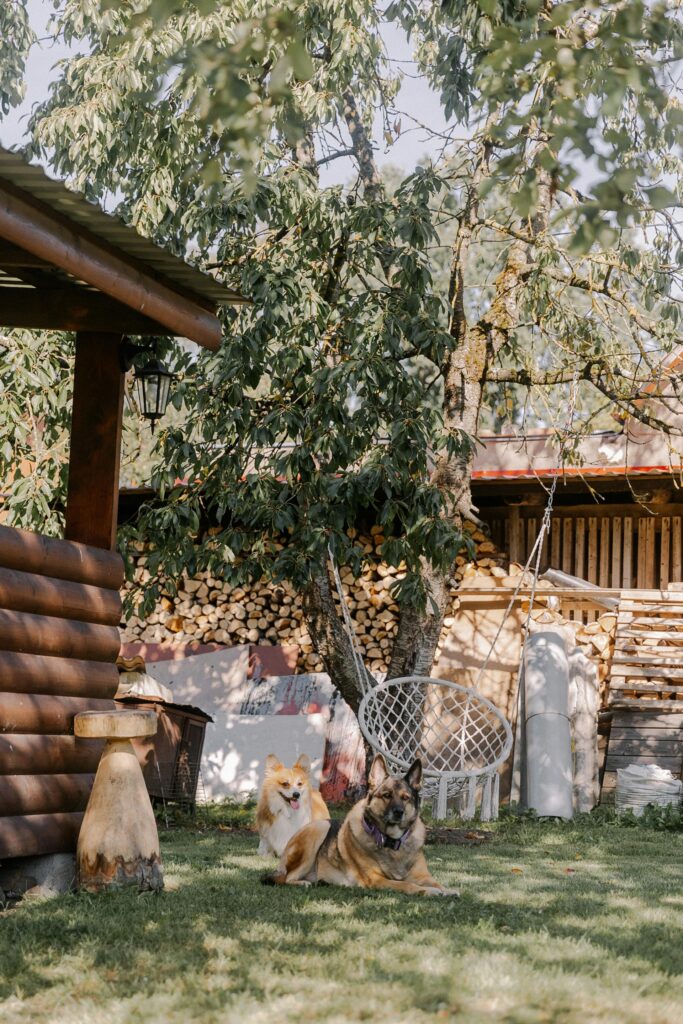
Prep Time: 1 hour | Active Project Time: 6–8 hours | Difficulty Level: Intermediate
Your golden’s been digging up the garden again. You’ve got muddy paw prints on the kitchen floor, and she’s got that “but I was just exploring” look. Girl, I feel you — my dog did the same thing until I finally built her a dedicated outdoor space she could actually call her own.
This one’s giving full rustic Pinterest board energy, and it’s easier than it looks.
Materials & Tools:
– 4–6 log-style round wooden posts (6 ft height, cedar or pine)
– Galvanized chain-link or welded wire fencing (4 ft x 10 ft panels)
– Landscape staples and zip ties
– Grass seed or sod patch (5 x 8 ft minimum ground area)
– Macramé hanging chair (optional, for the human — but why not)
– Cordless drill, post-hole digger, level, measuring tape
– Outdoor lantern hook (black metal finish)
– Stacked firewood as a natural windbreak backdrop
Instructions
Start by marking your perimeter. Measure out a 10 x 8 ft rectangle on flat grass and use spray paint or stakes to mark each corner. Dig your post holes 18–24 inches deep — this depth keeps the structure stable through wind and rain, which means your dog stays safely contained without you checking the fence every morning.
Drop your cedar log posts into each hole and pack them tight with gravel and soil. Let them set for at least two hours. Cedar naturally resists moisture, so it won’t rot when rain hits — that’s the feature-benefit-payoff right there: cedar construction keeps maintenance low, which means years of use instead of a rebuild every spring.
Attach your fencing panels by wrapping them around the posts using galvanized zip ties every 6 inches. Pull the wire taut as you go. Loose fencing sags fast and creates gaps your dog can squeeze through — ask me how I learned that one the hard way with my shepherd mix.
Stack your firewood logs along the back exterior wall as a natural windbreak. It blocks cold gusts and honestly looks gorgeous against the log posts. Hang your black metal lantern on a hook near the entrance for evening visibility.
Lay fresh sod or seed inside the run. Grass gives your dog real ground to walk on — her paws stay healthier than on concrete, and it keeps the run looking like part of your yard, not an afterthought.
If your property has a slope or your dog is older, 7 Heartwarming DIY Dog Ramp Ideas for Your Pup pairs well with this setup for easy entry and exit.
Add a macramé hanging chair just outside the run so you can sit with her while she settles in. Because honestly? She’s going to want you close the first few days.
Keep a small stump stool inside the run — it doubles as a perch for her and a step for you when you need to reach the latch.
📸 Photo credit: pexels
The One DIY Dog Run Mistake That’ll Cost You a Full Rebuild
Okay, real talk — the biggest mistake I see people make? Building the dog run before testing drainage.
I did this exact thing in my backyard three summers ago. Spent a whole weekend laying gravel, securing panels, feeling so proud. First rainstorm? Puddle city. My dog refused to go near it, and honestly, I didn’t blame her.
Here’s the pro move nobody talks about: pour a bucket of water on your chosen spot before you buy a single material. Watch where it pools. That 10-minute test saves you from ripping everything up later.
Also — and this one’s huge — skip the cheap galvanized wire if you have a heavy chewer. It bends, it gaps, and golden retrievers will absolutely find that gap.
If you’re going full backyard project mode, these DIY dog playground backyard ideas pair perfectly with a dog run setup, because your pup needs enrichment inside that space, not just a pen.
Size up your gate opening too. You’ll thank yourself every single muddy morning.
Your Dog’s Clean Space Starts Today
Okay, so here’s the thing — you already know your golden deserves a spot that doesn’t make your living room look like a muddy disaster zone. Pick one idea from this list and just start. Even a simple basket or a designated mat makes a huge difference in how the whole room feels.
Don’t overthink it. Seriously. I spent weeks planning and then threw something together in an afternoon — and it worked better than anything I’d dreamed up.
If you’re into the DIY rabbit hole, these creative dog feeding station ideas pair so well with a dedicated dog zone setup.
So tell me — which storage idea are you actually trying first? 🐾