
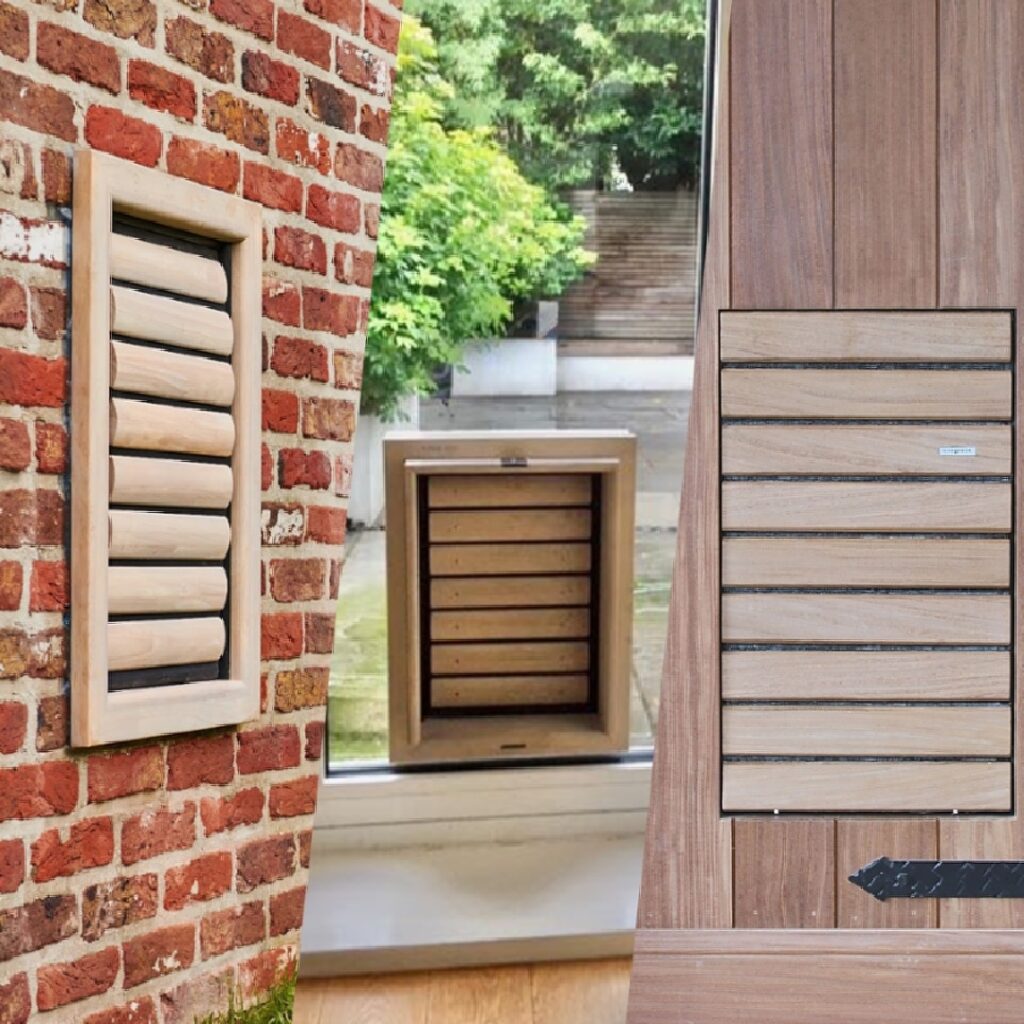
Okay, so real talk — your golden retriever is running you.
You open the back door seventeen times a day, every single day, mud gets tracked across your clean floors, and that gorgeous jute rug you pinned three months ago? Already destroyed. I’ve been there. My dog Koda had me basically operating as his personal doorman for an entire winter, and I was done.
Here’s what nobody tells you: a dog door doesn’t have to look like an eyesore bolted onto your beautiful home. Some of these dog door ideas actually make your space look more put-together, not less.
These 10 dog door ideas give your pup the freedom they’re craving while keeping your home looking Pinterest-board ready — because honestly, you deserve both.
#1: A Built-In Dog Gate That Looks Like It Belongs There
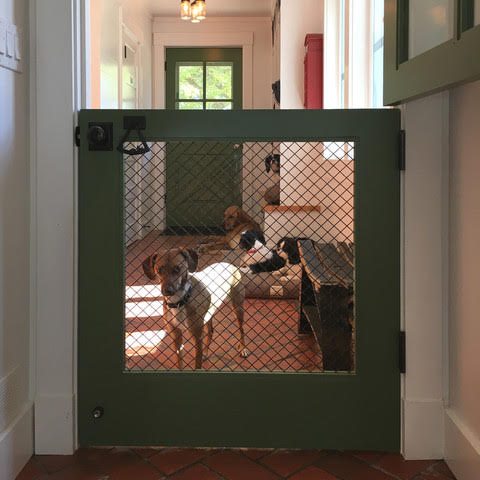
You know that moment when your golden bolts toward the kitchen the second you open the back door — muddy paws, wet nose, zero chill? This green painted gate is the answer you didn’t know you needed.
The setup here is so good. A hunter green, wood-framed gate with a diamond-pattern wire mesh panel sits flush between two white walls, doing double duty as a dog barrier and a legit design moment. The dogs on the other side? Totally calm. Because they can see you. That wire mesh panel — instead of solid wood — keeps the space feeling open and lets natural light pass straight through.
To get this look, start with a solid wood gate frame (think 1.5-inch pine or poplar) painted in something deep like Benjamin Moore’s Tarrytown Green. The mesh insert is standard welded wire hardware cloth, stapled and sandwiched between trim pieces for a clean finish. Add matte black strap hinges and a slide-bolt latch and you’ve got yourself a gate that looks like it was always part of the house.
The brick-red tile floor on the dog’s side is the smartest move here — it wipes clean in seconds and hides the grime between washes. If you’re setting up a dedicated dog zone, this pairs perfectly with 7 cozy DIY indoor dog kennel ideas for a full mudroom-to-kennel setup.
Mount the gate at standard door height (around 36 inches) so bigger dogs can’t nudge it open. And size the mesh openings at 1-inch or smaller — that mesh opening keeps paws from getting caught but still gives your pup full visibility, which cuts down on anxious scratching and whining at the gate.
📸 Photo credit: Instagram @_rockpaperhammer
#2: The Built-In Dog Station with a Direct Outdoor Door Access
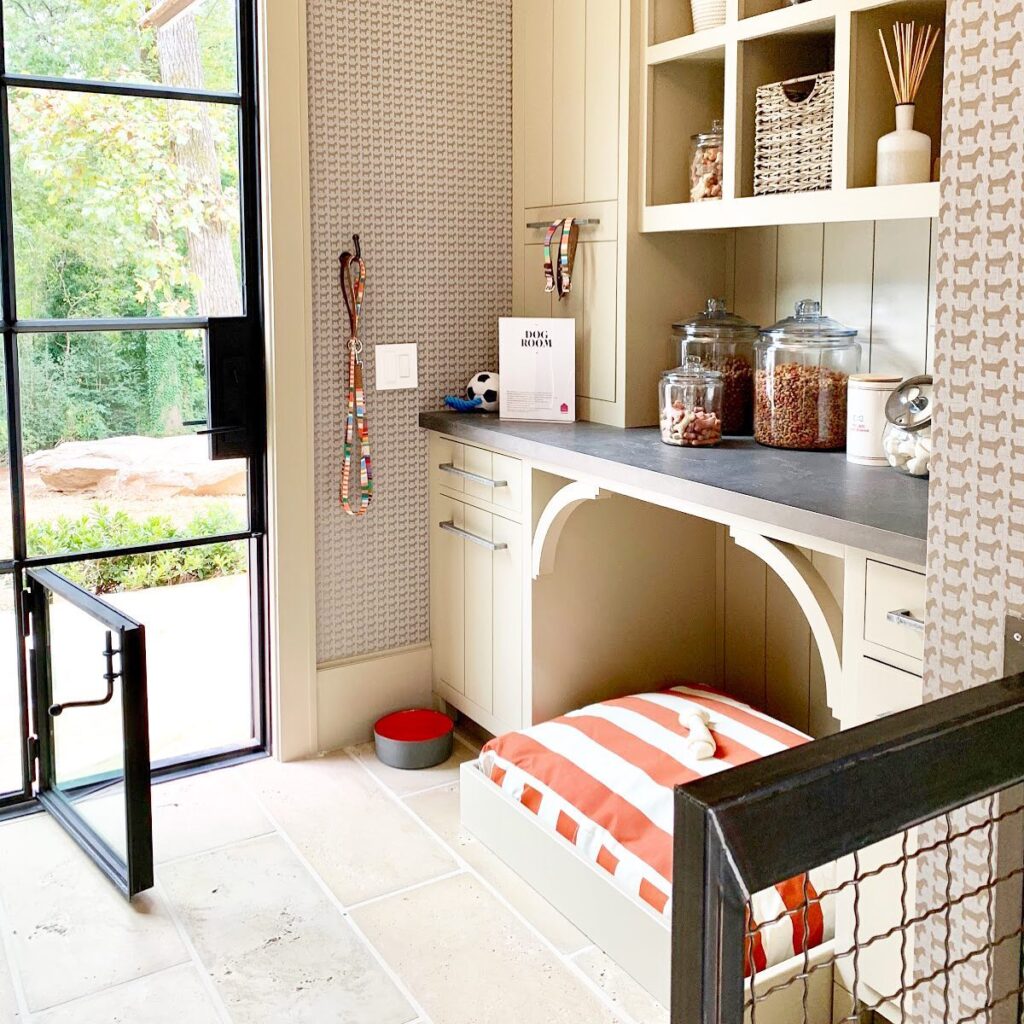
Okay, you have to see this setup. It’s the kind of dog room that makes you want to scrap your whole mudroom and start over — a cream-painted built-in cabinet system with a dark slate gray countertop, wallpaper printed with little dog silhouettes, and a steel-framed glass door that opens right to the backyard. Your golden retriever would sprint through that door and back again all day long.
The star of this whole thing? That built-in under-counter dog crate — framed with decorative corbel brackets and fitted with an orange and white striped canvas cushion. It’s not a cage shoved in a corner. It’s basically a dog suite built into the cabinetry itself. Cushion sits right on a pull-out drawer base, which means storage and comfort in the same footprint.
The countertop holds three large glass apothecary jars filled with kibble and treats — no more digging through bags. And the wall hooks hold colorful nylon leashes right next to the door, so walks actually happen instead of turning into a 10-minute search mission.
Here’s the trick: Mount your leash hooks at eye level, 60 inches from the floor, not near the floor where your dog can grab them. Learned that one the hard way with my cousin’s lab.
The crittell-style steel door with a built-in pet flap keeps the space functional without looking like a utility room.
📸 Photo credit: Instagram @belledecor_and_design
#3: The Stair-Landing Dog Gate That Looks Like It Belongs in an Interior Design Magazine
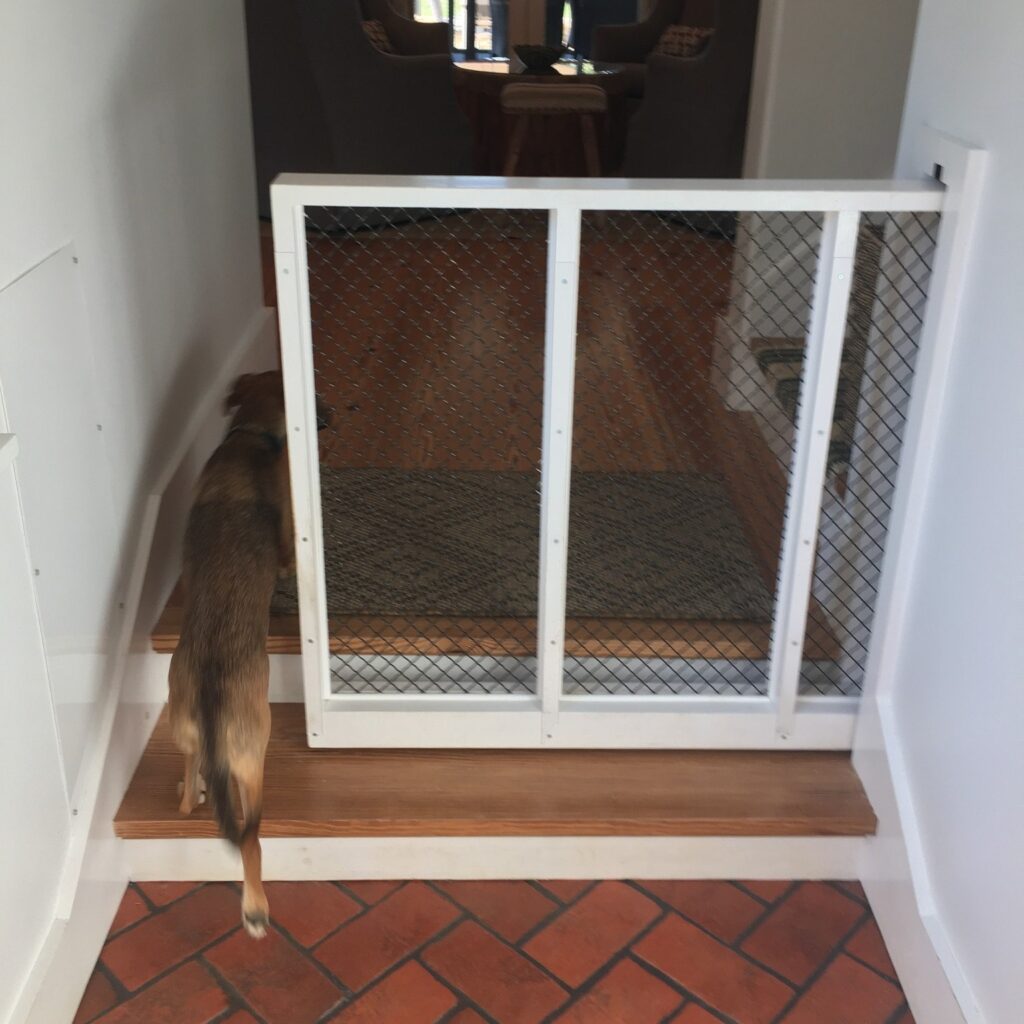
Your golden is standing at the top of the stairs giving you that look — the one that says “I will absolutely barrel down these steps and skid across the tile.” And you’re just standing there holding your coffee, bracing yourself.
This setup is the answer to that exact moment.
What you’re seeing is a white powder-coated metal frame gate stretched across a stair landing, fitted with diamond-pattern wire mesh panels. The gate sits flush between two white walls, and it works so well because it feels architectural — not like a baby gate you grabbed off Amazon at midnight.
The frame looks like 1.5-inch square aluminum tubing, painted white to match the trim. The mesh is galvanized steel wire in a classic diamond grid, secured with visible bolts at each corner — and honestly, those bolts add a little industrial charm. Below the gate, you’ve got warm wood stair treads paired with terracotta brick tile on the landing floor. That combo? Total Pinterest moment.
To DIY this, grab pre-cut aluminum square tubing from a hardware store, a roll of galvanized hardware cloth, and a piano hinge for the swing side. The mesh panel blocks your dog — so you get zero scrambling chaos on the stairs — and it still lets light and sightlines flow through the whole space.
Mount the latch side into a wall stud, not just drywall. A gate this size needs that anchor point, especially if your girl is 60-plus pounds and enthusiastic about dinner time.
📸 Photo credit: Instagram @_rockpaperhammer
#4: Dutch Door with a Half-Gate — The Chicest Dog Door Idea You’ll Actually Want in Your Home
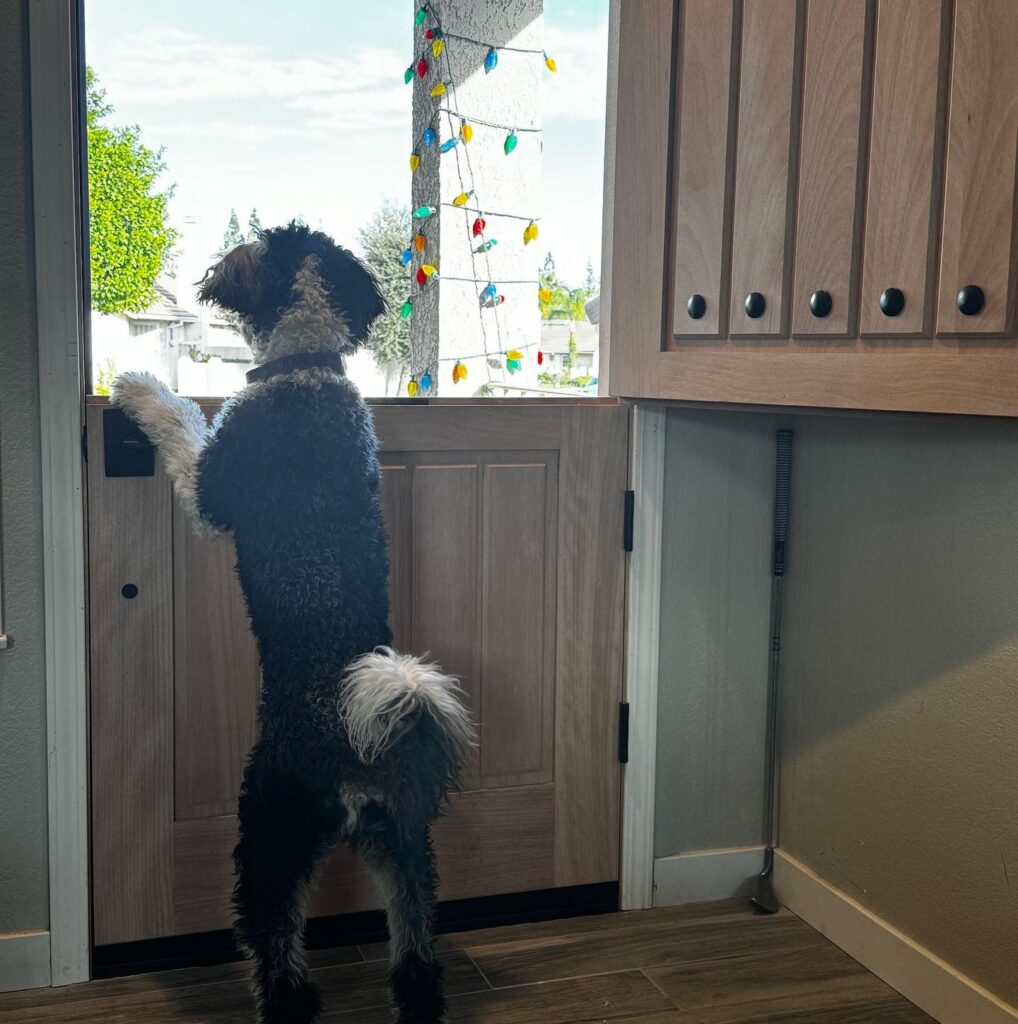
Your golden probably does that thing where she plants herself at the front door the second she hears anything outside. A car. A squirrel. The wind. And you’re left choosing between shutting her in completely or letting the whole neighborhood into your entryway.
This setup is exactly the fix.
A Dutch door split into top and bottom halves — with the lower half-gate panel latching independently — gives your dog full sightlines to the outside world without giving her an escape route. The door here is finished in a warm taupe wood-grain laminate, paired with matte black hardware, and it sits against gray-blue walls with wood-look tile flooring. The upper cabinets above match the same taupe tone, so the whole entry reads as intentional, not an afterthought.
The lower gate panel sits at roughly 24–28 inches high — tall enough to contain a medium-to-large dog, short enough that she can prop her paws up and watch the world. That’s the feature. The benefit is she stops destroying your screen door. The payoff is you stop apologizing to every guest for the scratch marks.
To recreate this, you need a solid-core Dutch door (look for pre-hung units from Masonite or TruStile — they run $400–$900), black pivot hinges, and a barrel bolt latch for the lower half. The colorful bulb Christmas lights wrapped around the exterior column outside are a small touch that somehow makes the whole entry feel festive and lived-in.
For the flooring, wood-plank porcelain tile in a dark walnut tone hides muddy paw prints way better than real hardwood — and it won’t warp when she tracks in water from her bowl.
Small change, big win: add a rubber door sweep to the bottom of the lower gate panel. It stops drafts, muffles outside noise, and keeps bugs out when the top half is open on warm days.
If your entry space is tighter and a full Dutch door isn’t an option, a built-in indoor dog pen near the entryway can give your dog that same “watching zone” without the renovation.
Make sure your lower gate latch is a double-action barrel bolt — not a basic slide latch. A determined dog will figure out a single-action latch in about a week.
📸 Photo credit: Instagram @belovedbernedoodles
#5: The Dutch Door Dog Window — A Peek-a-Boo Setup Your Dog Will Obsess Over
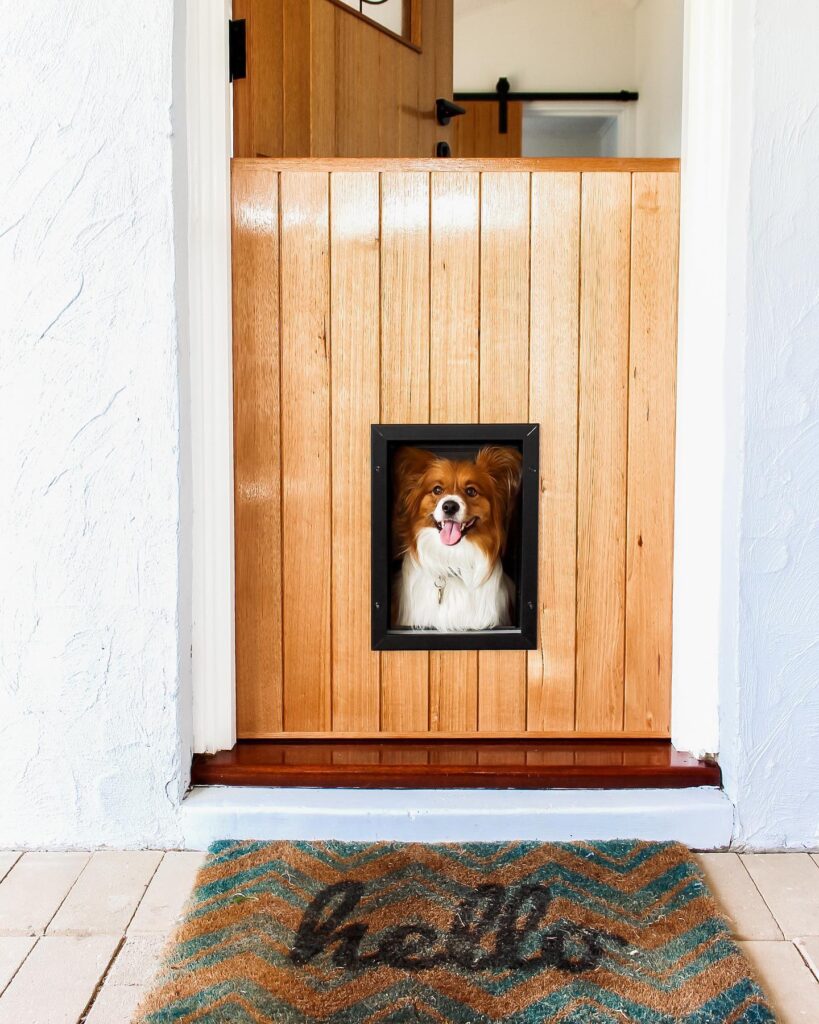
Your golden’s nose is already pressed against the front window before you even pull into the driveway. She knows. And the second you open the door, she’s launching herself at you like you’ve been gone for three years. This Dutch door setup? It keeps that energy contained and gives her a front-row seat to the world.
So here’s what makes this work. The door is a natural oak wood Dutch door, split horizontally so the bottom half stays closed while the top swings open. Cut into the lower panel is a black metal-framed dog door window — no flap, just an open frame — sized to fit a small-to-medium dog comfortably at chest height. The bottom half acts like a built-in barrier gate, so your dog gets her moment without actually escaping onto the porch.
The “Hello” doormat in teal and brown chevron ties the whole entry together — it’s giving Pinterest farmhouse without trying too hard.
This is the key: the window opening works best when it sits 8–10 inches from the bottom of the panel, right at your dog’s natural standing eye level. No tiptoeing, no straining. She gets the view, you get the chaos contained.
If you’re considering a full door overhaul like this, the Best Dog Doors Reviewed: Find the Perfect Fit for Your Home breaks down sizing by breed — worth a scroll before you start cutting wood.
Sand the frame edges twice before finishing. Rough oak splinters fast with curious noses bumping against it daily.
📸 Photo credit: Instagram @cockburnjoinerymyaree
#6: Dutch Door Dog Gate — The Prettiest Way to Keep Your Pup Inside
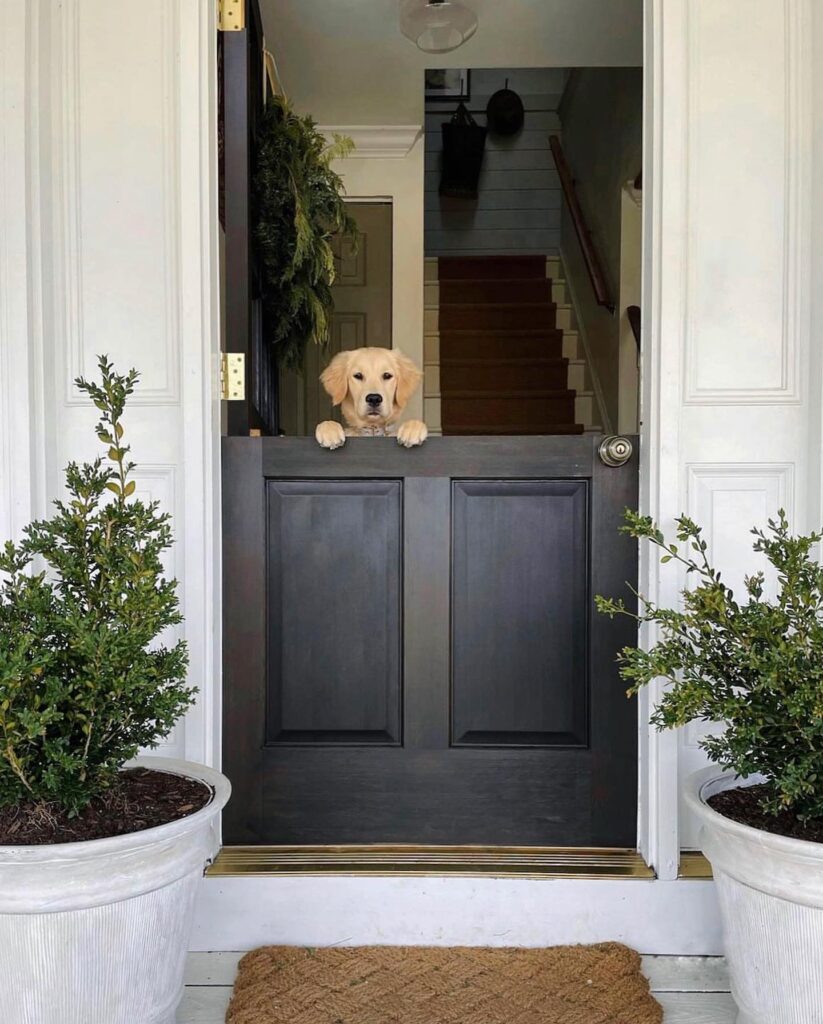
You know that moment when you open the front door to grab a package and your golden bolts past you before you can even blink? Yeah. My neighbor’s dog did that last Thanksgiving and ended up three blocks away. Not fun.
This setup is the solution you didn’t know you needed.
It’s a classic Dutch door — split horizontally so the bottom half stays closed while the top swings open. The door here is painted in a matte charcoal black, trimmed against crisp white millwork, and the whole thing looks like it belongs on a Pinterest board (because it does). And your golden can’t resist poking their head over the top — which, honestly, makes it even cuter.
The bottom panel sits at roughly 36 inches tall, which is the sweet spot for blocking a golden retriever without making the entryway feel like a prison. The door uses solid wood construction with recessed panels, paired with brass hardware — that knob and hinge combo is doing serious heavy lifting for the aesthetic. Two ribbed white ceramic planters flank the entrance with boxwood topiaries, and a woven jute doormat pulls the whole porch together.
Pair your Dutch door with brass door hinges (not silver — trust me, the warmth matters) and a brushed gold threshold strip at the base like the one in this photo. That strip protects the wood and adds a polished detail most people miss.
If you’re DIY-ing this, the easiest route is buying a pre-hung solid core interior door and having a carpenter cut it horizontally at the midpoint — usually around 36 inches from the floor. Add a surface bolt latch on the inside of the lower half so it stays shut even when your dog leans on it. And they will lean on it.
The feature here is the split door design — the benefit is that fresh air flows through your entryway without your dog escaping — and the payoff is a porch that looks like a magazine spread while actually functioning for real dog-mom life.
📸 Photo credit: Instagram @countryhomemagazine
#7: The Dutch Door Dog Door Combo That Makes Every Mudroom Feel Like a Farmhouse Dream
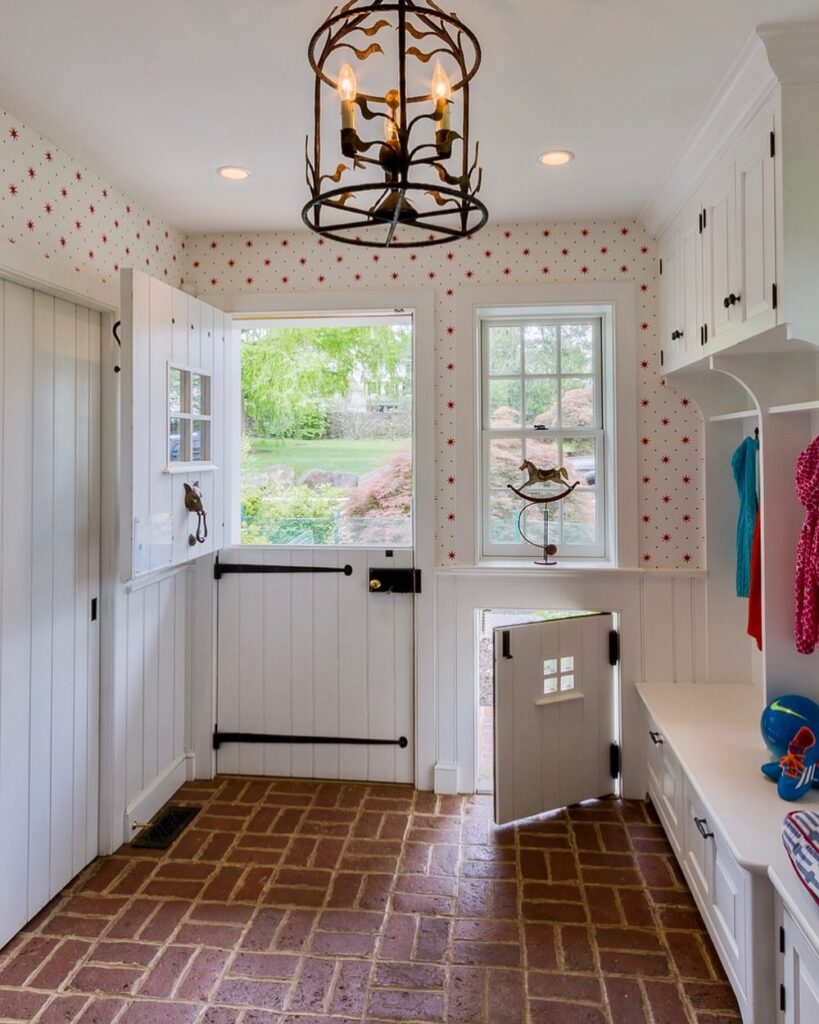
Your golden is covered in mud from the backyard, and you’re standing at the door doing that thing — the full-body block — trying to stop 70 pounds of wet dog from charging into your living room. Yeah. We’ve all been there.
This mudroom does something so smart. It pairs a classic Dutch door with a miniature dog door built directly into the lower half panel, so your pup gets their own dedicated entry point while the top half stays open for the breeze. The red star wallpaper by Ferrick Mason adds this warm, playful energy, and the reclaimed brick flooring underneath means mud, paws, and puddles are basically a non-issue. Dogs love it because it feels like freedom — they can come and go without waiting on you.
The door itself is a solid wood Dutch door in white, fitted with black iron strap hinges and a barrel bolt latch. The tiny dog door insert is built into a separate gray painted lower panel, complete with a four-pane window cutout — which is honestly the cutest thing I’ve ever seen in a mudroom. On the right side, white shaker-style built-in cabinets with black bin pulls run floor to ceiling, and the lower bench section offers storage drawers underneath. Coat hooks with an arched surround sit in between. That wrought iron lantern pendant with candelabra bulbs ties everything together.
For the flooring, use running bond brick pavers instead of tile — they hide dirt better and add grip for paw traffic. Seal them with a matte penetrating sealer so cleanup stays easy without making them slippery.
If you’re DIYing the dog door insert, cut the opening after the door is hung so your measurements stay true. Frame the cutout with matching white trim and add a magnetic flap to keep drafts out. Size it for your dog’s shoulder height plus 2 inches of clearance on all sides.
📸 Photo credit: Instagram @cullenconstruction
#8: Mini Sliding Barn Door Dog Door
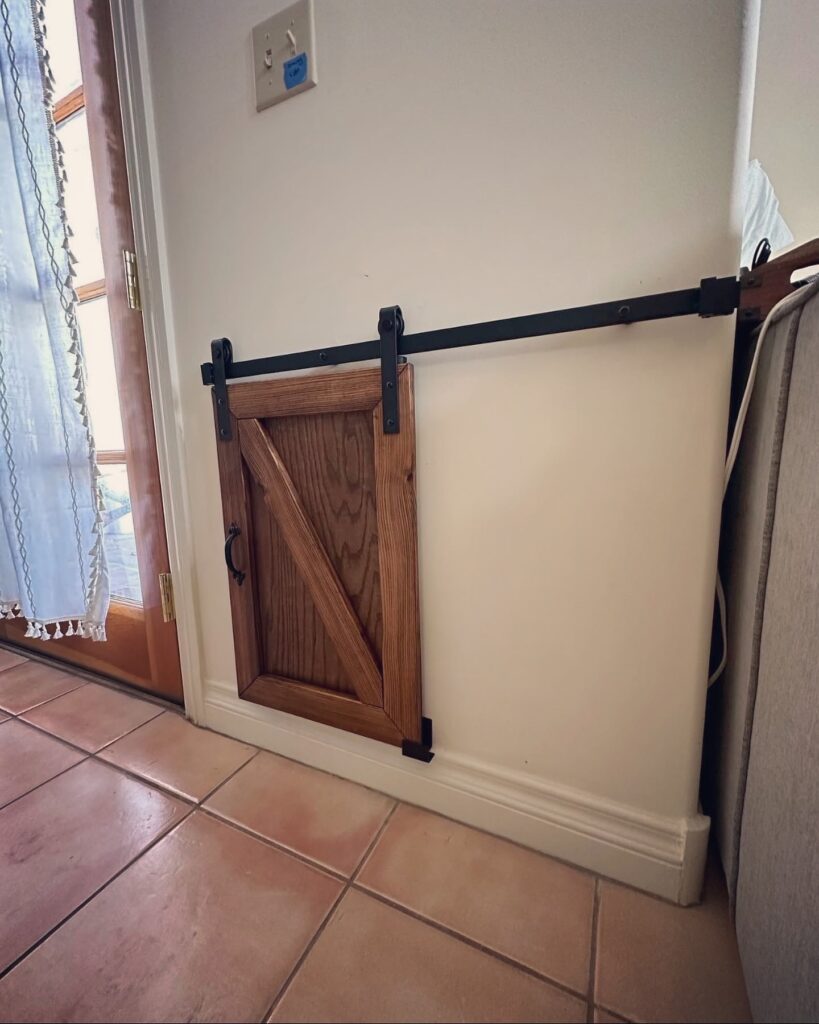
Your golden retriever finally stops pawing at the back door every ten minutes — because she has her own little entrance. That’s the whole vibe of this setup, and honestly, it stopped me mid-scroll the first time I saw it.
This is a mini sliding barn door built from stained pine wood with a classic Z-brace design on the front panel. The stain is a warm walnut-brown tone, and it hangs on a black iron sliding barn door track mounted directly into the wall beside a standard door frame. There’s even a tiny black cast-iron pull handle on the front. It’s a whole moment.
The track hardware matters more than people think. You want a ceiling-mount or wall-mount barn door kit rated for doors under 50 lbs — something like a 36-inch mini barn door hardware set works here. The door itself sits flush with the white baseboard trim, and a small floor guide bracket keeps it from swinging.
The panel is around 18 inches wide by 24 inches tall, which clears most golden retrievers. Cut your door from ¾-inch pine plywood, frame it with 1×3 pine boards, and add the diagonal brace with wood glue and finish nails before staining.
Sand the edges after staining — rough edges snag fur and that gets old fast. This door slides open, stays open, and your dog learns it in about two days.
📸 Photo credit: Instagram @doors4mutts
#9: Built-Into-the-Wall Dog Door (The Clean, Permanent Solution Your Golden Deserves)
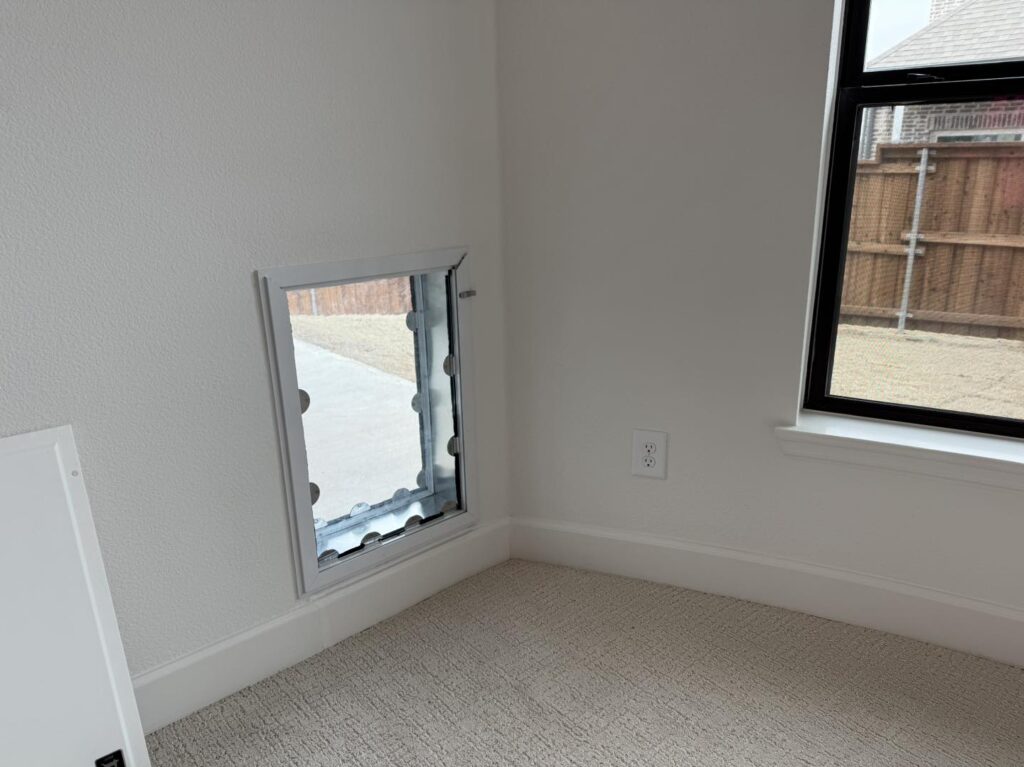
You know that moment when your golden is scratching at the back door again — paws muddy, tail going insane, and you’re literally mid-zoom call? Yeah. This one’s for that exact moment.
This setup is clean. We’re talking a wall-mounted aluminum-framed dog door cut directly into the interior wall, finished with a white painted drywall surround that matches the room’s trim seamlessly. The flap is a clear, hard plastic panel held in place with a metal pin latch at the top — your dog pushes through, it closes behind them, done.
To recreate this, you need a heavy-duty through-the-wall dog door kit (look for one with a galvanized steel tunnel insert to handle the wall thickness). The frame here sits flush against smooth-textured drywall, painted in what looks like a bright white — probably something in the Sherwin-Williams extra white family. The carpet is a low-pile, neutral beige, which honestly makes cleanup so much easier when your golden tracks in half the backyard.
The door placement near the corner — not centered — is a design choice that matters. It keeps your main wall open for furniture and doesn’t interrupt the flow of the room.
Wall-mounted dog doors protect your actual doors from scratches and claw marks. That protection means your door frames stay gorgeous for years, which is the whole payoff if you care about your home looking Pinterest-ready and being dog-proof.
Make sure your wall doesn’t have electrical wires or plumbing running through it before you cut. A stud finder with AC detection runs about $30–$40 at any hardware store and saves you a nightmare.
📸 Photo credit: Instagram @northtexasdogdoors
#10: Built-In Wine Cooler Turned Dog Door Station (Yes, Really)
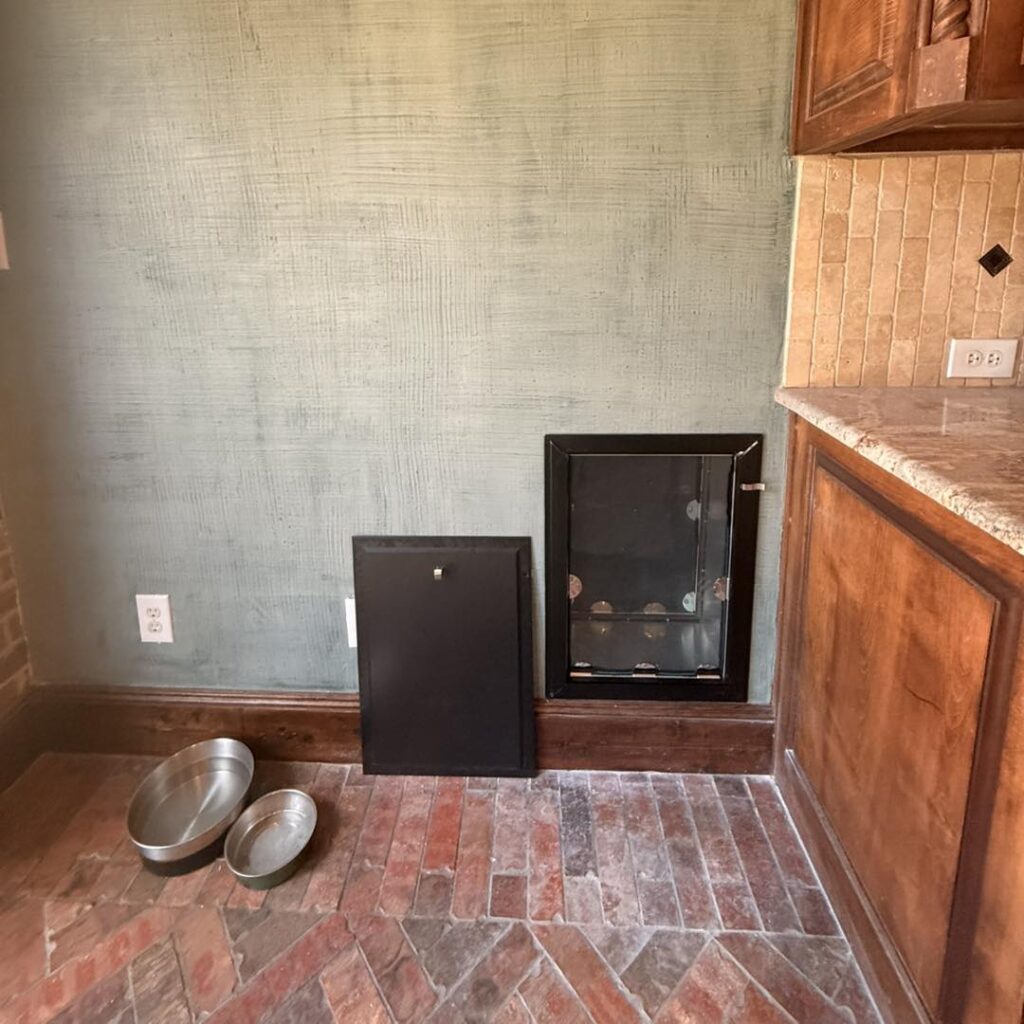
Okay, so you know that moment when your golden is desperately scratching at the back door, and you’re mid-pour of a glass of wine, and you just think — there has to be a better way? This idea is literally that better way, and it’s one of the coolest repurpose moves I’ve ever seen.
The setup here features a built-in dog door installed directly into the base of a kitchen cabinet — the kind of slot where a wine cooler or mini fridge normally lives. The space sits flush with warm dark walnut cabinetry, a terracotta brick herringbone floor, and walls finished in a textured sage-green plaster. And those two stainless steel water bowls sitting right there on the brick floor? Chef’s kiss. Your golden would feel so at home here.
To recreate this, you need a standard cabinet-height opening (roughly 24″ x 34″) with the shelving removed. The dog door itself is a black aluminum-framed pet door with a clear double-flap panel — the glass-front version gives it that built-in appliance look so it doesn’t feel like an afterthought.
For the flooring, reclaimed brick pavers in a diagonal herringbone pattern are your best friend here. They’re tough, they clean up fast, and muddy paw prints basically disappear into the texture.
Here’s the smart part: positioning the door inside the cabinet cavity keeps wind drafts contained — the cabinet walls act as a natural buffer, which means less cold air sneaking in during winter. Seal the edges with weatherstrip foam tape and you’re good.
If you love this kind of intentional dog-friendly design, 12 Creative Dog Room Ideas for Your Furry Friend has more setups that blend style with function like this one.
Measure your dog’s shoulder height before ordering the door frame — you want at least 2 inches of clearance above their back so they don’t hunch through. Golden retrievers usually need a large or extra-large flap, around 10″ x 15″ minimum.
📸 Photo credit: Instagram @northtexasdogdoors
The One Measurement Mistake That’ll Cost You a New Door (And How to Skip It)
Here’s the thing nobody tells you before you buy a dog door — measure your dog’s width, not just their height.
I learned this the hard way with my cousin’s lab mix. We installed a “large” door based on height alone. That dog’s barrel chest got stuck on the first try. We had to patch the whole thing and start over. Total nightmare.
For a golden retriever like yours, shoulder width is the number that matters. Add at least two inches on each side so she’s not squeezing through with muddy paws and knocking the flap sideways every single time.
Good news: most mid-range dog doors actually list “shoulder clearance” now — look for that specific term, not just “large breed.”
Also? Skip doors with magnetic double flaps if your golden is food-motivated. The resistance frustrates them fast, and you’ll end up propping it open anyway, which defeats the whole purpose.
One more thing — if you’re already thinking about outdoor access setups, 17 creative DIY dog run ideas pair well with a properly fitted door.
Your Dog-Proof Home Starts Right Now
Pick one spot that drives you crazy — the muddy entryway, the drool-covered couch, the corner your golden has claimed as his personal nap kingdom. Start there.
Small changes hit different when they actually work for your life and your dog’s.
These dog mudroom setups and dedicated dog spaces gave me so much inspiration — and honestly, they made me realize a pretty home and a happy dog aren’t a trade-off.
So tell me — what’s the one room your golden retriever has completely taken over?